14-Night Rarotonga All-Inclusive Resort Stay: Itinerary Ideas and Travel Tips
Fourteen nights in Rarotonga give you enough time to do something many island holidays never allow: slow down without losing momentum. An all-inclusive resort can simplify meals, budgeting, and daily logistics, yet the real benefit appears when that convenience is paired with a thoughtful plan. Two full weeks let you blend lagoon swims, inland hikes, cultural evenings, and lazy afternoons in sensible balance. This guide shows how to shape that longer stay into a trip that feels effortless, varied, and genuinely restorative.
Article Outline and Resort Planning Basics
Before filling every morning and evening with activities, it helps to build a simple structure for the full 14 nights. Rarotonga is not a giant destination where you need to race across long distances. The island road is roughly 32 kilometers around, and that small scale is part of its charm. You can circle the island by bus, scooter, or car without turning the trip into a transport exercise. Because of that, the smartest itinerary is usually one that alternates active days with easy ones rather than trying to “cover everything” in a rush.
- Days 1 to 4: arrive, recover, learn the island layout, enjoy the lagoon, and settle into resort rhythm.
- Days 5 to 8: add adventure, cultural activities, and one or two longer outings.
- Days 9 to 12: keep plans flexible for weather, optional day trips, or a premium experience.
- Days 13 to 14: slow the pace again, revisit favorite places, and leave space for a calm departure.
One important point for travelers comparing packages: in the Cook Islands, “all-inclusive” may not always mean the same thing it does in some Caribbean or Mexican resorts. Some properties bundle breakfast, selected lunches, dinner, and non-alcoholic drinks. Others may include full board but limit premium beverages, excursions, or minibar access. That is why the best booking decision often comes down to the details rather than the headline label. Look closely at what is covered, especially airport transfers, daily dining hours, snorkeling gear, kayaks, cultural shows, and children’s activities if you are traveling as a family.
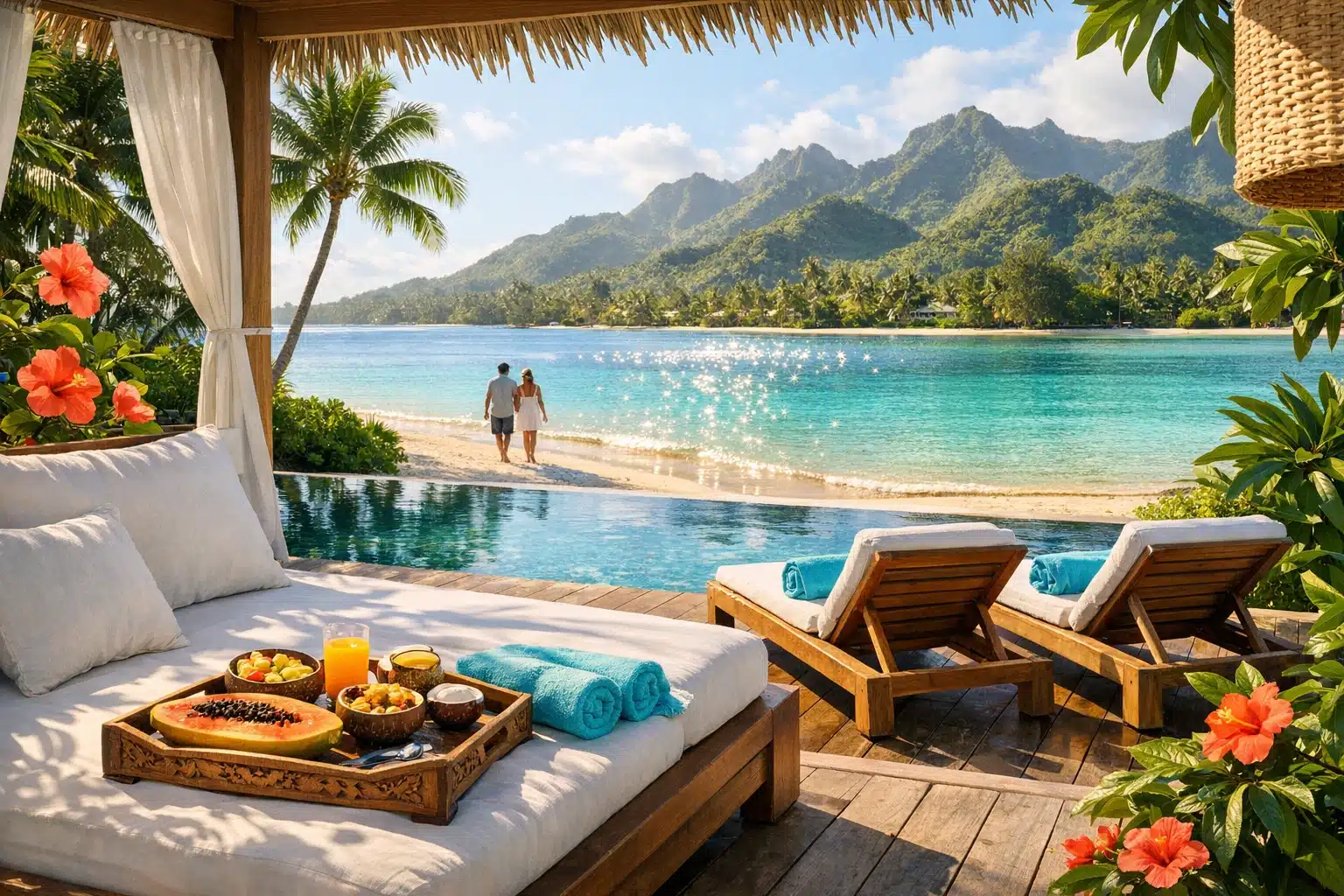
Location matters too. Resorts around Muri are popular because the lagoon is calm, photogenic, and convenient for paddling and lagoon cruises. West coast and south coast stays can feel quieter and sometimes deliver stronger sunsets, a more secluded mood, or easier access to certain beaches. If you want a social atmosphere and ready access to lagoon activities, the east side has clear advantages. If you value a slower, lower-key base, another coast may suit you better. The outline below works for either style, but it becomes even more useful when matched to your priorities, your meal plan, and your tolerance for busy schedules during what is supposed to be a restorative holiday.
Days 1 to 4: Ease In, Learn the Island, and Use Your Resort Well
The first four days should not be overloaded. Even if your flight arrives with excitement levels sky-high, these opening days are ideal for orientation rather than ambition. Check in, walk the grounds, confirm what your package includes, and learn the rhythm of the property. Some travelers lose value in all-inclusive stays simply because they do not understand meal windows, activity schedules, or how far they need to travel for the experiences they imagined. A quick chat with reception or the activities desk on day one can save time and money across the next two weeks.
A balanced start might look like this:
- Day 1: arrival, beach walk, early dinner, and an easy night.
- Day 2: lagoon swim, pool time, resort orientation, and a short local outing.
- Day 3: bus loop around the island, stop in Avarua, and a relaxed sunset evening.
- Day 4: snorkeling or paddleboarding in the morning, then downtime in the afternoon.
Rarotonga rewards gentle observation. On your island loop, notice how quickly scenery changes from lagoon views to lush mountain backdrops and village stretches lined with churches, small stores, and family homes. Public buses run clockwise and anticlockwise, making them surprisingly practical for newcomers. If you want a low-stress way to learn the island, a full bus circuit is one of the best early-trip investments. It gives you a sense of beaches, cafes, churches, road conditions, and distances before you commit to more independent transport.
If your stay overlaps with Saturday, the Punanga Nui Market in Avarua is worth visiting for food stalls, crafts, and a lively local atmosphere. It is not a staged resort version of island life; it feels more rooted, more useful, and more revealing. This is also a good point in the trip to compare your resort dining with outside options. All-inclusive plans are convenient, but eating every meal on property for two weeks can flatten the experience. A smart middle path is to enjoy the inclusions that make sense, then step out for a few memorable lunches or dinners. By the end of day four, the goal is simple: you should know where you are, how you like to move around, and how much structure you actually want from the rest of the trip.
Days 5 to 8: Lagoon Adventures, Inland Hikes, and Cultural Evenings
Once you have settled in, the middle of the first week is the ideal time to shift from orientation to exploration. This is when Rarotonga starts to feel less like a pretty backdrop and more like a place with layers. The lagoon remains a major draw, and for good reason. Muri Lagoon in particular is popular for kayaking, stand-up paddleboarding, and boat trips to small motu, or islets. Calm conditions can make it beginner-friendly, though weather and tides still matter. Water clarity changes from day to day, so do not judge your whole snorkeling experience by one session. If visibility looks average on Monday, it may look much better on Wednesday.
These days are also a strong window for more active inland plans. Rarotonga’s mountainous interior adds a dramatic contrast to the calm coast, and a guided cross-island hike is often one of the most memorable experiences of a longer stay. Trails can be muddy, steep, and humid, so footwear matters more than many beach-focused visitors expect. If you are considering a trek near Te Rua Manga, often called The Needle, choose a guide if you want extra context and a safer experience in changing conditions. This is not just a photo outing; it is a chance to see how closely packed the island’s ecosystems really are.
- Choose one water-based activity day.
- Choose one inland or hiking day.
- Reserve one evening for a cultural show or island night feast.
- Leave one afternoon open for recovery or a spa treatment.
Cultural evenings deserve a place in the itinerary when done thoughtfully. Music, dance, drumming, and local food can add depth to the trip, especially after several days centered on scenery. Compare experiences before booking. Some are intimate and food-focused, while others are larger and more entertainment-driven. Neither is automatically better; the right choice depends on whether you want a polished show, a family-friendly night out, or a smaller setting with more conversation. By day eight, the ideal result is a satisfying contrast: coral gardens in the morning, mountain air by afternoon, and a drumbeat under the stars by evening. That variety is exactly what makes a two-week stay in Rarotonga feel complete rather than repetitive.
Days 9 to 12: Flexible Planning, Optional Splurges, and Smart Mid-Stay Choices
The second week is where longer trips quietly outperform short ones. By day nine, you no longer need to prove that you are “making the most” of the destination every hour. You already know the island’s tempo, and that makes smarter decisions possible. This is the right moment for flexibility. If the early days were windy, reschedule lagoon activities. If you loved a certain beach, go back without guilt. If the resort begins to feel too self-contained, use these middle days to widen the frame.
An optional day trip to Aitutaki often enters the conversation here, and it is worth comparing carefully. Aitutaki is famous for its lagoon and can be a spectacular addition, but it turns one of your Rarotonga resort days into a very early, tightly scheduled excursion. The trade-off is clear. Staying on Rarotonga gives you a slower, more cohesive holiday with less transit. Adding Aitutaki introduces a high-impact visual highlight and a second island perspective. Travelers who enjoy variety and do not mind the logistics may find it worthwhile. Travelers who chose a 14-night resort stay specifically to unwind may prefer to keep the whole holiday based around one island.
Mid-stay is also a smart time to test alternative transport. If you have relied on buses, consider renting a car for one day to reach beaches or cafes more freely. If you were planning a scooter, make sure you are comfortable with local road conditions and licensing requirements before committing. Convenience matters, but so does confidence. Anxious transport choices can drain the mood from an otherwise easy trip.
- Revisit your favorite beach at a different time of day.
- Book one premium experience, such as diving, a private lagoon cruise, or a spa session.
- Use one afternoon for absolutely nothing planned at all.
This part of the holiday is often when travelers notice the real value of a longer stay. Sunsets become familiar rather than hurried. Resort staff may know your coffee order. You stop photographing every palm tree and start noticing subtler details: the changing color of the reef line, the quieter roads on Sunday, the way afternoon showers can sharpen the green of the hills. That shift from checklist travel to lived-in enjoyment is hard to manufacture on a quick trip, but it appears naturally during nights nine to twelve if you leave enough breathing room.
Final Thoughts: Travel Tips, Common Mistakes, and How to Make 14 Nights Feel Worth It
For most travelers, the success of a 14-night Rarotonga resort stay depends less on finding nonstop activities and more on balancing convenience with curiosity. Pack with the island climate in mind. Lightweight clothing, reef-safe sun protection, a rash shirt, sandals, a dry bag, and proper walking shoes cover far more situations than an oversized suitcase full of “just in case” items. If you travel in the warmer, wetter part of the year, expect more humidity and occasional downpours rather than assuming every day will look like a brochure. If you visit in the cooler dry season, conditions are often more comfortable for walking and general sightseeing, even though weather can still change quickly.
A few practical questions can improve the trip before you even arrive:
- Does the package include airport transfers and daily beverages?
- Are water sports equipment and cultural activities part of the rate?
- How many meals are included each day, and at what times?
- Is the beach directly swimmable in front of the resort at different tides?
- What are the extra charges for premium dining, spa treatments, or excursions?
Common mistakes are surprisingly consistent. Travelers often book too many tours in the first week, underestimate how satisfying simple beach time can be, or assume “all-inclusive” means every drink and activity is unlimited. Another frequent misstep is treating the resort as the whole destination. Comfort is valuable, but Rarotonga becomes more meaningful when you pair that comfort with market visits, local meals, church music heard from the roadside, or a chat with a guide who knows the island beyond the brochure language.
If you are a couple looking for a relaxed escape, a family wanting easy logistics, or a traveler who likes a slower pace without boredom, two weeks in Rarotonga can be a very strong choice. The island is compact, scenic, and easy to understand, yet varied enough to reward extra time. An all-inclusive base works best when it acts as a launch point rather than a bubble. Use the resort for comfort, use the island for texture, and let the final days stay light enough that you leave rested instead of relieved. That is when a long tropical holiday stops feeling like a purchase and starts feeling like time well used.