2-Night Mini Cruise from Hull to Amsterdam: Itinerary, Onboard Experience, and Travel Tips
A 2-night mini cruise from Hull to Amsterdam offers a rare mix of movement and stillness: one evening watching the Humber fade behind you, the next wandering canals, cafés, and museum-lined streets. For travellers who want the feel of a break without the complexity of a long holiday, it is a practical and atmospheric option. This guide explains the itinerary, the onboard experience, the value compared with other short trips, and the small choices that make the journey easier.
Article outline:
• Section 1 explains how the route usually works, including departure, arrival, and time ashore.
• Section 2 explores cabins, dining, entertainment, and the general mood onboard.
• Section 3 looks at how to spend your limited hours in Amsterdam wisely.
• Section 4 compares costs, convenience, and overall value with other weekend breaks.
• Section 5 shares practical travel tips and closes with advice on who this mini cruise suits best.
1. Understanding the Itinerary: What a 2-Night Mini Cruise from Hull to Amsterdam Really Looks Like
At first glance, the phrase 2-night mini cruise can sound slightly misleading if you picture two leisurely days drifting through Dutch waterways. In reality, this trip is best understood as an overnight ferry crossing to the Netherlands, a full day visit to Amsterdam, and a second overnight crossing back to Hull. That structure is exactly why it appeals to busy travellers: it compresses transport, accommodation, and a city break into one neat package.
The route from Hull usually sails from King George Dock in the late afternoon or evening. Travellers check in several hours before departure, board the ship, settle into their cabins, and leave the East Yorkshire coast behind as the vessel heads across the North Sea. By the following morning, the ship typically arrives at IJmuiden, the port area west of Amsterdam. This detail matters because the ferry does not dock in central Amsterdam itself. Most mini cruise packages either include or coordinate coach transfers from the port into the city, and that journey commonly takes around 45 to 60 minutes depending on traffic.
A typical itinerary often looks like this:
• Day 1: Check in at Hull, board, eat dinner, explore the ship, and sail overnight.
• Day 2: Arrive in IJmuiden, transfer to Amsterdam, spend the day in the city, return to the terminal in the evening, and sail back overnight.
• Day 3: Wake up onboard, have breakfast, and disembark in Hull.
The main advantage of this schedule is simplicity. You unpack once, sleep in the same cabin both nights, and avoid airport queues, security lines, baggage restrictions, and transfers between hotels. The trade-off is equally important to understand: your time in Amsterdam is limited. This is not a slow city immersion. It is a brisk but enjoyable encounter, ideal for first-time visitors, casual sightseers, couples looking for a novel short break, or groups who enjoy the social side of travel.
There is also a distinct emotional rhythm to the trip. Evening departure gives the experience a sense of ceremony, almost like the holiday begins before you arrive anywhere. By the second morning, the return sailing creates a gentle decompression period that flights rarely offer. You are not rushing from hotel checkout to terminal gate. Instead, you watch the sea again, perhaps with coffee in hand, while the weekend settles into memory.
For travellers judging whether the itinerary is worthwhile, the key question is not “Will I see all of Amsterdam?” but “Do I want a compact getaway where the sailing is part of the fun?” If the answer is yes, the format makes excellent sense.
2. Onboard Experience: Cabins, Dining, Entertainment, and the Atmosphere at Sea
One of the strongest reasons people choose a Hull to Amsterdam mini cruise is that it does not feel like mere transport. The ship is an active part of the holiday. Once onboard, the experience sits somewhere between a ferry journey, a floating hotel, and a casual night out. That blend is especially appealing for travellers who enjoy the novelty of travel itself rather than seeing transit as dead time.
Cabins are central to the experience because both nights are spent at sea. Standard inside cabins are often the budget-friendly option and usually work well for passengers who mainly need a clean, private place to sleep and shower. Sea-view cabins cost more but can add a small thrill, especially in daylight when the horizon seems to stretch forever. Premium cabins may include extra space, upgraded furnishings, or additional amenities, though for a short trip the practical value depends on your priorities. If your plan is to spend most of the evening in restaurants, bars, or lounges, a simple cabin is often enough.
Dining options vary by ship and season, but mini cruise travellers can usually expect a mix of buffet dining, casual café choices, and at least one more formal restaurant. Pre-booking meals can be useful, especially if you want predictable costs and less decision-making once onboard. Breakfast is often worth arranging in advance because it saves time on arrival morning. Dinner can shape the mood of the trip: some people prefer a quick meal and a walk on deck, while others treat the crossing like a proper night out.
The general onboard atmosphere is more relaxed than formal cruising. You may find:
• Bars and lounges with live music or DJs on selected sailings
• Shops selling travel essentials, gifts, and small luxuries
• Play areas or family-friendly spaces on some ships
• Outdoor deck areas for fresh air and sea views
• Quiet corners where you can read, talk, or simply watch the light change over the water
There is a practical side to managing expectations. A mini cruise ship is not the same as a large ocean cruise liner with endless pools, theatres, or destination lectures. The entertainment is usually lighter and more social. For many travellers, that is actually a strength. The scale feels manageable, and the journey never becomes over-programmed.
The sea itself also shapes the experience. On calm nights, the crossing can feel soothing, almost meditative. On rougher sailings, particularly in winter or windy periods, motion may be noticeable. If you are prone to seasickness, bring remedies rather than assuming you will be fine. It is a small preparation that can make a major difference.
Perhaps the most memorable part of life onboard is the sense of transition. You have left England, but you have not quite arrived elsewhere yet. There is a pleasant in-between quality to the evening: a drink in the lounge, engines humming beneath the floor, the dark sea outside, and the feeling that the trip has already become a story worth telling.
3. Making the Most of Your Day in Amsterdam: Shore Time, Priorities, and Smart Planning
The greatest challenge of a Hull to Amsterdam mini cruise is not getting to the city. It is deciding what to do once you are there. Because your time ashore is limited, the difference between a satisfying day and a frustrating one usually comes down to planning. Amsterdam rewards curiosity, but on a mini cruise it rewards focus even more.
Most travellers arrive in the city during the morning after the transfer from IJmuiden. Depending on the schedule, you may have several useful hours, but not enough for a long, loose itinerary filled with crossed-out plans and zigzagging between districts. The smartest approach is to choose one of three styles of day: a classic first-time highlights route, a museum-led visit, or a slow wandering experience built around neighbourhood atmosphere.
For first-time visitors, the most efficient plan often includes Central Amsterdam, the canal belt, Dam Square, and at least one memorable stop such as a canal cruise, the Rijksmuseum, or the Anne Frank House area. It is important to note that some attractions require timed entry and can sell out well in advance. If a specific museum matters to you, book early and build the day around it. Do not assume you can simply turn up and stroll in.
A practical city plan might look like this:
• Morning: Arrive, get oriented near Central Station or Dam Square, and take a short walking route through the canals.
• Midday: Visit one pre-booked museum or attraction.
• Afternoon: Pause for lunch, browse independent shops, or enjoy a canal cruise.
• Late afternoon: Keep a buffer for return travel rather than squeezing in one last distant stop.
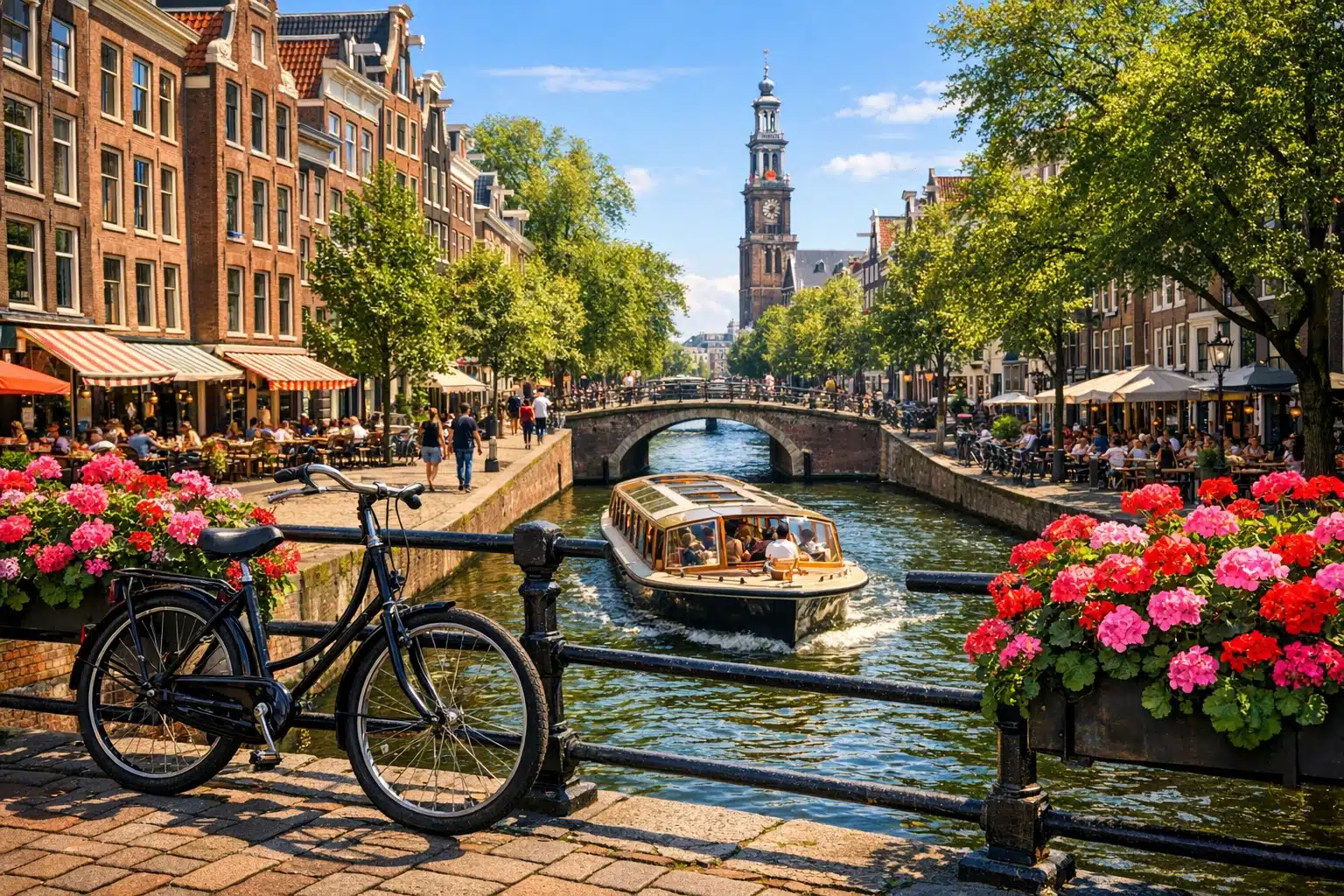
The real temptation in Amsterdam is overreaching. Travellers sometimes try to combine major museums, shopping streets, long lunch breaks, and out-of-centre sights in a single day. The city may look compact on a map, but queues, bridges, tram waits, and crowd density all consume time. A well-paced itinerary usually feels richer than a frantic one. You remember the canal reflections, the narrow houses leaning into the water, the bells, bicycles, and bakery windows. You do not remember the stress fondly.
If you prefer a less scheduled visit, Amsterdam is excellent for that too. The Jordaan district, the Nine Streets area, and the canals around the historic centre are ideal for gentle exploring. You can combine strolling with coffee stops, casual lunches, and small purchases without needing to “complete” a checklist. For many mini cruise passengers, this is the best use of the city: not a race to cover everything, but a short, vivid taste that invites a future return.
One final rule matters more than any sightseeing advice: leave enough time to get back to the transfer point. Ferry departures do not wait for late city wanderers. However charming the canal at sunset looks, missing the coach back to IJmuiden would turn an easy trip into a very expensive problem. Enjoy the city generously, but respect the clock.
4. Cost, Value, and Comparison: How a Mini Cruise Stacks Up Against Flights, Hotels, and Other Weekend Breaks
A 2-night mini cruise from Hull to Amsterdam is often marketed as a convenient short escape, but whether it represents good value depends on what kind of traveller you are. It can be excellent value for some people and less efficient for others. The crucial point is to judge it by the right criteria. If you measure only the number of daylight hours spent in Amsterdam, a flight may seem better. If you measure the whole experience, including transport, accommodation, and atmosphere, the mini cruise becomes far more competitive.
The base fare typically covers the return sailing and cabin accommodation, while add-ons can include meals, better cabins, city transfers, and optional sightseeing products. Overall price can rise quickly if you choose premium upgrades, drinks packages, or onboard shopping, so the headline fare does not always tell the whole story. Still, when two people share a cabin, the per-person cost can compare favourably with booking flights and a central hotel for a short break, especially during busy travel periods.
Here is where the mini cruise often works well:
• Travellers living in Yorkshire, the North East, or nearby regions who can reach Hull easily
• Couples who want a different type of weekend away
• Friends or groups who enjoy bars, live entertainment, and a social travel atmosphere
• People who dislike airports or want to avoid strict baggage rules
Where it may be less ideal:
• Travellers whose main goal is to maximise time in Amsterdam
• Visitors who want a deep museum schedule over several days
• Anyone who gets very seasick or dislikes overnight travel
• People coming from far south of England, where reaching Hull may add too much extra journey time
Compared with flying, the mini cruise is slower but more immersive. Airports often involve early departures, security delays, luggage rules, and separate hotel logistics. The ferry replaces much of that with a single booking rhythm: board, sleep, arrive, explore, return. Compared with a Eurostar-style city break, the ferry is usually less direct but more distinctive. It feels more like a trip than a transfer.
Season also affects value. Prices often rise during school holidays, festive sailings, and popular weekends. Midweek or shoulder-season departures may offer better rates and a calmer onboard atmosphere. Budget-conscious travellers should also consider hidden spending ashore. Amsterdam is not the cheapest city for food, drinks, or entry tickets, so a modest ferry fare can be offset by an expensive day if you book several attractions and dine in tourist-heavy areas.
In honest terms, this mini cruise is not the cheapest way to have the longest possible Amsterdam visit. That is not its strongest selling point. Its value lies in convenience, novelty, and the pleasure of making the sea crossing part of the holiday. For travellers who appreciate that combination, the trip can feel surprisingly worthwhile.
5. Travel Tips, Common Mistakes, and Final Advice for the Kind of Traveller Who Will Enjoy This Most
Small decisions have an outsized effect on a short trip. Because a mini cruise compresses travel, accommodation, and sightseeing into roughly three days, every practical choice matters a little more than it does on a longer holiday. The good news is that the trip is straightforward once you understand a few basics.
Start with documents and timings. Always check the current passport and entry requirements well before departure, especially since international travel rules can change. Arrive at Hull with enough time for check-in rather than aiming for a last-minute dash. Ferry terminals are not built for dramatic sprint finishes, and a missed boarding window is a serious problem. Keep booking confirmations, travel documents, and any attraction tickets easy to access on your phone and in printed form if you prefer a backup.
Packing wisely is another advantage on a ferry trip because baggage limits are usually less stressful than air travel, but that does not mean you should overpack. A short, sensible list works best:
• Comfortable walking shoes for Amsterdam’s cobbled areas and long sightseeing days
• Layers for the ship’s deck, where wind can feel much colder than expected
• Seasickness remedies if you are even slightly unsure
• Portable charger, reusable water bottle, and a small day bag
• Any pre-booked attraction details and city transfer information
One common mistake is assuming the ship experience will automatically be restful. It can be, but only if you manage it well. If you stay up very late enjoying the bars and entertainment, then try to rush through a packed Amsterdam itinerary the next morning, fatigue will catch up with you. Another frequent error is treating the day ashore as limitless. It is not. Pick priorities, allow buffer time, and leave room for surprise rather than overloading the schedule.
Travellers should also think about who the trip suits. This mini cruise is particularly good for first-time ferry passengers, couples who want an easy break, groups of friends looking for a sociable weekend, and residents of northern England seeking a European city without the airport routine. Families can enjoy it too, provided expectations are realistic and the children handle overnight travel well. It is less suited to visitors who want several museum days, a slow luxury escape, or a guaranteed calm crossing in all weather.
Conclusion for short-break travellers: if you want maximum hours in Amsterdam, choose a longer city break. If you want a compact, memorable trip where the crossing itself has character, this route delivers something different. It offers sea air, a touch of theatre, and a satisfying glimpse of the Dutch capital without requiring a week off work. Think of it not as a substitute for a full holiday in Amsterdam, but as a cleverly designed teaser: just enough city, just enough ship, and just enough novelty to make an ordinary weekend feel larger than it is.