3-Night All-Inclusive Hotel Stay in York: A Practical Guide
Planning a three-night escape to York sounds simple until you start comparing hotel packages, meal plans, locations, and travel times. A practical guide matters because city-break deals in York rarely work like classic resort offers, so the wording of an inclusion can change the real value. Book well and you spend your time exploring lanes, walls, and museums instead of checking bills. That is why a little planning turns a short stay into a calm, satisfying break.
Outline
This article moves from the basics to the details so you can plan with fewer surprises and better expectations.
- What all-inclusive usually means in York, and why three nights is a useful trip length
- How to compare prices, package terms, meal plans, and hidden costs before booking
- Which parts of York suit different travellers, from station-side convenience to city-centre atmosphere
- How to build a realistic 3-night itinerary that makes the most of included meals and local attractions
- Who this type of break suits best, plus final advice for couples, families, solo travellers, and drivers
Understanding What “All-Inclusive” Means in York
The first thing to know is that York is not a resort destination in the usual sense. When travellers hear the phrase all-inclusive, they often picture a large coastal property where most meals, snacks, drinks, and entertainment are bundled into one fixed rate. York works differently. It is a compact historic city built for walking, sightseeing, and short breaks, so hotel packages tend to be more selective. In practice, a York all-inclusive stay often means one of the following: breakfast plus dinner, full board with set meal times, room packages with restaurant credit, or bundled extras such as spa access, parking, afternoon tea, or attraction tickets.
This matters because value depends on your travel style. If you plan to spend long afternoons inside museums and evenings in the old centre, a dinner-inclusive package may save both money and decision fatigue. On the other hand, if your dream trip involves trying independent cafés, pubs, and bistros around the Shambles, Bishopthorpe Road, or nearby riverside areas, a rigid meal plan can feel restrictive. York’s appeal comes partly from its excellent walkable core, which means you are rarely far from food options. A package is useful when it supports your day, not when it pins you to the hotel at the wrong hour.
Three nights is a particularly practical length for York. One night is too short, because arrival and check-in eat into the day. Two nights is enjoyable but often rushed, especially if you want to visit major sights such as York Minster, the City Walls, the JORVIK Viking Centre, or the National Railway Museum. With three nights, you usually gain two full days and a more relaxed final morning. That creates space for both headline attractions and slower pleasures, like sitting beside the River Ouse or wandering through medieval lanes after dinner.
It also helps to think of all-inclusive in York as a convenience tool rather than a luxury label. A strong package often includes practical wins:
- Breakfast each morning, which reduces daily planning
- At least one substantial evening meal, useful after a full sightseeing day
- Added-value extras such as late checkout, parking, or spa use
- A central or well-connected location that lowers transport hassle
Seen this way, the best package is not always the one with the longest list. It is the one that fits the rhythm of a city break and leaves room for York itself to do the charming work.
How to Compare Hotel Packages, Prices, and Real Value
Once you understand the local meaning of all-inclusive, the next step is comparing offers with a cool head. The headline room rate alone rarely tells the full story. Two hotels may look similar in photos, yet one includes breakfast, parking, and a three-course dinner while the other charges separately for every extra. In a city like York, where many visitors arrive for a short, carefully planned stay, those details can shape the total cost more than the room category itself.
Start with the meal structure. A package described as all-inclusive may still have limits. Drinks may apply only at dinner, restaurant credit may not cover the full menu, and some packages work on fixed dining times. If you want flexibility, check whether the dinner allowance can be used in a bar menu, whether vegetarian and family options are clearly available, and whether children’s meals are included or discounted separately. This is especially important for three-night stays, because a package that sounds generous on night one can feel repetitive by night three if the menu barely changes.
Next, compare the hidden or semi-hidden costs that travellers often notice too late. UK city hotels commonly quote prices with tax included, but parking, pet fees, upgrades, and some service charges can sit outside the advertised total. York’s historic layout also affects value. A cheaper hotel outside the centre may require taxis, paid parking, or more time commuting in and out. A higher-priced central hotel can sometimes be the more economical choice once transport costs disappear.
Useful questions to ask before booking include:
- Are all meals included each day, or only breakfast and dinner?
- Are drinks part of the rate, limited to certain times, or fully excluded?
- Is parking included, discounted, or unavailable?
- What is the cancellation policy, and can dates be changed easily?
- Are leisure facilities, spa sessions, or attraction tickets actually usable during your stay?
Seasonality matters too. York becomes especially busy on summer weekends, race days, school holidays, and during the festive market period. Demand pushes up room rates quickly, and the most appealing package deals often disappear first. Midweek stays can offer better value and quieter breakfast rooms, while shoulder-season travel often gives a pleasant balance of reasonable pricing and atmospheric weather.
The smartest comparison method is simple: write down the full trip cost, not the room cost. Include meals outside the package, parking, train fares or fuel, attraction tickets, and the value of convenience. When you do that, the best deal often reveals itself without drama.
Choosing the Right Area: City Walls, Station Side, Riverside, or Beyond
York is compact, but location still shapes the mood of a three-night stay. Because many of the city’s best-known sights sit close together, a hotel that looks only slightly outside the centre can feel much farther away after a long day on foot. The right area depends on what you want most: medieval atmosphere, transport convenience, evening quiet, easy parking, or better value for money.
Staying within or very near the historic core gives the strongest sense of place. You can step outside and be among ancient streets, independent shops, and major landmarks within minutes. This is ideal for first-time visitors, couples on a short break, and anyone who loves the idea of early morning walks before the crowds gather. The trade-off is that central hotels may have smaller rooms, limited parking, busier surroundings, or older buildings with more character than space. If your package includes dinner, confirm that the restaurant atmosphere suits you, because a charming heritage hotel is only as relaxing as its practical details.
Hotels near York railway station are often a strong middle ground. They work particularly well for travellers arriving by train from London, Leeds, Manchester, or Edinburgh, and they remove the stress of dragging luggage across cobbled streets. The walk into the historic centre is usually manageable, and you may find more modern room layouts or leisure facilities than in the oldest properties. For many visitors, this is the sweet spot between convenience and access.
Riverside and slightly out-of-centre hotels can be excellent when you want more breathing room. They may offer larger rooms, parking, spa facilities, or package deals that would be harder to find in the densest part of town. After a day in York’s busy lanes, returning to a calmer setting can feel like an advantage rather than a compromise. The question is whether you are happy walking back or arranging transport in the evening, especially in poor weather.
A quick comparison helps:
- Historic centre: best for atmosphere and immediate access, weaker for parking and often pricier
- Station area: best for rail travellers and balanced practicality
- Riverside or edge-of-centre: best for space, quieter nights, and sometimes better package value
- Outer areas: best for drivers and budget control, but less spontaneous for sightseeing
Think about your real habits, not your idealised ones. If you like dipping in and out of the hotel during the day, stay central. If you prefer a calmer base with straightforward logistics, a short walk from the centre may be the smarter call. In York, the right neighbourhood does not just save time; it changes the whole tone of the trip.
How to Make the Most of Three Nights in York
A well-planned three-night stay gives York enough room to unfold gradually. You do not need to sprint through every attraction. In fact, the city rewards a steadier pace. The stone, the bells, the river, the narrow lanes that seem to turn one century into another, all work better when your schedule leaves breathing space.
On arrival day, aim low and finish strong. Check in, settle your bags, and use any included afternoon tea, welcome drink, or early dinner credit instead of trying to cram in major sightseeing. If your hotel is central, take a relaxed evening walk through the old streets. The Shambles after daylight softens can feel entirely different from the busy middle of the day. If you are near the walls, a short stroll at sunset is one of the simplest pleasures in the city and costs nothing at all.
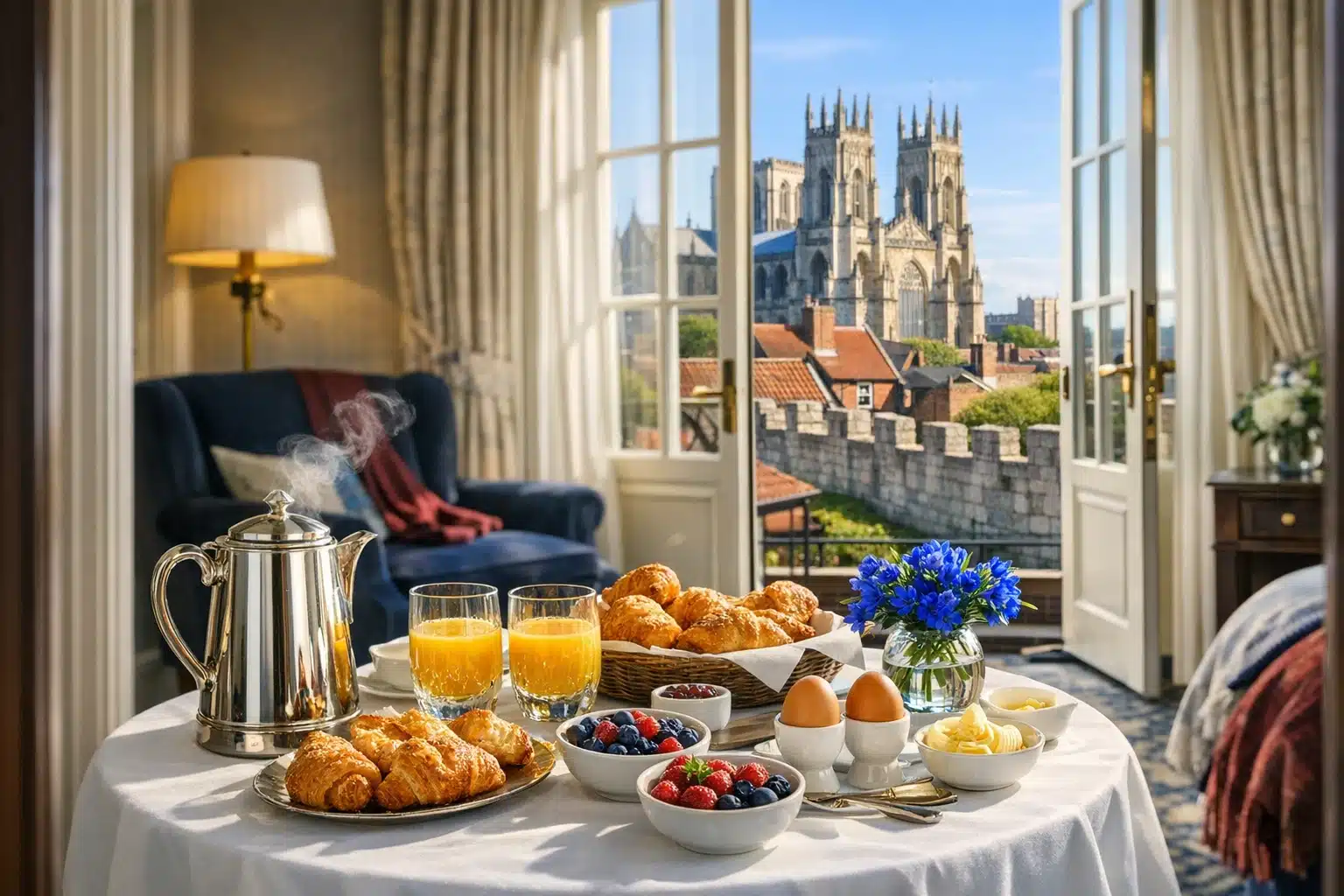
Your first full day is ideal for York’s headline heritage attractions. Start with breakfast at the hotel to make full use of the package, then head to York Minster and the surrounding area while energy is high. After that, choose one deeper historical experience rather than too many. JORVIK Viking Centre suits travellers who want an immersive story of the city’s Norse past, while the York Castle Museum offers a broader social history experience. Use lunch outside the hotel if you enjoy local food variety, then return in time for any included dinner reservation. This approach keeps your paid meal relevant without making the day feel hotel-bound.
The second full day works well for contrast. If the weather is clear, walk more. Explore the City Walls in sections, browse independent shops, visit the National Railway Museum, or take a river cruise if that suits your mood and budget. If your package includes spa access, place it in the late afternoon rather than the morning. It becomes a reward after sightseeing instead of a reason to delay the day. For families, this is also the moment to slow the pace with a less formal activity.
A practical rhythm for the trip often looks like this:
- Night 1: arrive, settle in, enjoy a simple evening and nearby stroll
- Day 2: major historic attractions and a structured dinner
- Day 3: flexible exploration, shopping, museum time, or spa use
- Departure day: one last breakfast and a short final wander if luggage storage is available
The real secret is not doing more. It is placing the right things at the right times. Three nights in York works beautifully when the hotel package supports the city experience instead of competing with it.
Who This Type of Stay Suits Best: Final Advice and Conclusion
A 3-night all-inclusive hotel stay in York suits travellers who want structure without losing the pleasure of discovery. It is especially useful for couples seeking an easy city break, first-time visitors who do not want to overthink every meal, rail travellers who value convenience, and anyone celebrating an occasion with a small sense of occasion built into the booking. Families can benefit too, particularly if breakfast and one evening meal are covered, because that reduces both daily cost uncertainty and the familiar end-of-day question of where to eat.
That said, this format is not perfect for everyone. Travellers who love spontaneous dining, pub-hopping, or building each day around independent food spots may prefer a room-only or breakfast-only stay. York has enough personality on its streets that some visitors feel boxed in by fixed dining schedules. The key is being honest about your habits. If you often return to the hotel early and enjoy a quieter evening, a package makes sense. If you treat the hotel mainly as a sleeping base, fewer inclusions may be the better choice.
Before you confirm the booking, run through a final checklist:
- Check exactly which meals are included and on which nights
- Confirm parking, especially if you are driving into the historic centre
- Look at walking distance rather than just postcode location
- Read recent reviews for service consistency, breakfast quality, and room comfort
- Make sure any added extras, such as spa time or attraction entry, fit your schedule
Pack for York with practicality in mind. Comfortable shoes matter more than travellers sometimes expect because the city invites walking. A light waterproof layer is wise in every season. If your plan includes nicer hotel dinners, one smart outfit is usually enough. Beyond that, let the trip stay simple.
For most visitors, the best version of this break is neither the cheapest nor the most extravagant. It is the one that removes friction. A good York package should make mornings easier, evenings calmer, and the middle of the day gloriously open. If you choose the right location, read the inclusions carefully, and leave room for a little wandering, three nights is enough to feel the city’s character properly. You will not see every corner, but you will leave with something better than a checklist: a trip that felt balanced, memorable, and genuinely restorative.