3-Night UK Cruise Guide: Scenic Coastal Escapes
A 3-night UK cruise sits in a sweet spot between a full holiday and a spontaneous escape, offering sea views, compact itineraries, and simple departures from ports many travellers can reach by rail or car. It matters because not everyone can spare a week away, yet plenty of people still want scenery, comfort, and a clear sense of getting somewhere new. Seen from the water, Britain’s coastline feels less familiar and far more dramatic, with cliffs, harbour lights, and old seaside towns taking on a fresh perspective.
Outline:
- Why a 3-night UK cruise works so well for short breaks
- How to compare scenic coastal routes around different parts of Britain
- What life on board feels like when the trip is brief but busy
- How to use limited port time without making the holiday feel rushed
- What to know about budgets, booking strategy, and who will enjoy this format most
Why a 3-Night UK Cruise Can Be a Smart Short Break
A 3-night cruise is short, but it is not trivial. In practical terms, it usually gives you four calendar days: embarkation on day one, one or two full days at sea or in port, a final evening on board, and disembarkation on the morning of day four. That structure matters because it explains the appeal. You get the rituals that make cruising distinct, such as the sailaway, the changing horizon, the easy shift between meals and entertainment, and the pleasure of waking up somewhere new, without having to commit to a week or more away from home.
For first-time cruisers, this format is often a sensible test rather than a compromise. A short voyage lets you find out how you feel about ship life, cabin size, motion at sea, dining schedules, and organised excursions before booking a longer itinerary. For experienced travellers, it can work like a refined weekend away. Instead of repacking between hotels, navigating traffic on coastal roads, or worrying about airport time buffers, you unpack once and let the ship handle the movement. The result is not always cheaper than a land-based break, but it is often easier.
There are also clear lifestyle reasons behind the popularity of mini cruises in the UK. Many people have limited annual leave, care responsibilities, or work patterns that make a seven-night holiday hard to arrange. A 3-night sailing can fit around a long weekend, a birthday, an anniversary, or a quick reset after a demanding month. Departures from ports such as Southampton, Liverpool, Newcastle, Greenock, or Dover can be especially attractive because they remove the need for flights and the baggage restrictions that often come with them.
- Good for first-timers who want to sample cruise life
- Useful for couples seeking a low-fuss break
- Practical for multigenerational families with tight schedules
- Appealing to solo travellers who prefer structure and easy logistics
Still, short cruises do ask you to accept trade-offs. There is less room for spontaneity if weather changes the plan, and every hour matters more than it does on a longer voyage. One missed morning can feel like a larger slice of the trip. Yet that intensity is part of the charm. A brief sailing often has a crisp, almost cinematic rhythm: luggage disappears, the shoreline loosens its grip, and by the time your mind has fully switched into holiday mode, you are already collecting sea-lit memories. For busy travellers who value convenience as much as scenery, that is a persuasive combination.
Scenic Coastal Routes: Comparing the Best Styles of Itinerary
Not every 3-night UK cruise looks the same, and the most rewarding choice depends on what kind of scenery you want. Broadly speaking, these itineraries fall into a few characterful groups: south coast sailings with gentler maritime landscapes, western routes with rugged island and harbour scenery, and eastern or northern departures where cliffs, estuaries, and historic port cities shape the mood. The ship may be the constant, but the coast writes a different script each time.
South coast sailings often feel accessible and polished. Departures from Southampton or Dover can include views along the Solent, the Isle of Wight, the Dorset coast, or calls further west toward Devon and Cornwall, depending on the operator. This style of itinerary works well for travellers who want a calm introduction to British cruising. The scenery here is not always wild in the dramatic sense, yet it has texture: chalky headlands, layered cliffs, elegant harbours, and towns that look as though they were arranged carefully for postcards. If you enjoy historic waterfronts, garden-heavy coastal counties, and a softer visual rhythm, the south can be very appealing.
Western sailings from Liverpool or Greenock often feel bolder and more changeable. You may find routes that pass the Welsh coast, the Isle of Man, Belfast Lough, or Scottish island approaches, depending on the season and line. Here the atmosphere tends to be more elemental. The sea can look darker, the skies more theatrical, and the coastline more muscular. Hills rise faster from the shore, ports can feel more industrial or more remote, and the visual drama is often stronger when weather sweeps in. For photographers and travellers who enjoy a rawer coastal personality, western routes can feel especially memorable.
Eastern and northern options, including sailings from Newcastle or routes touching areas near Edinburgh and Northumberland, often combine built heritage with striking maritime geography. Think of castle silhouettes, working ports, broad estuaries, and long lines of coastline that seem to stretch without hurry. These itineraries can be especially rewarding for travellers who like history attached to scenery, because the approach by sea gives old settlements a sense of logic. You start to understand why a town grew where it did.
- Choose the south coast for smoother accessibility and elegant harbour scenery
- Choose western routes for a wilder mood and stronger weather drama
- Choose eastern or northern sailings for heritage-rich coastal landscapes
One useful comparison is this: a road trip shows you the coast in fragments, while a cruise presents it as a sequence. The headlands, shipping lanes, harbour entrances, and changing light connect into a single story. On a short sailing, that continuity matters. Because there are fewer port calls, the scenery between destinations becomes part of the main attraction rather than dead time. A well-chosen route can make three nights feel surprisingly full.
On Board for Three Nights: Cabins, Dining, and the Rhythm of a Mini Cruise
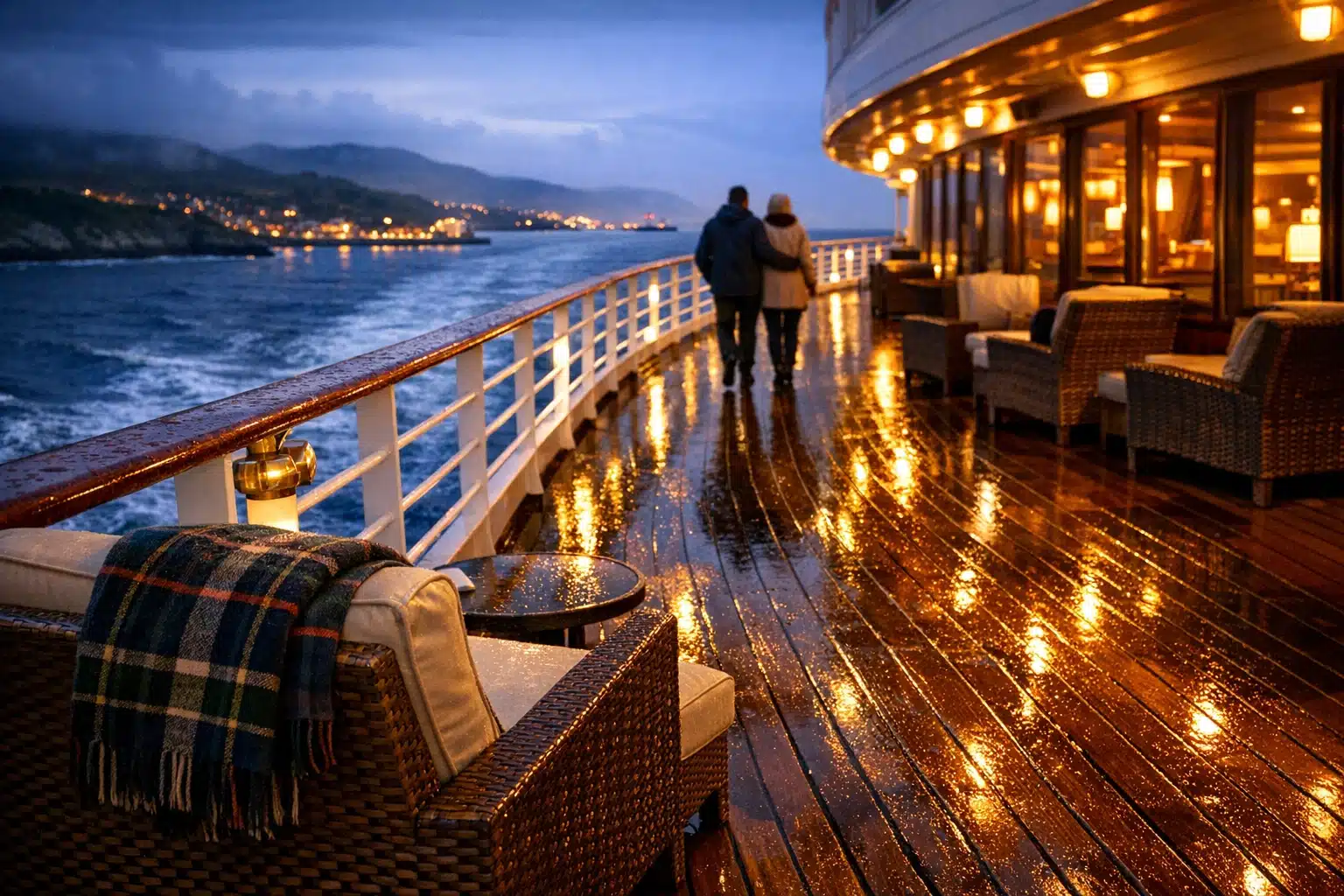
Life on board a 3-night cruise has a different tempo from a week-long voyage. The atmosphere is usually more immediate. People board with energy, explore the decks quickly, and settle into holiday mode within hours rather than days. There is less waiting for the trip to “get going” because the schedule begins working straight away: sailaway drinks, the first dinner, live music, quizzes, theatre, or simply a windy lap around the promenade deck while the coast slowly fades into dusk.
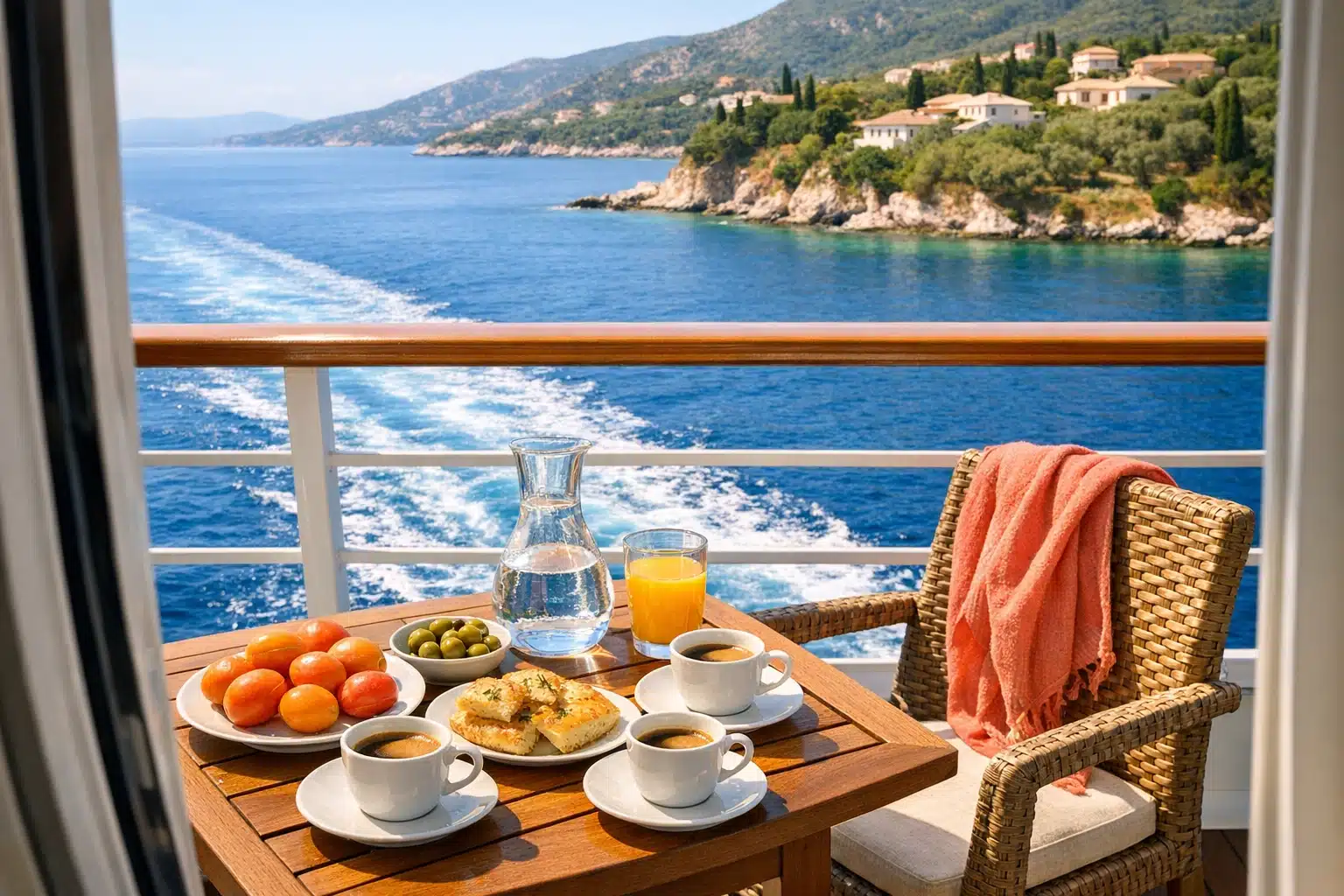
This is one reason cabin choice matters a little differently on a short cruise. On a seven-night itinerary, the cabin becomes a semi-private base for a longer stay. On a 3-night trip, it is more like an efficient retreat between meals, ports, and evening events. Interior cabins usually offer the lowest fares and can make sense if you plan to spend most of your time in public spaces. Ocean-view cabins add daylight and a stronger sense of place, which can be especially welcome on scenic UK routes where weather and coastline are part of the entertainment. Balconies are appealing if you value privacy and uninterrupted views, though on a brief cruise some travellers decide the premium is better spent on dining, excursions, or a future trip.
- Interior cabins suit value-focused travellers and heavy onboard users
- Ocean-view cabins help connect you to the route and the weather
- Balcony cabins work best for those who want quiet scenic time of their own
Dining is another strong advantage of the format. Even a short sailing usually includes multiple restaurants or meal styles, from main dining rooms to buffets and speciality venues. Because there are only a few evenings on board, it is worth deciding in advance whether you want to keep things simple or treat one dinner as an event. Some travellers prefer the sociable structure of a fixed dining time, while others like flexible dining that lets them linger over sunset on deck and eat later. Neither is universally better; the right choice depends on whether you value routine or freedom.
Entertainment on mini cruises is often compressed into a lively schedule. Cruise lines know guests want visible value, so evenings can feel busy in a good way. You might see one production show, a guest musician, themed bars, cinema screenings, lectures, or deck parties depending on the ship. There is also the understated pleasure of doing very little. A mug of tea in a lounge, a patch of grey-blue sea beyond the glass, and the low hum of the ship can be enough. That is the hidden luxury of a short cruise: it does not need elaborate planning to feel restorative.
For practical comfort, pack as though you will encounter several seasons in a single weekend. UK waters can serve sun, wind, mist, and sharp evening chill in quick succession. Layers, comfortable shoes, a waterproof outer layer, and any motion-sickness remedies you trust are more useful than overpacking formalwear. On a small timescale, convenience is part of the pleasure, and the best onboard experience often comes from keeping decisions simple.
Making Shore Time Count Without Turning It Into a Race
The biggest planning challenge on a 3-night cruise is not the sea; it is time. Port calls on short itineraries can be satisfying, but they are rarely generous. By the time the ship is cleared, guests disembark, and transport is arranged, a “full day” ashore may function more like a focused half day. That does not mean the stop is poor value. It means you need to choose your priorities with more discipline than you might on a longer holiday.
The smartest approach is to define the purpose of each port before you arrive. Do you want scenery, local food, a historic site, or a simple wander? Trying to do all four can turn a pleasant visit into a sequence of watches, maps, and hurried photographs. If your ship calls at a place such as Falmouth, you might spend your time on a harbour walk, a short visit to a maritime museum, and a relaxed seafood lunch rather than attempting an ambitious cross-county dash. If the port is near a major city but not inside it, remember to account for transfers. That elegant skyline on the brochure may still require a shuttle, a tender, or a train connection.
- Pick one main goal and one optional extra for each stop
- Check whether the ship docks directly, tenders, or uses shuttle buses
- Allow more time than you think you need to return to the port
- Keep weather in mind, especially on exposed coastal routes
There is also a useful comparison to make between independent exploration and ship-organised excursions. Independent plans offer freedom, often cost less, and can make a port feel more personal. They are ideal when the town centre is walkable or the destination is compact. Ship excursions, however, reduce friction. On a short cruise, that matters. If your stop involves distance, complicated local transport, or a high-value sight you would hate to miss, the convenience of an organised tour can be worth the premium. The ship will also wait for its own excursion if there is an operational delay, which is not a minor detail when schedules are tight.
One of the quiet joys of coastal cruising is that the arrival and departure can be as memorable as the visit itself. Stand on deck early if the ship enters a harbour at dawn, or stay outside as the evening light thins over breakwaters and cliffs. Those transitions often provide the most distinct sense of place. A port is not just a checklist item; it is a moment in a larger coastal journey. If you treat shore time as a carefully chosen taste rather than a conquest, a 3-night cruise becomes more satisfying and much less rushed.
Budget, Booking Strategy, and a Final Word for Short-Cruise Travellers
Budgeting for a 3-night UK cruise requires a slightly different mindset from pricing a longer holiday. At first glance, the fare may look attractively low, especially when lines promote mini cruises during quieter seasons. Yet the per-night cost can sometimes be higher than on a week-long voyage because fixed operating costs, such as embarkation services, port fees, and onboard staffing, are spread across fewer days. This does not make the short cruise poor value. It simply means you should compare total experience rather than headline price alone.
Start by separating the essentials from the extras. The base fare commonly covers accommodation, standard meals, and much of the onboard entertainment. Beyond that, your total can shift depending on cabin category, drinks packages, speciality dining, Wi-Fi, parking, rail travel to the port, gratuities where applicable, and any excursions you book. For a quick getaway, these extras can shape the value calculation more dramatically than they would on a longer trip.
- Watch the final price, not only the advertised starting fare
- Price transport to the departure port before booking
- Check whether a drinks package makes sense for only three nights
- Consider shoulder-season sailings for a better fare-to-experience balance
Booking strategy matters too. If your dates are fixed and you want a specific cabin type, booking earlier usually gives you stronger choice. If you are flexible and mainly want a low-commitment escape, late deals can appear, particularly outside school holidays. The trade-off is that short cruises are popular with first-timers and celebratory travellers, so desirable weekends and sailaways from convenient ports can fill faster than expected. It is wise to think not just about price, but about friction. A cheap fare loses some shine if the port is awkward for you to reach or if embarkation day becomes a stressful scramble.
So who is this type of trip best for? It suits travellers who value ease, variety, and atmosphere more than deep destination immersion. Couples looking for a break, curious first-time cruisers, busy workers with limited leave, and retirees who enjoy gentle coastal scenery can all get a lot from three nights at sea. Families can enjoy it too, provided expectations are realistic and the emphasis is on shared experience rather than packing in landmarks.
Conclusion for the target traveller: if you want a compact holiday that feels distinct from an ordinary weekend, a 3-night UK cruise is a strong option. It will not replace the depth of a long sailing or the freedom of a road trip, but it does offer something unusually efficient: changing views, easy logistics, and the pleasure of stepping briefly out of routine. For people who want the coast, comfort, and a manageable commitment, that is often exactly enough.