Drone Buying Guide: Features That Matter Most
Buying a drone can feel simple until spec sheets start shouting at you with 4K video, obstacle sensors, transmission range, and flight modes that sound like science fiction. The real challenge is not finding a drone with the longest feature list, but choosing one that matches how and where you will actually fly. A smart purchase saves money, shortens the learning curve, and reduces the odds of ending up with an expensive gadget that rarely leaves its case.
Outline
This guide follows a practical path from the ground up. First, it explains how to match a drone to your purpose, skill level, and budget. Next, it breaks down flight performance, including battery life, wind handling, control range, and stability. Then it looks closely at camera and imaging features, where numbers can mislead as easily as they inform. After that, it covers safety systems, software quality, and legal factors that affect day-to-day ownership. Finally, it brings everything together with a realistic buying checklist focused on value rather than hype.
1. Start With Your Purpose, Skill Level, and Budget
The first and most important drone feature is not on the box. It is the answer to a simple question: what do you want the drone to do? A traveler who wants a light, easy-to-pack camera has different needs from a beginner practicing in open parks, and both are different from a creator who expects clean footage for commercial edits. When buyers skip this step, they often pay for features they never use or sacrifice essentials they discover only after the first few flights.
A useful way to narrow the field is to define your main flying scenario. Think about whether you care most about portability, image quality, speed, or simplicity. For example:
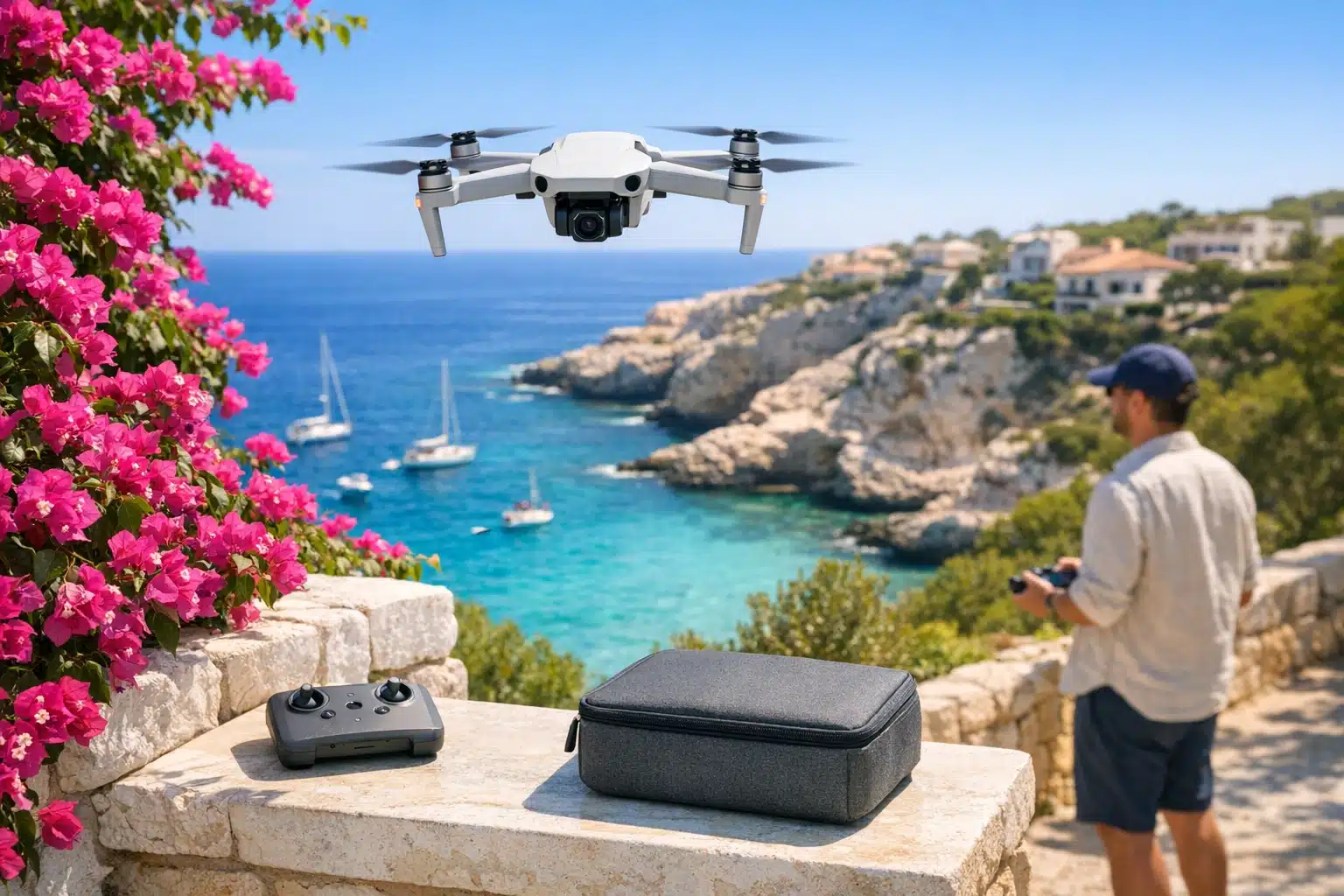
• A casual traveler may value a compact foldable design, quick launch, and strong auto modes.
• A new pilot may need stable hovering, beginner-friendly controls, and low replacement costs for props and batteries.
• A serious video creator may prioritize a larger sensor, better dynamic range, and advanced manual settings.
• An action-focused flyer may lean toward agility and speed, even if image quality is less cinematic.
Budget matters, but it should be viewed as total cost, not sticker price. The drone itself is only the beginning. Many pilots eventually buy extra batteries, a multi-battery charger, spare propellers, a memory card, ND filters, and a carrying case. That means a drone advertised at a moderate price can become a much bigger investment once you build a practical kit. Some retailers sell bundle packages that improve value, but they are not always bargains. If a bundle includes accessories you will not use, the lower per-item price is still wasted money.
Weight is another early decision point. In several markets, drones at or above 250 grams can trigger extra registration or operating requirements, while lighter models may face fewer barriers. That legal threshold can be more influential than a slight difference in camera resolution. A small sub-250g drone may be less intimidating to carry and easier to fly casually, while a heavier model often handles wind better and can support more advanced imaging hardware.
Skill level should guide your feature priorities as much as your budget does. A beginner usually benefits more from strong GPS stabilization, reliable return-to-home, and a forgiving app than from extreme speed or complex manual exposure options. In other words, the right first drone should feel like a patient teacher, not a temperamental race car with propellers. Once you know your purpose, weight preference, and realistic budget, the long list of models becomes much easier to compare.
2. Flight Performance: Battery Life, Stability, Range, and Wind Resistance
People often start with camera specs, but flight performance determines whether the drone is enjoyable to use at all. A drone that hovers steadily, responds predictably, and returns home reliably will usually be more satisfying than one with a better camera but weaker handling. This is especially true for new pilots. A flying camera is still an aircraft first, and the best footage in the world does not help much if the machine struggles to stay composed when conditions turn less than perfect.
Battery life is one of the most misunderstood numbers in drone marketing. Manufacturers typically test flight time under controlled conditions, often with light wind and smooth movement. Real-world results are usually lower. A drone rated for 30 to 40-plus minutes may deliver noticeably less once you add active flying, wind, climbs, and repeated starts and stops. As a practical rule, many pilots expect usable flight times to drop by around 20 to 30 percent from the most optimistic claims. That is why extra batteries often matter more than a small difference in official specifications.
Wind resistance is equally important, especially for travelers and coastal users. Small, light drones are convenient, but physics never takes a day off. A lighter airframe can get pushed around more easily, which affects both safety and image stability. Heavier drones generally track more confidently in breezy conditions, though they may be less convenient to carry. When comparing models, look for clues beyond top speed:
• Stronger motors usually improve position holding and recovery in gusts.
• Better stabilization makes hovering and slow cinematic movement smoother.
• A well-designed controller link can reduce dropouts and give more confidence at moderate distances.
Transmission range also deserves a reality check. Long-range claims are often measured in ideal, interference-free environments. In many places, pilots are expected to keep drones within visual line of sight, so the practical benefit of extreme range is often less about flying miles away and more about maintaining a stable signal nearby in noisy areas. A stronger connection means fewer frozen previews, fewer control hiccups, and a better overall experience.
Look closely at navigation and control systems too. GPS and related satellite positioning help the drone hold its place in the sky, while vision sensors can improve hovering close to the ground or indoors. Flight modes such as normal, sport, and cinematic are not just marketing extras; they change how aggressively the drone accelerates and brakes. Beginners often appreciate slower, smoother modes because they make framing easier and reduce jerky inputs. In calm air, a good drone feels less like a gadget and more like it is reading your intentions half a second ahead.
3. Camera and Imaging Features: What Actually Improves Your Footage
Once the flight basics are covered, the camera becomes the star of the buying decision. This is where many buyers get dazzled by resolution alone. A higher number on the box sounds impressive, but video quality depends on a much wider set of factors: sensor size, lens quality, stabilization, bit depth, frame rates, low-light performance, and how much editing flexibility the files preserve. A mediocre sensor recording high-resolution footage can still look less natural than a better sensor capturing a more modest format.
Sensor size is one of the clearest quality indicators. Many compact drones use sensors around the 1/2.3-inch or 1/1.3-inch class, while more advanced models often step up to 1-inch or larger. In general, a larger sensor gathers more light, improves tonal separation, and performs better in shadow-heavy or sunset scenes. That matters because drone footage often includes bright skies and dark ground elements in the same frame. A camera with stronger dynamic range can hold more highlight detail without turning the land below into a murky patchwork.
Gimbal performance is just as important as the sensor itself. A 3-axis mechanical gimbal is far more valuable than aggressive digital stabilization when you want footage that looks smooth and professional. Without a good gimbal, even beautiful landscapes can appear twitchy, especially during pans or in light wind. If you plan to shoot video regularly, gimbal quality belongs near the top of your checklist.
When comparing video specs, think about output, not just capture. Ask yourself where your footage will live. If you post to social platforms, 4K is often more than enough. Higher resolutions such as 5.1K or similar options can help with cropping and reframing, but they also create larger files and heavier editing demands. Frame rate matters too. For cinematic motion, 24 or 30 fps may be enough. For smoother action or slow motion, 60 fps can be more useful. Then there is color depth:
• 8-bit video is common and fine for casual use.
• 10-bit recording gives more room for color grading and subtle sky tones.
• Flat or log color profiles are valuable for editors, but less convenient if you want ready-to-share results straight from the drone.
Still-photo buyers should also look beyond megapixels. Lens sharpness, RAW capture, and exposure control often matter more than a giant number on a product page. Some higher-end drones include features such as adjustable aperture or a mechanical shutter, which can help in specialized work, though many casual users will never need them. If your goal is vacation clips, family travel footage, or social media reels, a well-balanced camera system with dependable auto exposure may beat a feature-packed setup that demands heavy editing.
The easiest mistake is buying for bragging rights instead of actual output. A drone that delivers clean, stable footage in real conditions is more useful than one that promises cinema in theory but struggles at dusk or stutters in wind. Good aerial imaging is a blend of hardware, software, and restraint. The sky may feel limitless, but your storage, editing time, and patience are not.
4. Safety, Software, and Ownership Experience
A drone does not live on specifications alone. It lives in firmware menus, controller feel, battery management screens, map warnings, and the small moments when something unexpected happens in the air. That is why safety systems and software quality deserve as much attention as camera resolution. For many buyers, these are the features that separate a fun tool from a stressful one.
Obstacle sensing is a major example. Some drones offer only downward sensors, some add forward and rear detection, and others provide more complete coverage in multiple directions. More sensors can reduce risk, especially for beginners, but they are not magical shields. Thin branches, low light, reflective surfaces, and fast movement can still confuse automated systems. Treat obstacle avoidance as a helpful assistant, not a substitute for good judgment. Even advanced systems have limits, and the pilot remains responsible.
Return-to-home is another feature worth examining closely. In principle, it is simple: if signal drops or battery runs low, the drone can fly back automatically. In practice, its reliability depends on a good satellite lock, a correct home point, and a safe return altitude. Pilots who understand how this works tend to trust it appropriately; pilots who assume it is foolproof sometimes learn otherwise. A strong app should make these settings visible and easy to confirm before takeoff.
Software quality affects every flight. Look for a mature mobile app, clear battery information, stable firmware updates, and sensible flight logs. A good app makes preflight checks painless and presents key warnings without turning the screen into a wall of anxiety. It should also offer intelligent flight modes that are useful rather than gimmicky. Tracking, waypoint planning, quick-shot modes, and panorama functions can be excellent tools when implemented well.
Do not overlook ecosystem and support. Ask practical questions:
• How easy is it to find genuine spare propellers and batteries?
• Is customer support responsive in your region?
• Are repair programs or protection plans available?
• Does the manufacturer have a solid history of updating products and fixing bugs?
Legal and regional features matter too. Some drones include geofencing or location-based restrictions, which can help prevent unsafe flights but may frustrate users who do not understand local rules. In many jurisdictions, registration, pilot competency requirements, remote identification, or location restrictions can apply depending on weight and intended use. The exact rules vary, so buyers should always check current local guidance before flying. This is not the glamorous side of drone ownership, yet it directly affects how often and where you can use what you buy.
In the end, the best drone software disappears into the background. It quietly keeps the aircraft stable, communicates clearly, and lets you focus on the sky rather than on troubleshooting. That kind of reliability is easy to ignore in a store and impossible to ignore once you are 60 meters up with fading light and one battery left.
5. How to Make the Final Choice: Value, Accessories, and Smart Trade-Offs
By the time you compare a few serious options, the hardest part is usually not understanding the features. It is deciding which compromises you can live with. No drone is perfect. Some are easier to carry, some shoot better footage, some handle wind more confidently, and some offer the safest beginner experience. The smartest purchase comes from choosing the right trade-off pattern rather than chasing a mythical all-in-one machine.
Start by calculating the real ownership cost over the first year. Many buyers underestimate how quickly accessories become essential. A practical drone kit often includes:
• At least one or two extra batteries
• Spare propellers
• A fast charger or multi-battery hub
• A high-speed memory card
• A protective bag or hard case
• Filters for bright conditions if video is a priority
These extras are not glamorous, but they shape how much you actually fly. One battery can turn an outing into a short demo. Three batteries can turn it into a proper session. In many cases, a mid-range drone with a strong accessory bundle is more useful than a slightly better aircraft bought bare.
Next, compare models by scenario instead of by score. For instance, a sub-250g travel drone may lose some wind performance and advanced imaging options, but it gains convenience, easier packing, and in some places fewer regulatory hurdles. A larger mid-range model may offer stronger obstacle sensing, longer endurance, and better low-light footage, but it usually asks for more space in your bag and a larger budget. That trade-off is not a problem if it matches how you plan to fly.
Buying used can be worthwhile, but caution matters. Check battery health, gimbal condition, controller response, charging cycles if available, and whether the aircraft has ever been crashed. Confirm that the drone is properly reset and can be activated without account issues. A low used price is less exciting if the battery is worn out or if replacement parts are hard to find.
Before you decide, build a short personal checklist and rank the items. A simple example might be:
• Must have: stable GPS hover, 4K video, spare batteries within budget
• Nice to have: obstacle sensing on multiple sides, vertical shooting, RAW photos
• Not important: extreme top speed, oversized resolution, advanced pro codecs
This approach keeps the buying process grounded. The drone market loves impressive labels, but the best choice is usually the one that makes you want to fly more often with less friction. If a model is easy to carry, easy to trust, and good enough for your actual output, it will create more value than a higher-spec option that stays at home. In drone buying, practicality is often the quiet feature that wins.
Conclusion for Drone Buyers
If you are choosing a drone for the first time or upgrading from an older model, focus on the features that affect real use: purpose fit, stable flight, dependable battery performance, a capable camera, and software you can trust. Resolution headlines and long feature lists are easy to market, but they are not always the reason a drone becomes part of your routine. The right model is the one that matches your budget, local rules, and shooting goals without adding unnecessary complexity.
For casual users, portability and ease of use may matter most. For creators, sensor quality, gimbal performance, and grading flexibility often deserve the bigger share of the budget. For everyone, safety systems, accessory costs, and regulatory requirements should be part of the decision from the start. Buy with your real flights in mind, not an idealized future version of yourself, and you will be much more likely to end up with a drone that earns its place in your bag.