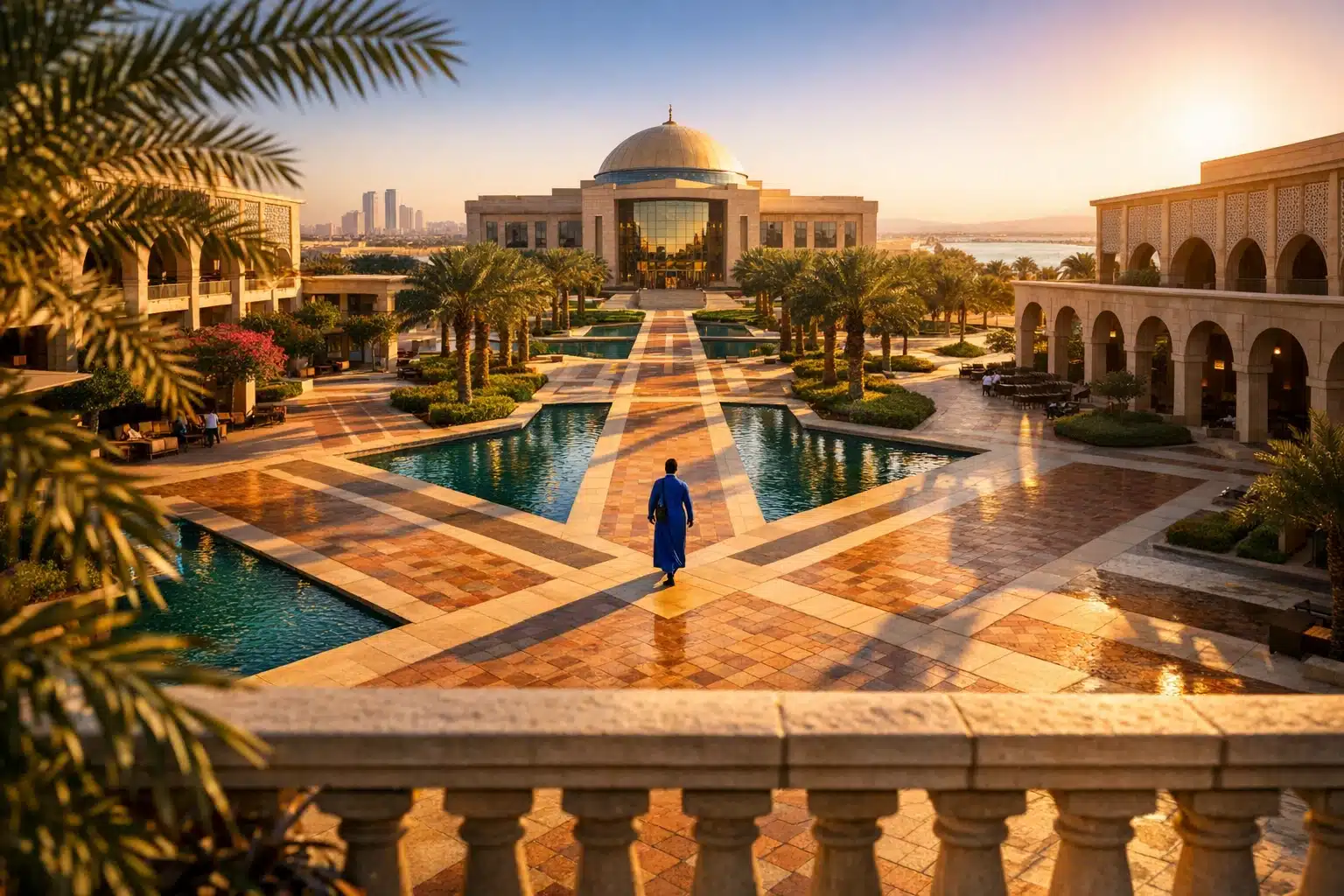
Exploring Scholarship Opportunities in Saudi Arabia
Saudi Arabia is becoming a serious destination for students who want funded degrees, modern campuses, and access to a fast-changing region. Yet scholarships are not simply prizes waiting on a shelf; they favor applicants who understand the system, prepare documents early, and match their goals to the right university. This guide explains where opportunities exist, what they usually cover, and how to judge your own readiness before you apply. If you want a practical roadmap instead of vague inspiration, you are in the right place.
Article outline:
- Why Saudi Arabia is drawing growing academic interest from international students
- The main scholarship routes and what funding packages often include
- How to assess your readiness before spending time on applications
- What makes an application stand out in a competitive pool
- How to prepare for campus life, cultural adjustment, and practical realities after admission
Why Saudi Arabia Has Become a Serious Scholarship Destination
For many students, Saudi Arabia was once seen through a narrow academic lens, usually associated with religious studies, Arabic language learning, or regional specialization. That picture is no longer complete. The country now presents a wider educational landscape shaped by economic diversification, research investment, and a stronger push to connect universities with global talent. In practical terms, that means more international attention on Saudi institutions, especially in engineering, computer science, energy studies, business, public policy, biotechnology, and environmental research.
One reason the country matters is scale. Saudi Arabia has around 30 public universities alongside a growing private higher education sector, and several institutions now seek greater international visibility through research partnerships, exchange programs, and scholarship schemes. Universities such as King Saud University, King Abdulaziz University, Imam Mohammad Ibn Saud Islamic University, Princess Nourah bint Abdulrahman University, and the King Abdullah University of Science and Technology have each built distinct academic identities. KAUST, for example, is especially well known for graduate research, advanced laboratories, and an international faculty base. By contrast, students interested in Arabic, Islamic studies, or social sciences may find stronger alignment at other institutions.
Saudi Arabia is also strategically located. It sits at a crossroads between Asia, Africa, and Europe, which can matter for students who want regional exposure without the cost profile of some Western study destinations. Compared with the United States or the United Kingdom, scholarship-backed study in Saudi Arabia can dramatically reduce the financial burden if tuition, housing, and stipends are included. On the other hand, students may find a narrower range of humanities specializations in English than they would in larger Anglophone systems. That trade-off matters, and it should be evaluated honestly.
Another attraction is the country’s development agenda. Under Vision 2030, Saudi Arabia has emphasized innovation, technology, entrepreneurship, and human capital. Universities are part of that story. For applicants, this creates an important clue: scholarships are often not random generosity but strategic investments. Institutions frequently prioritize fields linked to national development goals, such as artificial intelligence, health sciences, renewable energy, logistics, and industrial research.
In short, Saudi Arabia is not just offering seats in classrooms. It is positioning itself as a place where education, research, and national transformation intersect. For the right student, that can be an exciting opportunity. But excitement alone is not enough. A scholarship works best when your academic profile, subject choice, and long-term plans fit the ecosystem you are entering.
Understanding the Main Scholarship Types and What They Usually Cover
If you are exploring scholarship opportunities in Saudi Arabia, the first practical step is to understand that “scholarship” can mean several different things. Some awards are fully funded and cover most core expenses, while others only reduce tuition or support a specific stage of study. Applicants often assume every funded offer includes the same benefits, but that is rarely true. The details vary by university, degree level, field of study, and sometimes by nationality or partnership agreement.
Broadly speaking, students will encounter four common pathways. First, there are university-funded scholarships, which are offered directly by institutions to attract strong domestic or international candidates. Second, some opportunities are connected to government-backed international education initiatives or central admission platforms. Third, research-based funding may be available at the master’s or doctoral level through labs, centers, or faculty-led projects. Fourth, a smaller number of students arrive through bilateral agreements, embassy channels, or cultural exchange arrangements between countries.
What a scholarship covers can differ significantly. A full package may include:
- Tuition waiver or full tuition coverage
- Monthly stipend for living expenses
- University housing or housing allowance
- Medical insurance or access to campus health services
- Annual or initial travel support, depending on policy
- Research support for graduate students in laboratory-based fields
Partial awards, by comparison, may only cover tuition and leave the student responsible for accommodation, transport, food, and visa-related costs. That distinction is not minor. Two scholarships can look equally attractive on a website and produce very different everyday realities once you arrive.
Degree level matters too. Undergraduate scholarships may emphasize academic records, standardized requirements, and language readiness. Graduate scholarships often place much more weight on research fit, publications, recommendations, and alignment with faculty interests. In many systems, postgraduate funding is easier to find in STEM disciplines than in fields with lower research budgets. Saudi Arabia follows a similar pattern in several institutions. Students in engineering, computing, life sciences, or energy-related subjects may encounter more structured funding than applicants in less research-intensive areas, though excellent opportunities still exist in language, law, education, and religious studies.
The smartest approach is comparative, not impulsive. Build a simple table for each scholarship you find: degree, deadline, language of instruction, benefits, renewal rules, GPA threshold, required tests, and restrictions. This turns the search from a hopeful scroll into a strategic process. Scholarships in Saudi Arabia can be generous, but generosity lives in the fine print. Read every benefit, every renewal condition, and every eligibility note before you decide where to invest your energy.
Are You Actually Ready to Apply? A Realistic Readiness Check
Many students begin a scholarship search by asking, “Which universities should I apply to?” A better opening question is, “Am I ready to apply well?” That shift matters because deadlines are only half the battle. A scholarship application is really a test of organization, self-knowledge, and academic fit. If your documents are incomplete, your goals are vague, or your program choice is mismatched, even a strong academic record can lose momentum.
Start with the academic basics. Do your grades meet the typical standard for the level you want to enter? For undergraduate study, institutions often examine secondary school performance closely. For master’s and doctoral programs, your bachelor’s or master’s transcript, research background, and subject alignment become much more important. A student with a solid GPA and a coherent academic story usually stands out more than someone with scattered interests and a generic ambition statement.
Language readiness is another major checkpoint. Not every program requires Arabic, especially in science and engineering, where English is often the medium of instruction. However, many universities still require proof of English proficiency through tests such as IELTS or TOEFL for English-taught programs. Some programs in Arabic studies, Sharia, or humanities may expect Arabic competence or offer preparatory pathways. The wise applicant does not guess. They verify.
Your document set should also be ready long before the deadline. A typical application may require:
- Passport copy with sufficient validity
- Academic transcripts and degree certificates
- Official translations if documents are not in Arabic or English
- Statement of purpose or personal essay
- Letters of recommendation
- CV or resume for graduate applicants
- Language test scores where required
- Research proposal for some master’s or PhD programs
Beyond paperwork, ask harder questions. Can you explain clearly why Saudi Arabia is the right place for your field? Are you prepared to live in a cultural environment that may differ sharply from your home country? Have you researched city conditions, climate, campus rules, and academic expectations? Readiness is not only academic. It is logistical and emotional.
A useful comparison helps here. An unready applicant often rushes to submit whatever is available, hoping quantity will replace quality. A ready applicant applies more selectively, tailors each submission, and anticipates verification steps. Think of it like packing for a long journey across desert roads: enthusiasm gets you to the vehicle, but preparation keeps you moving when the terrain changes. If you can answer the academic, language, document, and lifestyle questions honestly, you are no longer just interested. You are approaching readiness.
How to Build a Competitive Scholarship Application That Feels Credible
Once you know you are eligible, the next challenge is persuasion. Scholarships are not awarded only to the most talented applicants on paper; they are often awarded to the applicants who present their strengths with the most clarity and relevance. A competitive application does not sound grand. It sounds specific, informed, and believable.
The statement of purpose is where many applicants rise or fall. Weak statements are filled with large claims and little substance: “I want to change the world,” “I have always loved knowledge,” or “This university is my dream.” These phrases are common because they feel safe, but they tell selectors almost nothing. A stronger statement explains your academic path, identifies your field of interest, and shows why a particular Saudi university is a credible match. If you are applying for data science, mention the kind of research, industry direction, or faculty environment you are seeking. If you want to study Arabic linguistics or Islamic finance, show that you understand how the institution’s strengths connect with your goals.
Recommendations matter for the same reason. The best letters are not merely polite; they are detailed. A useful recommender can describe your analytical ability, writing quality, reliability, research potential, or classroom performance with examples. Generic letters full of praise but empty of evidence rarely help as much as applicants imagine.
Graduate candidates should pay special attention to research fit. In Saudi Arabia, as in many countries, postgraduate funding can be closely tied to laboratory priorities, faculty projects, or institutional research goals. A master’s or PhD application becomes stronger when it reflects that reality. Instead of writing about a broad wish to “study technology,” define whether your interest lies in machine learning for healthcare, desalination systems, renewable energy storage, or another precise area. Specificity signals seriousness.
Here are a few habits that usually strengthen an application:
- Customize each statement instead of reusing one version everywhere
- Check whether your chosen program is currently active and open to international applicants
- Follow word limits and document instructions exactly
- Use professional translations and consistent naming across all files
- Prepare a clean CV that highlights results, not just responsibilities
- Apply early enough to solve technical or verification issues
There is also an ethical side to competitiveness. Do not exaggerate internships, publications, language levels, or volunteer work. Universities verify more than many students expect, and misrepresentation can sink an otherwise promising file. The strongest applications create trust. They show that the applicant has done the reading, respected the process, and built a case that holds together from the first line to the final attachment.
Preparing for Life After Admission: Culture, Budget, Campus Reality, and Long-Term Value
Winning a scholarship is not the finish line. It is the gate opening onto a new landscape, and landscapes have weather, routines, and rules. Students who prepare for life after admission tend to settle faster, perform better academically, and avoid avoidable stress during the first semester. Saudi Arabia can offer a rewarding student experience, but it helps to arrive with informed expectations rather than cinematic assumptions.
First, consider place. Student life in Riyadh does not feel identical to student life in Jeddah, Dhahran, Madinah, or Thuwal. Riyadh is the capital and offers a large urban setting, policy institutions, corporate activity, and expanding cultural life. Jeddah is more coastal and commercially oriented, with a different rhythm. Research-oriented environments such as KAUST have their own campus ecosystems that may feel more self-contained than city-based universities. Climate also matters. Summers can be intensely hot in much of the country, and that affects transport habits, budgeting, and daily comfort.
Second, understand costs even if your scholarship is generous. A stipend can be very helpful, but your spending pattern determines whether it feels comfortable or tight. Daily expenses may include food, local transportation, phone service, books, clothing, and personal travel. If housing is not fully covered, budgeting becomes even more important. Compare the total package, not just the headline word “funded.” A fully funded offer with modest monthly support can still require careful planning, while a partial scholarship in an expensive city may create pressure from the first month.
Third, learn the campus and social environment. Saudi society has undergone visible changes in recent years, yet universities still differ in rules, housing structure, and student life expectations. Read official student guides, connect with current students where possible, and pay attention to orientation materials. Respect for local norms is not a burden; it is part of functioning well in a new academic community.
Finally, think beyond arrival. Ask what the degree can do for your future. Does the program offer strong faculty mentoring, internships, industry links, or research output? Are alumni active in your field? If you hope to work after graduation, study the current visa and employment framework rather than assuming a scholarship automatically converts into a job pathway. In some cases, the degree may be most valuable as a springboard to research, entrepreneurship, public service, or regional expertise rather than immediate local employment.
The strongest applicants are also the strongest planners. They imagine the day after acceptance, the first week on campus, and the first year of study. That is where scholarship value becomes real. A funded place is important, but a well-used funded place can reshape an academic career.
Conclusion for Future Applicants
If you are considering Saudi Arabia for scholarship study, the key question is not only whether funding exists, but whether your goals fit the opportunities on offer. The country can be an excellent option for students interested in research growth, strategic disciplines, Arabic learning, Islamic studies, or regional engagement, especially when a strong funding package reduces financial barriers. Still, a successful application depends on careful comparison, complete documents, realistic self-assessment, and a clear reason for choosing a specific institution. For students who are willing to prepare with precision instead of rushing with hope alone, Saudi Arabia may offer more than a scholarship. It may offer a serious academic platform for the next stage of your education.