All-New Hyundai Tucson: An Overview
The Hyundai Tucson has become a central player in the compact SUV market because buyers now expect one vehicle to do almost everything: carry a family, calm a crowded commute, stretch fuel budgets, and still feel fresh every time the door opens. The all-new Tucson steps into that demanding role with dramatic styling, broader powertrain choice, and a cabin that tries to deliver near-premium atmosphere without wandering into premium-brand pricing.
Ahead, this overview moves from big-picture context to cabin design, then out onto the road, through the technology stack, and finally to the question that matters most when the brochures are closed: is the Tucson the right compact SUV for the way you actually live?
Outline and Why the New Tucson Matters
The Hyundai Tucson sits in one of the most fiercely contested corners of the car market. Compact SUVs are no longer niche family wagons with a little extra ground clearance; they are the default choice for millions of buyers who want one vehicle to cover school runs, highway trips, weekend errands, and the occasional long vacation. That puts the Tucson in direct conversation with established favorites such as the Toyota RAV4, Honda CR-V, Nissan Rogue, Mazda CX-5 and CX-50, Ford Escape, Subaru Forester, and even its close cousin, the Kia Sportage. In that company, a vehicle cannot survive by being merely competent. It has to give shoppers a reason to remember it.
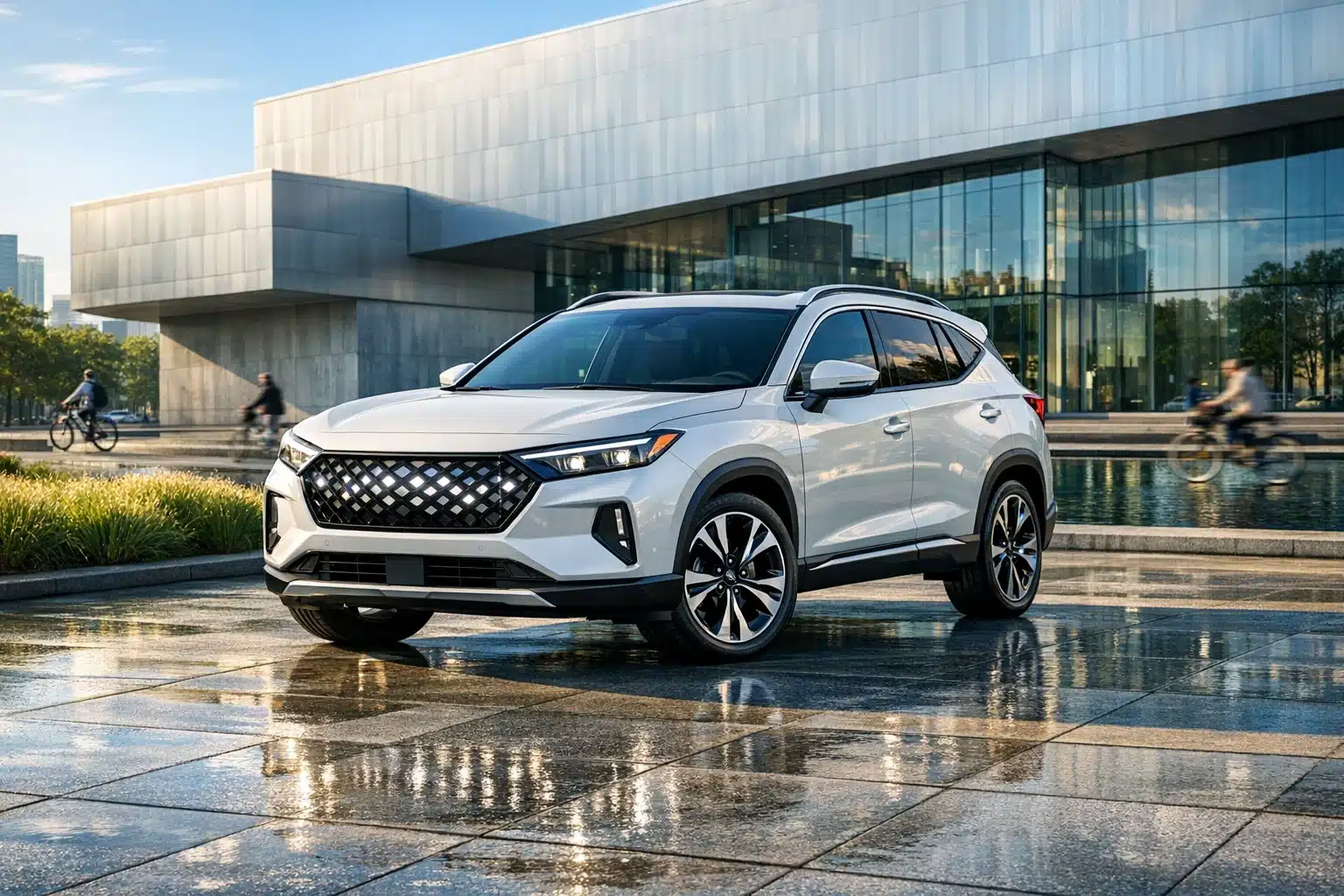
This is where the latest Tucson changes the mood. Earlier generations were sensible and easy to recommend, but they often played the role of the quiet student in a loud classroom. The newer model arrives with a far more assertive identity. Its exterior uses sharp surfacing, hidden lighting elements in the grille, and a profile that feels more sculpted than soft. The aim is obvious: make the Tucson look less like anonymous transport and more like a product someone genuinely chooses.
That visual shift matters because the segment has changed. Buyers now compare not only fuel economy and cargo space, but also screen quality, cabin atmosphere, software responsiveness, and whether the car feels emotionally current. Hyundai has clearly recognized that reality. The Tucson’s broader appeal comes from trying to combine several traits that do not always coexist easily in one package: striking design, practical dimensions, available electrified powertrains, competitive safety features, and pricing that generally remains within mainstream reach.
At a high level, the Tucson’s value proposition can be understood through a few key themes:
– bold styling that stands apart in traffic
– a cabin designed to feel calm, open, and modern
– multiple engine choices in many global markets, including hybrid options
– a feature list that often looks generous for the price
– a comfort-first personality aimed at everyday use
That last point is especially important. The Tucson is not trying to be a rugged off-roader or a sharp-edged performance SUV. Its mission is broader and, in many ways, harder: to be the vehicle that feels right most of the time for most people. When viewed through that lens, the Hyundai becomes easier to judge fairly. It is less about dramatic extremes and more about delivering a polished middle ground. For families, commuters, and buyers moving up from smaller cars, that balance is exactly what makes this model relevant.
Exterior Design, Interior Atmosphere, and Everyday Practicality
If the latest Tucson makes its first impression with confidence, it sustains interest through detail. Hyundai’s design team did not settle for a generic SUV shape with a few decorative creases. The front fascia is the main talking point, where the daytime running lights appear integrated into the grille pattern until illuminated. It is a clever visual trick and one of the reasons the Tucson looks distinctive at night without becoming theatrical. Along the sides, geometric lines cut through the bodywork in a way that gives the vehicle tension and movement, even when parked. Some buyers will prefer the softer look of a CR-V or the rugged understatement of a RAV4, but few will accuse the Tucson of visual indifference.
Step inside, and the tone changes from angular drama to modern calm. The dashboard architecture is typically wide and horizontal, which helps the cabin feel broader than its footprint suggests. Depending on trim and market, the Tucson may offer dual-screen layouts, touch-sensitive climate interfaces, or more conventional control mixes. The impression Hyundai wants to create is clear: this should feel contemporary, not budget-minded. In many trims, soft-touch materials, subtle metallic accents, and a clean center console help the cabin punch above what shoppers might expect from a mainstream compact SUV.
Practicality is where style has to prove itself, and the Tucson generally does. Rear-seat room is one of its stronger arguments. Adults can sit comfortably in the second row on many versions, and families dealing with child seats will appreciate rear doors that open wide enough to make loading less awkward. Cargo capacity varies slightly by powertrain and regional specification, but the Tucson is widely regarded as one of the roomier options in its class rather than one of the tighter ones.
In daily use, several details make a difference:
– rear seat space that feels usable for actual adults, not just short trips
– a cargo area shaped for strollers, shopping bags, and travel cases
– cabin storage for phones, bottles, cables, and small personal items
– a driving position that tends to suit a wide range of body types
There are, of course, trade-offs. Some versions use touch-heavy controls that may look sleek but can be less intuitive than traditional buttons when you are adjusting settings on the move. Fingerprints also collect quickly on glossy surfaces, which is the kind of small annoyance owners notice long before journalists stop mentioning design language. Even so, the Tucson makes a persuasive argument by blending style with everyday usefulness more effectively than many rivals. The Mazda CX-5 may feel more overtly upscale in some trims, and the Subaru Forester may win on outward visibility, but the Hyundai’s blend of space, visual freshness, and comfort-focused packaging gives it a broad and appealing middle ground.
Powertrains, Ride Quality, and Efficiency
The mechanical story of the Hyundai Tucson is one of range and flexibility. Depending on where you live, the lineup may include a naturally aspirated gasoline engine, smaller turbocharged units, hybrid models, plug-in hybrid variants, and in some markets even diesel options. That breadth is not just a catalog exercise. It reflects how differently buyers prioritize cost, performance, fuel economy, and driving distance. In North America, for example, the standard non-hybrid Tucson has commonly used a 2.5-liter four-cylinder engine with output around 187 horsepower, while hybrid versions in many markets produce roughly 226 horsepower and the plug-in hybrid rises to about 261 horsepower. Exact figures vary by region and model year, but the hierarchy remains broadly the same.
For many buyers, the standard gasoline engine will be perfectly acceptable rather than particularly exciting. It is tuned for smoothness and predictability, not thrill-seeking. Around town, it does its work without fuss, and on the highway it feels composed enough for regular long-distance use. What it does not deliver is the instant low-speed shove that some turbocharged rivals provide. If you often carry passengers, merge into fast traffic, or simply enjoy a more effortless response, the hybrid powertrain is likely the more satisfying choice.
The hybrid is where the Tucson becomes notably more compelling. Electric assistance helps fill in torque at lower speeds, making the vehicle feel lighter on its feet in real traffic than the base engine might suggest on paper. It also improves efficiency, which matters more than ever in a segment bought by households watching monthly costs as closely as sticker prices. Plug-in hybrid versions go a step further by offering a meaningful amount of electric-only driving for short commutes in some markets, allowing owners to cover routine errands with little or no fuel use if charging is convenient.
On the road, the Tucson leans toward comfort over corner-carving aggression. The suspension is usually tuned to absorb broken pavement with calm, which suits family buyers and commuters well. Steering tends to be accurate enough without feeling especially chatty, and noise isolation is generally competitive. This is not the SUV that begs to attack a winding road, but it rarely feels unsettled or crude. In that sense, it mirrors the priorities of much of its audience.
A practical way to think about the lineup is this:
– choose the standard gasoline model if purchase price matters most
– choose the hybrid if you want the strongest mix of performance and efficiency
– choose the plug-in hybrid if your routine supports charging and you value electric commuting
– consider all-wheel drive if winter weather or gravel roads are part of everyday life
Compared with rivals, the Tucson’s driving character lands in a smart position. The Mazda CX-5 feels sportier, the Subaru Forester more outdoorsy, and the Toyota RAV4 Hybrid often sets the benchmark for reputation-backed efficiency. Yet the Hyundai responds with a combination of refinement, available electrification, and easygoing road manners that makes it feel thoughtfully calibrated for ordinary life. Sometimes the most impressive engineering is not dramatic; it is the kind that fades into the background and makes every trip less tiring.
Technology, Connectivity, and Safety Systems
Technology is now a major reason people choose one compact SUV over another, and the Tucson understands that reality. In many trims and markets, Hyundai offers a dashboard that looks clean, digital, and modern rather than cluttered. Screen sizes vary by specification, but the broader point is that the Tucson presents itself as a connected product, not simply a vehicle with a token touchscreen attached. Depending on version, buyers may find digital instrument displays, large central infotainment screens, navigation, connected services, wireless charging, multiple USB ports, digital key functionality, and remote vehicle controls through a smartphone app.
There are a few interesting nuances here. Some Tucson versions with smaller infotainment units have offered wireless Apple CarPlay and Android Auto, while certain larger-screen setups in some model years relied on wired connections. That sounds like a small issue until you live with it every day, because convenience in daily interaction matters more than spec-sheet theater. Hyundai’s interface design is usually logical, and menus tend to be easier to understand than systems that try too hard to look futuristic. Even so, touch-based climate controls on some versions may divide opinion. They clean up the dashboard visually, but traditional knobs still win the usability contest when you want instant adjustments without glancing away from the road.
The Tucson also scores well by offering features that used to belong mostly to more expensive categories. Depending on trim, owners may find a surround-view monitor, blind-spot camera views displayed in the instrument cluster, remote parking assistance, premium audio, heated and ventilated seats, and configurable driver displays. Not every shopper needs those extras, but they help the Tucson feel current in a market where buyers increasingly expect their vehicle to behave like a well-designed device.
Safety is another area where Hyundai has made the Tucson easy to take seriously. Standard or available driver-assistance features often include:
– forward collision warning with automatic emergency braking
– lane keeping assistance and lane following support
– blind-spot monitoring
– rear cross-traffic alert
– adaptive cruise control
– driver attention monitoring
– safe exit warnings on some trims
These systems do not replace attentive driving, but they do add meaningful support in crowded modern traffic. Compared with rivals, the Tucson’s safety suite is usually competitive not only in content but also in how early useful features appear in the trim walk. That matters because many buyers shop lower and mid-range models, not fully loaded flagships.
In practical terms, the Tucson’s technology works best when it disappears into routine. A good infotainment system should not feel like homework, and a good safety package should step in quietly when needed rather than constantly nagging. The Hyundai generally understands that balance. It may not lead every category in every region, but it offers the sort of tech-and-safety package that feels contemporary, useful, and appropriately ambitious for a mainstream family SUV.
Value, Rivals, and Who Should Put the Tucson on the Shortlist
The final test for any compact SUV is not whether it shines in one category, but whether it makes sense once price, equipment, fuel use, comfort, and ownership expectations are weighed together. This is where the Hyundai Tucson builds a strong case. Hyundai has spent years moving from budget-minded outsider to serious mainstream contender, and the Tucson reflects that progress clearly. In many markets, it delivers a rich feature list, contemporary styling, and an available electrified lineup at pricing that remains competitive against well-known rivals. That does not automatically make it the cheapest option, but it often makes it look well judged rather than stripped or inflated.
Value also depends on how a vehicle ages in ownership. Here, the Tucson typically benefits from Hyundai’s stronger-than-average warranty reputation in several regions, though exact coverage varies by country and buyers should always confirm local terms. A good warranty does not eliminate maintenance costs or guarantee ideal resale, but it can lower anxiety for shoppers who plan to keep the vehicle for years. For many households, peace of mind is not a minor footnote; it is part of the monthly value equation.
Against competitors, the Tucson has a clear personality. Choose a Toyota RAV4 if long-established hybrid reputation and rugged simplicity top your list. Choose a Honda CR-V if you prioritize polished packaging and a broad sense of familiarity. Choose a Mazda CX-5 if interior richness and sharper handling matter most. The Tucson, meanwhile, appeals to buyers who want a modern-looking SUV with generous space, sensible comfort, and a tech profile that feels current without demanding luxury-brand money.
The best-fit buyers usually look like this:
– families who need a roomy second row and useful cargo area
– commuters who want comfort, available driver aids, and strong efficiency from hybrid versions
– design-conscious shoppers who find many rivals visually conservative
– value-focused buyers who prefer lots of equipment for the money
– drivers moving up from sedans and wanting an easy, non-intimidating SUV experience
There are still reasons to shop carefully within the range. Base engines may suit some budgets but feel less energetic than hybrid alternatives. Top trims can climb enough in price that cross-shopping becomes essential. And if you strongly prefer physical controls for every major function, some Tucson configurations may test your patience. Yet none of those caveats undermine the broader point: the Hyundai Tucson is one of the most complete all-rounders in its class.
For the target audience of compact SUV shoppers, especially families, commuters, and buyers seeking one vehicle to cover many roles, the Tucson deserves serious attention. It pairs standout design with everyday usefulness, offers powertrain choice that reflects real-world needs, and wraps the experience in a cabin that feels more considered than casual. It may not be the absolute specialist’s pick in every category, but as a thoughtful, modern, highly usable package, it earns its place near the top of the conversation.