How to Choose the Right Entry Door for Security, Style, and Durability
Your front door does more than close an opening; it shapes first impressions, blocks weather at the threshold, and stands between your family and the street. Choosing one can feel simple until materials, cores, locks, glass, finishes, and installation details start competing for attention. This guide breaks the decision into practical steps so you can compare options with confidence and avoid paying for features that do not fit your home.
Article Outline
- How to define your priorities before shopping
- What different door materials offer in real-world use
- Which security features matter most and which are often overlooked
- How to match style, glass, color, and hardware to your home
- How to judge durability, maintenance, energy performance, and overall value
1. Start by Defining What Your Entry Door Needs to Do
The best entry door is not automatically the most expensive one, the heaviest one, or the most decorative one in the showroom. It is the door that solves the right problems for your house. Before you compare materials or browse paint colors, take a step back and ask what the opening actually demands. A front entry facing a quiet porch in a mild climate has different priorities than a side entry exposed to hard rain, freezing temperatures, and high foot traffic. Homeowners often start with looks because that is the easiest feature to picture, but function should set the shortlist.
Think about the four pressures every entry door faces: security, weather, appearance, and daily wear. Security includes the strength of the slab, the frame, the lock area, and the glazing if glass is included. Weather performance depends on insulation, seals, finish quality, and whether the door sits under cover. Appearance involves architecture, proportion, color, glass pattern, and hardware. Daily wear covers impacts from bags, pets, children, deliveries, moisture, sun exposure, and constant opening and closing. When you sort your needs into those categories, the decision starts to feel less like guesswork and more like a clean process.
It helps to make a simple priority list before shopping:
- If security is your main concern, focus on solid construction, reinforced strike plates, better locks, and professional installation.
- If curb appeal matters most, narrow your search by architectural style, panel layout, and finish options.
- If durability is the priority, pay special attention to exposure, maintenance demands, and how the material behaves in your climate.
- If comfort and efficiency are important, compare insulated cores, weatherstripping quality, and certified performance ratings.
Budget should be handled honestly at this stage too. A base stock door may look affordable until sidelites, custom glass, upgraded hardware, and installation are added. On the other hand, buying the cheapest slab can be false economy if it dents easily, leaks air, or needs early replacement. It is also worth measuring the opening carefully and noting whether the frame is square, whether the threshold is worn, and whether the swing direction works for furniture, traffic flow, and storm door clearance. A front door is a daily handshake between the house and the world. When you define what that handshake needs to feel like, every later decision becomes sharper and easier.
2. Comparing Entry Door Materials: Steel, Fiberglass, Wood, and Other Options
Material is the backbone of the entire decision because it affects security, maintenance, energy performance, price, and visual character all at once. Most homeowners will choose between steel, fiberglass, and wood, while aluminum and composite options appear more often in contemporary designs or specialty applications. Each material has strengths, tradeoffs, and ideal use cases. There is no universal winner, only a better fit for a given home and climate.
Steel doors are popular for practical reasons. They are typically built with a steel skin over an insulated core, often polyurethane or polystyrene, which helps with stiffness and thermal performance. Many residential steel doors use skins in the 24- to 20-gauge range, and lower gauge numbers mean thicker metal. Steel generally offers strong impact resistance and is often a smart value choice for homeowners who want a secure, straightforward entry. The downsides are cosmetic and environmental. Steel can dent, scratches can expose the surface to rust if left untreated, and in harsh sun or salt-heavy air, finish quality matters even more. Still, for many households, steel is the dependable workhorse of the category.
Fiberglass has become a strong contender because it balances appearance and durability well. It resists swelling, warping, and rot better than wood, and many models convincingly mimic wood grain from a few steps away. That makes fiberglass attractive for homeowners who want the warmth of traditional styling without constant refinishing. It also handles humidity and seasonal swings better than many wood doors. High-quality fiberglass units can be more expensive than basic steel models, but they often return value through lower maintenance and longer-lasting appearance.
Wood remains the classic choice, and for good reason. A real wood door can bring depth, texture, and character that manufactured materials still struggle to match. On a well-kept home, a wood entry can feel like a tailored suit: rich, individual, and unmistakably intentional. Yet wood asks for commitment. It may expand or contract with moisture, its finish needs regular attention, and prolonged exposure can lead to cracking or surface wear. In a protected entryway, wood can age beautifully. In a punishing climate without an overhang, it can become a high-maintenance project.
Other options deserve a brief mention:
- Aluminum doors are often associated with modern aesthetics and corrosion resistance, but quality and thermal performance can vary.
- Composite doors combine materials to improve stability and reduce upkeep.
- Wood-clad or specialty doors can blend visual warmth with more resilient cores.
In simple terms, steel tends to win on value and solid security, fiberglass often leads on low-maintenance versatility, and wood excels when style and authenticity matter enough to justify the upkeep. Material is not the whole story, but it is the decision that shapes almost every other one.
3. Security Features That Actually Matter More Than Marketing
Many entry doors are sold with language that sounds reassuring, but real security comes from a system, not a slogan. A strong slab is useful, yet the frame, hinges, lockset, strike plate, and installation quality often determine how well the entire assembly resists forced entry. Homeowners sometimes focus on decorative hardware because it is visible, while the most important upgrades are tucked into the jamb or hidden behind trim. If security is high on your list, think beyond the surface.
Start with the lock area. A quality deadbolt remains one of the most effective basics. Look for a properly installed deadbolt with a solid throw, paired with a reinforced strike plate anchored by long screws that reach framing, not just the thin jamb material. That small detail matters because many break-ins exploit weak attachment points rather than defeating the lock mechanism itself. Multi-point locking systems can add additional resistance and improve compression along the weather seal, though they are more common on premium units. They can be useful, especially on taller or heavier doors.
The door frame deserves as much attention as the slab. Even a sturdy steel or fiberglass door can underperform if the frame is flimsy, out of square, or poorly secured. Reinforced jambs, better hinge screws, and careful shimming all help the unit act like one solid structure. For outswing doors, security hinges or non-removable hinge pins are important. If the door includes glass, ask what type it is and where it is positioned. Decorative glass beside the lock can be a vulnerability if it allows easy reach-in access. Tempered glass improves safety, while laminated glass can add another layer of resistance because it tends to remain adhered even when cracked.
Useful security features often include:
- A solid or reinforced core
- A high-quality deadbolt and secure strike plate
- Long mounting screws into wall framing
- Reinforced lock and hinge areas
- Limited or strategically placed glass near the latch side
- Motion lighting, a door viewer, or a smart camera at the entry
Smart locks can add convenience, remote control, and user codes for family or service providers, but they should be treated as part of a broader plan, not a substitute for strong physical construction. Battery dependence, connectivity issues, and app quality all matter. For some households, a mechanical deadbolt paired with good lighting and a camera may be simpler and just as sensible. The quiet truth about door security is almost unglamorous: solid materials, thoughtful glazing, reinforced hardware, and professional installation beat flashy promises almost every time.
4. Choosing a Door That Fits Your Home’s Style and Improves Curb Appeal
A front door is one of the few building elements that people study up close and from a distance. It sits in family photos, greets guests, frames package deliveries, and quietly tells the neighborhood what kind of home stands behind it. That is why style matters. The goal is not to chase trends but to choose a design that feels proportionate, welcoming, and believable on your particular house. A door that looks stunning in a catalog can feel oddly theatrical if it fights the architecture around it.
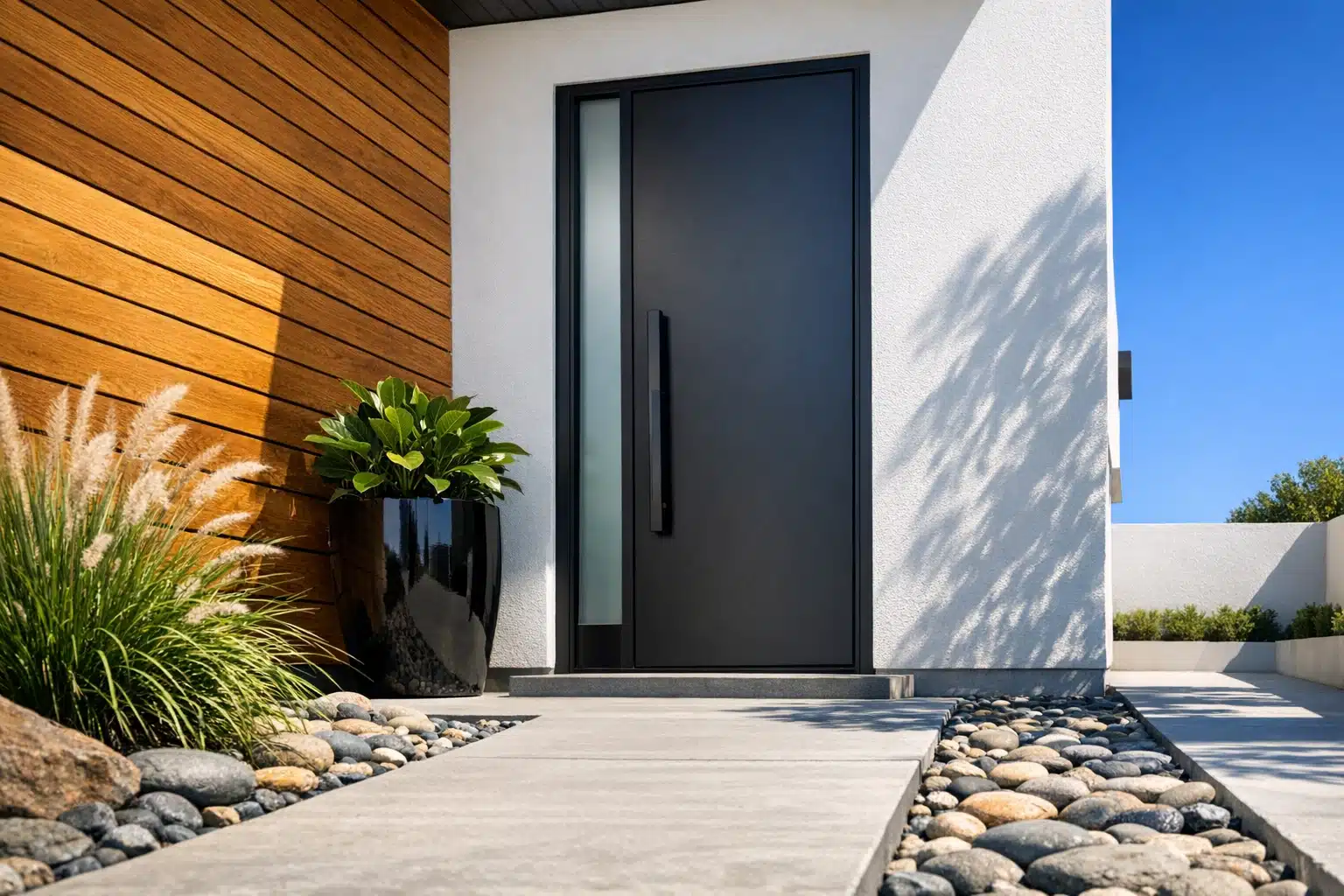
Start with the bones of the house. Traditional homes often work well with symmetrical panel designs, muted colors, and classic hardware. Craftsman exteriors usually suit doors with strong vertical lines and upper glass lites. Farmhouse and cottage styles tend to welcome simple panel arrangements, divided-light glass, and painted finishes with a little softness. Contemporary homes often favor flush slabs, minimal hardware, large glass areas, or dark matte finishes. The key is visual consistency. Your entry should look like it belongs there, not like it was borrowed from another building halfway through its own story.
Color has enormous influence, and it is one of the most enjoyable choices to make. Deep blue, forest green, black, warm red, and natural stain tones can all work beautifully, but context matters more than trend reports. Look at roof color, brick or siding tone, trim color, porch materials, and the amount of natural light the entry receives. A shaded porch can make colors appear cooler and darker, while direct sun may wash them out. Hardware finish also changes the final impression. Black, bronze, satin nickel, and brass each steer the mood in a different direction.
Glass can dramatically transform an entry, but it should be chosen with both privacy and practicality in mind. Consider:
- Clear glass for maximum light and visibility
- Obscure or textured glass for privacy
- Decorative caming for traditional character
- Sidelites and transoms for a grander, brighter entry
Scale is another detail homeowners often overlook. A narrow suburban facade may not benefit from an oversized statement door with elaborate sidelites, while a wide front elevation can make a small plain door look underdressed. Stand back from the curb and think of the entry as a composition rather than a product. The best-looking doors do not shout. They invite. They make the house feel settled, intentional, and complete, as if the front elevation finally remembered the sentence it meant to say.
5. Durability, Maintenance, Energy Performance, and the Final Decision for Homeowners
Once security and style are narrowed down, the smartest final comparison usually comes down to endurance. A door may look excellent on installation day, yet what matters most is how it behaves through summers, storms, muddy shoes, humidity, sunlight, and years of repeated use. Durability is not just about the slab surviving impact. It includes finish retention, resistance to warping, performance of seals, hardware longevity, and how well the threshold and frame continue to operate as the house expands and contracts seasonally.
Climate should strongly influence your decision. In humid or rainy regions, materials that resist swelling and rot deserve extra attention. In freeze-thaw climates, stable construction and tight weatherstripping are valuable because air leaks become immediately noticeable. In sunny exposures, especially south- or west-facing entries, UV resistance and finish quality matter more than showroom appearance. A sheltered porch gives almost any door an easier life, while a fully exposed entry demands tougher materials and more careful maintenance planning. This is where fiberglass often earns its reputation for practicality, and where wood needs the protection and care that allow it to succeed.
Energy performance is another factor worth understanding in plain language. Two common measures are U-factor, which indicates how readily heat passes through the door, and solar heat gain coefficient, which relates to how much solar heat enters through glazing. Lower U-factor generally means better insulation performance. Even without memorizing numbers, homeowners should look for insulated cores, good perimeter seals, quality thresholds, and certified ratings where available. A drafty entry can make a house feel uncomfortable even when the HVAC system is working fine. The difference is often noticed first on winter mornings, when the foyer feels less like a room and more like a weather report.
Maintenance expectations should be realistic:
- Steel may need touch-up paint if chipped or scratched.
- Fiberglass usually asks for less routine maintenance, especially in wet climates.
- Wood needs the most consistent refinishing and inspection.
- Glass, seals, sweeps, and hardware should be checked periodically regardless of material.
For homeowners making the final call, the best approach is simple. Buy the most balanced door your budget comfortably supports, not the most dramatic option in the showroom. Choose a material suited to your climate, confirm the security details in the frame and hardware, and treat installation as part of the product rather than an afterthought. If your priority is low maintenance and long-term practicality, fiberglass is often a strong choice. If value and straightforward strength matter most, steel remains compelling. If craftsmanship and architectural character lead the conversation, wood can be worth it when protected and maintained properly. The right entry door should feel good every time you come home: secure when you lock it, solid when you close it, and visually at ease with the house it serves.