Electric Vehicles Explained: Charging, Battery Technology, and the Everyday Driving Experience
Electric vehicles are no longer futuristic curiosities parked in concept sketches; they are becoming ordinary choices for commuters, families, and fleet buyers alike. As fuel prices shift, cities tighten emissions rules, and charging networks spread, more drivers want clear answers rather than marketing slogans. Understanding how EVs charge, how batteries age, and what daily use really feels like is now essential for anyone comparing a new car.
The EV Shift and a Clear Roadmap for This Guide
Electric vehicles, or EVs, have moved from niche interest to mainstream conversation because they solve several problems at once. They can reduce tailpipe emissions, lower routine maintenance, and use energy more efficiently than internal combustion engines. A typical gasoline engine wastes much of its fuel as heat, while an electric motor converts a far larger share of stored energy into motion. That efficiency advantage matters in everyday economics as much as in environmental debates. For many drivers, the turning point is simple: an EV often feels cheaper to operate, quieter to drive, and easier to live with than they expected.
That said, EV ownership is not just a matter of swapping one powertrain for another. The experience changes how you think about refueling, planning long trips, and even slowing down at intersections. Instead of visiting a gas station for a quick five-minute fill-up, many EV owners charge at home overnight and begin each morning with a “full tank.” The rhythm is different, and once it clicks, it can feel surprisingly convenient. An EV does its best work quietly, almost like a household appliance that learned to sprint.
Before diving deeper, it helps to lay out the structure of the topic. This article first provides an outline, then expands each part in practical detail so readers can follow the logic from basics to ownership decisions. Here is the roadmap:
• Charging fundamentals: home charging, public charging, charging speeds, connectors, and what affects wait times.
• Battery technology: how packs are built, the differences between lithium-ion chemistries, and what influences degradation.
• Everyday driving: acceleration, range, regenerative braking, winter performance, road trips, and cabin comfort.
• Ownership decisions: costs, maintenance, resale questions, and who is most likely to benefit from switching.
The relevance of this topic keeps growing because EV adoption is no longer limited to luxury buyers or early adopters. Compact EVs, family crossovers, delivery vans, and commercial fleets now sit in the same conversation. Governments in many countries are supporting charging infrastructure, while automakers are investing heavily in battery plants and software platforms. Yet interest alone does not replace understanding. A shopper comparing two cars needs grounded answers: How fast can I charge at home? Will cold weather hurt range? Is battery replacement common? Does daily driving feel normal, better, or compromised?
This guide is written for readers who want fewer slogans and more substance. Whether you are shopping for your first EV, advising a family member, or simply trying to understand why the automotive industry is changing so quickly, the sections ahead aim to make the subject clear, balanced, and genuinely useful.
Charging Explained: Home Setups, Public Networks, and Real-World Speed
Charging is usually the first concern people raise, and for good reason. A gasoline car can be refueled quickly almost anywhere, while an EV depends on access to electrical power at the right speed. The good news is that charging is easier to understand once you break it into three layers: Level 1, Level 2, and DC fast charging. Level 1 uses a standard household outlet and is the slowest option. In many cases it adds only around 2 to 5 miles of range per hour, which may be enough for low-mileage drivers but feels limited for households with longer commutes. Level 2 uses a higher-voltage connection, often 240 volts in North America, and is the workhorse for home charging. Depending on the vehicle and charger, it may add roughly 15 to 40 miles of range per hour. DC fast charging is the highway solution, sending direct current at much higher power and often adding substantial range in 20 to 40 minutes, though exact results vary widely.
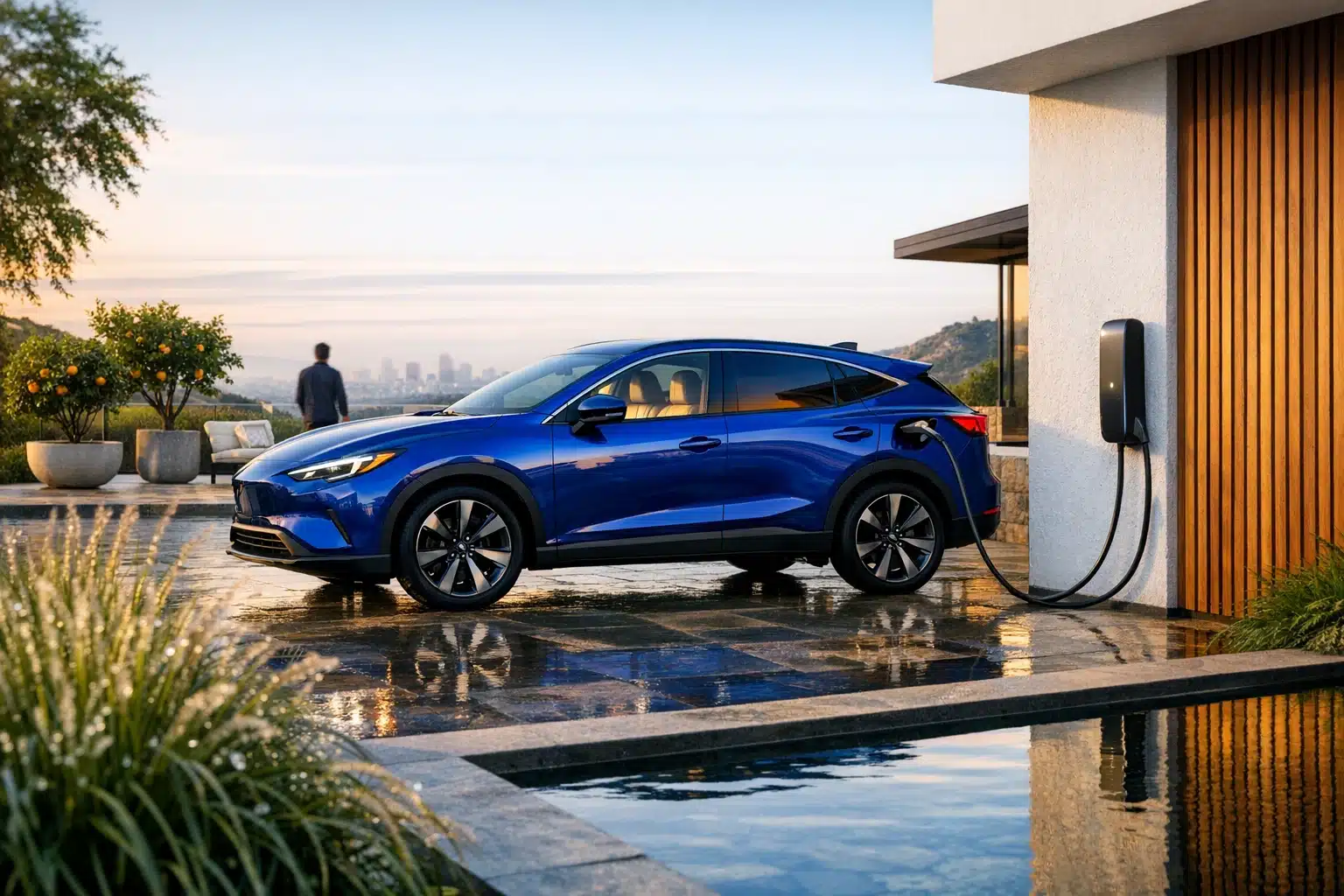
Home charging is the most important piece of the puzzle because it changes the convenience equation. If you can charge where you park, especially overnight, an EV can feel simpler than a gasoline car. You plug in during the evening and unplug in the morning without making a special trip. That is why many analysts say the real comparison is not “charging versus filling up,” but “charging while you sleep versus stopping on your way home.” For drivers with garages or dedicated driveways, installing a Level 2 charger is often the sweet spot. Apartment residents and people who rely on street parking face a different reality, and for them local public charging access becomes far more significant.
Public charging varies by region, operator quality, and station power. Some chargers are ideal for topping up during shopping or work, while others are built for intercity travel. Understanding the difference between power ratings matters:
• AC chargers are common at homes, offices, hotels, and parking areas.
• DC fast chargers are designed for rapid roadside charging and long-distance travel.
• Peak charging speed is not the whole story because EVs charge along a curve, not at a fixed rate.
That last point is crucial. An EV may advertise a high maximum charging speed, but it typically reaches that peak only under favorable conditions such as a warm battery and a low state of charge. Charging often happens fastest between roughly 10 percent and 60 or 80 percent, then slows to protect battery health. This is why experienced EV drivers on road trips often stop more briefly and more strategically instead of always charging to 100 percent.
Cost also matters. Charging at home is often cheaper than public fast charging because residential electricity rates are usually lower than commercial network pricing. In some areas, utilities offer cheaper overnight rates, which makes off-peak charging especially attractive. Public charging can still be cost-effective compared with gasoline, but the gap narrows when using premium fast chargers frequently. In short, the best charging setup depends less on technology alone and more on your routine: where you park, how far you drive, and whether your longest trips are rare events or weekly habits.
Battery Technology: What Is Inside an EV Pack and How It Ages
The battery is the defining component of an EV, not just because it stores energy, but because it shapes range, weight, cost, charging behavior, and resale confidence. Most modern EVs use lithium-ion batteries, yet that term describes a family of chemistries rather than a single formula. The pack itself is usually made of many small cells grouped into modules, then assembled into a larger enclosure under the floor of the car. This layout helps lower the center of gravity, which can improve stability and handling, though it also adds substantial mass.
Several battery chemistries are common in the market. Nickel-rich chemistries such as NMC, short for nickel manganese cobalt, and NCA, short for nickel cobalt aluminum, tend to offer strong energy density, which helps with longer range in a given battery size. LFP, or lithium iron phosphate, generally has lower energy density but can offer benefits in cost, thermal stability, and durability. That is one reason LFP packs have become more common in some entry-level and high-volume EVs. Chemistry choices involve trade-offs rather than a single winner:
• Higher energy density can support more range but may cost more.
• LFP often tolerates frequent full charging better than many nickel-rich chemistries.
• Different chemistries perform differently in cold weather, fast charging, and packaging needs.
Battery management systems play an equally important role. These electronic systems monitor voltage, current, and temperature, balancing cells and protecting the pack from harmful operating conditions. In practical terms, the software is the quiet guardian beneath the floor. Thermal management is another major factor. Most modern EVs use liquid cooling or heating to keep the pack within an efficient temperature window. This helps during fast charging, hot-weather driving, and winter operation. Without effective thermal control, performance and long-term durability would suffer.
Battery degradation is real, but it is often misunderstood. Like all rechargeable batteries, EV packs lose some capacity over time. However, degradation is usually gradual rather than dramatic. Real-world studies in several markets have shown that many EVs retain a large majority of their original capacity after years of service, especially when they have modern cooling systems and reasonable charging habits. Common influences on battery aging include:
• Frequent exposure to extreme heat.
• Repeated fast charging under demanding conditions.
• Long periods spent at very high or very low states of charge.
• Heavy use patterns such as towing or constant high-speed driving.
Manufacturers typically support battery confidence with long warranties, often around eight years or 100,000 miles in many markets, though the exact terms vary. Replacement packs are expensive, but full pack failure is less common than early skeptics once feared. The industry is also improving repairability through module-level service, better diagnostics, and recycling systems that recover valuable materials. Looking ahead, solid-state batteries are often discussed as the next leap, promising higher energy density and potentially faster charging with improved safety characteristics. Yet for now, conventional lithium-ion remains the practical backbone of the EV market. The key message is not that batteries are perfect, but that they are more mature, better managed, and more durable than many first-time buyers assume.
The Everyday Driving Experience: Range, Performance, Comfort, and Habits
If charging and battery chemistry explain how EVs work, the driving experience explains why many owners do not want to go back. The first difference most people notice is instant torque. Electric motors deliver power immediately, so even modest EVs can feel smooth, responsive, and brisk in city driving. Pulling away from a traffic light is often effortless, and merging onto a highway rarely feels strained. This does not mean every EV is a high-performance machine, but even ordinary models usually feel more eager at low speeds than comparable gasoline cars.
The second major difference is quietness. Without engine vibrations, gear shifts, and exhaust noise, the cabin often feels calmer. At low speed, the dominant sounds become road texture, tire noise, and wind. In stop-and-go traffic, that can make daily commuting feel less fatiguing. Regenerative braking adds another distinctive element. When the driver lifts off the accelerator, the motor can act as a generator, sending energy back into the battery while slowing the car. In many EVs, this creates a one-pedal driving style that some people love after a short learning period. It can reduce brake wear and make traffic flow feel more controlled.
Range, however, remains the part that demands the biggest mental adjustment. A gasoline driver may glance at the fuel gauge only occasionally, while an EV driver often learns to think in miles or kilometers, battery percentage, outside temperature, and route conditions. Real-world range depends on speed, weather, elevation changes, passenger load, and wheel choice. Highway driving usually consumes more energy than city driving because aerodynamic drag rises sharply with speed. Cold weather can reduce range noticeably because batteries operate less efficiently when cold and cabin heating consumes extra power. Drivers in winter climates often see meaningful drops in range, especially on short trips where the cabin must be warmed from scratch.
Still, the daily picture is often better than the anxiety suggests. Most private vehicles spend much of their life on predictable trips: commuting, school runs, shopping, errands, and local visits. For those patterns, an EV with moderate range can be entirely sufficient if charging access is dependable. Practical habits make a difference:
• Preconditioning the cabin while plugged in can save energy before departure.
• Keeping tires properly inflated helps efficiency.
• Moderate highway speeds can significantly extend usable range.
• Planning road-trip stops around charging windows reduces stress.
Maintenance is another part of everyday use that tends to surprise new owners. EVs do not need oil changes, spark plugs, or many of the routine services associated with combustion engines. They still require tires, suspension work, brake fluid service, and cabin filters, but the powertrain itself often asks for less attention. There are trade-offs, of course. EVs can be heavier, tire wear may be higher if the driver uses the instant torque enthusiastically, and public charging reliability can still be inconsistent in some areas. Yet in ordinary use, many owners discover that the car simply asks less of them. It starts quietly, drives smoothly, and folds itself into daily life with less fuss than expected.
Costs, Trade-Offs, and a Practical Conclusion for Future EV Buyers
For most readers, the final decision is not ideological; it is practical. Does an EV make sense financially and logistically for the way you actually live? The answer depends on purchase price, incentives, electricity costs, charging access, annual mileage, and how often you take long highway trips. Upfront prices for EVs can still be higher than comparable gasoline vehicles, although the gap has narrowed in several segments. Incentives, tax credits, and local rebates can materially change the math, but they vary by country and often by income, assembly location, or battery sourcing rules. That means a seemingly expensive EV may become competitive after incentives, while another model may not qualify at all.
Operating costs are where EVs often regain ground. Electricity is frequently cheaper per mile than gasoline, especially when charged at home during off-peak hours. Maintenance costs can also be lower over time because there are fewer moving parts in the drivetrain and fewer fluids to replace. A driver who covers many miles per year can benefit more quickly from these savings than someone who drives only occasionally. Insurance, however, can be higher for some EV models, and tire replacement may come sooner in heavy, high-torque vehicles. Depreciation also varies widely by brand, battery size, software support, and local market conditions, so it is unwise to assume every EV will hold value equally well.
The biggest non-financial factor is charging convenience. An EV is easiest to recommend to people who can charge at home or reliably at work. For them, daily ownership can be remarkably seamless. It becomes harder to recommend without qualification when a driver depends entirely on public charging in an area with sparse infrastructure or unreliable stations. In that situation, the technology may still work, but the ownership experience can feel unnecessarily fragile.
Who is most likely to benefit from an EV today?
• Commuters with predictable mileage and home charging.
• Families whose second car mainly handles local and regional trips.
• Drivers who value quiet operation and low routine maintenance.
• Fleet operators who can centralize charging and track energy costs carefully.
Who should evaluate more cautiously?
• Drivers in apartments without dependable charging access.
• People who tow heavy loads regularly over long distances.
• Households that often take back-to-back long road trips through poorly served routes.
For the target audience of everyday car shoppers, the balanced conclusion is this: an electric vehicle is neither magic nor compromise by default. It is a different tool with clear strengths and some real limitations. If your routine aligns with overnight charging, moderate-to-high annual mileage, and mostly predictable travel, an EV can be efficient, comfortable, and surprisingly easy to own. If your lifestyle depends on frequent remote travel, heavy towing, or uncertain charging access, a hybrid or efficient gasoline vehicle may still fit better for now. The smartest approach is not to ask whether EVs are “the future” in the abstract, but whether one fits your driveway, your schedule, and your budget today.