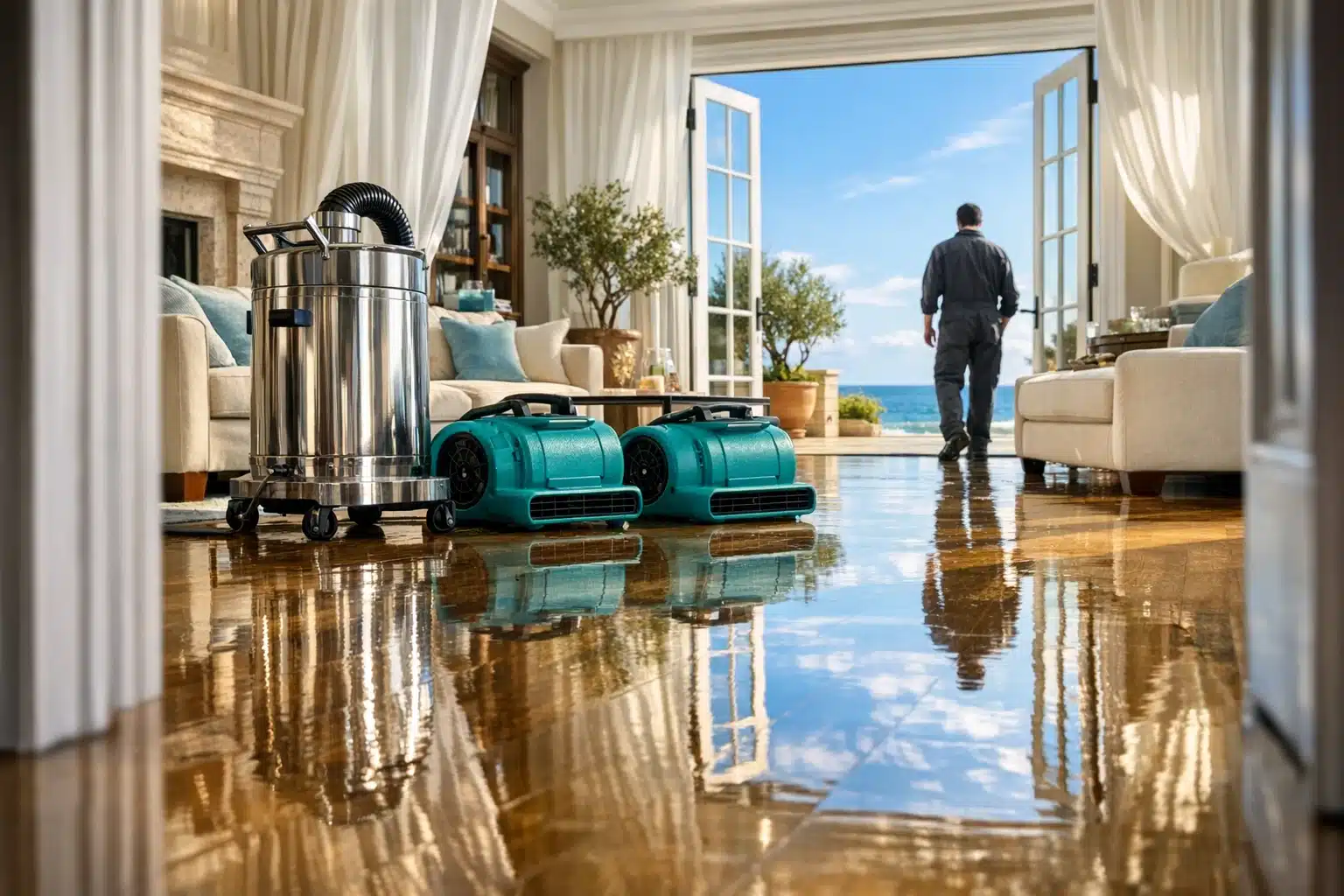
 Artificially generated image
 Understanding Water Damage Causes and the Restoration Process
Water damage rarely arrives with a formal introduction. Sometimes it seeps in silently behind a wall, sometimes it rushes through a broken pipe, and sometimes it settles after a storm like an unwelcome guest that refuses to leave. Understanding where it comes from and how restoration works is essential for homeowners, landlords, facility managers, and anyone responsible for keeping a building safe, functional, and financially sustainable. A quick response can reduce structural damage, lower repair costs, and help prevent secondary problems such as mold growth, material decay, and indoor air quality issues.
Article Outline
1. Common causes of water damage and why they are often overlooked.
2. How water damage affects structures, furnishings, and indoor health conditions.
3. The core restoration process, from inspection and water extraction to drying and cleaning.
4. Repairs, rebuilding, and the decisions that determine whether materials are saved or replaced.
5. Prevention strategies and practical guidance for property owners after restoration is complete.
1. Common Causes of Water Damage: From Sudden Failures to Slow, Hidden Leaks
Water damage is often described as one event, but in practice it comes from many different sources, each with its own pattern, risk profile, and urgency. Some incidents are dramatic, such as a burst supply line flooding a kitchen in minutes. Others are patient and quiet, like a slow leak under a sink that dampens cabinetry over several months. That contrast matters because the speed of the water release, the cleanliness of the water, and the time before discovery all influence how serious the damage becomes.
One of the most common causes is plumbing failure. Pipes can freeze and crack in cold weather, fittings can loosen over time, and supply lines connected to washing machines, dishwashers, or refrigerators can fail unexpectedly. Water heaters are another frequent source, particularly in older homes where internal corrosion weakens the tank. Roof leaks are also major contributors. Missing shingles, failed flashing, clogged gutters, and ice dams can allow rainwater to enter attics and wall cavities. What starts as a small stain on a ceiling may actually indicate a broader problem hidden above it.
Weather-related water intrusion creates another category of risk. Heavy rain, poor grading around a foundation, sewer backups during storms, and overflowing rivers can bring water into basements and crawl spaces. In these cases, the issue is not just volume but contamination. Floodwater may carry soil, bacteria, chemicals, and debris, which changes the restoration approach. Appliances and HVAC systems can also contribute. A blocked condensate line, for example, may sound minor, but repeated overflow can damage insulation, drywall, and flooring in a surprisingly short time.
Several causes tend to be underestimated because they develop gradually:
- Small pipe leaks behind walls or under floors
- Shower or tub seal failures that allow repeated seepage
- Window leaks during wind-driven rain
- Poor ventilation that causes chronic condensation
- Foundation cracks that let groundwater enter lower levels
Condensation deserves special attention because it does not look like a classic leak. Bathrooms without proper exhaust, uninsulated pipes, and humid basements can create persistent moisture that damages paint, trim, and framing. In commercial properties, flat roofs, sprinkler system failures, and maintenance oversights add more complexity. The important lesson is simple: water damage is not only a disaster problem. Very often, it is a maintenance problem that grew quietly until the bill became impossible to ignore. Recognizing the source early is the first meaningful step toward limiting both damage and cost.
2. What Water Damage Actually Does to a Building and Why Time Matters So Much
When people imagine water damage, they often picture soaked carpet and warped wood flooring. Those are certainly common results, but the real impact goes much deeper. Water moves through a building in ways that are easy to underestimate. It follows gravity, wicks through porous materials, settles in cavities, and lingers in insulation, subfloors, framing, and wall assemblies. A room may look only mildly affected while hidden moisture continues to weaken materials out of sight.
The first concern is structural and material deterioration. Drywall absorbs water quickly and can lose integrity within hours. Wood swells, laminates separate, adhesives fail, and metal components may begin to corrode. Ceiling materials can sag, paint can blister, and trim can distort. If saturation continues, subfloors soften and framing may remain damp long enough to support fungal growth. Even concrete, which appears durable, can hold moisture and transfer it into adjacent finishes. Water does not need dramatic force to do expensive damage; persistence is enough.
The second concern is contamination and health risk. Restoration professionals often classify water into broad categories based on likely contamination. Clean water may come from a broken supply line. Gray water may include discharge from appliances or plumbing fixtures. Black water, often associated with sewage or floodwater, can contain harmful microorganisms and requires stricter containment and disposal practices. This classification helps determine what can be cleaned, what must be removed, and what protective measures are needed during restoration.
Time is the detail that quietly changes everything. In the first several hours, the priority is limiting spread. Within a day or two, swelling, staining, and odor can worsen. If materials remain wet long enough, mold may begin growing on suitable surfaces under favorable conditions. While growth rates depend on temperature, humidity, and material type, industry guidance consistently emphasizes speed because moisture left in place increases both risk and cost. A quick response can be the difference between drying a room and rebuilding it.
Water damage can affect:
- Structural components such as joists, studs, and subfloors
- Finishes including drywall, flooring, paint, and trim
- Personal contents such as furniture, books, textiles, and electronics
- Indoor air quality due to humidity, odors, and microbial growth
- Electrical systems when outlets, wiring, or panels are exposed
There is also a financial dimension that reaches beyond the immediate repair. Business interruptions, temporary relocation, insurance deductibles, and loss of sentimental possessions can all amplify the burden. A child’s photo album, a stockroom of inventory, a favorite reading chair by the window, these are the human details behind a technical problem. That is why water damage restoration is not merely cleanup. It is a race against absorption, contamination, and time, with every hour shaping what can still be saved.
3. The Restoration Process Step by Step: Inspection, Extraction, Drying, and Cleaning
Once the source of water has been stopped or controlled, the restoration process begins with assessment. Professionals do not simply arrive with fans and hope for the best. A proper response is systematic. It starts with identifying the source, evaluating the affected areas, documenting visible damage, and measuring moisture levels in building materials. Moisture meters, thermal imaging cameras, and hygrometers are commonly used to understand where water has traveled and how damp the environment remains. This assessment stage guides the rest of the work and helps determine whether portions of the structure can be dried in place or need removal.
The next step is water extraction. Standing water is removed using pumps, wet vacuums, or truck-mounted extraction systems depending on the scale of the incident. Extraction matters because every gallon removed directly reduces the amount of evaporation that must later be controlled. In other words, removing liquid water quickly makes drying faster and more effective. Porous items such as carpeting and padding may either be extracted and dried or removed if contamination or prolonged saturation makes salvage impractical.
After extraction comes controlled drying and dehumidification. This is the stage many people recognize from the rows of air movers and dehumidifiers placed throughout a property. Yet the equipment is only part of the story. Air movement promotes evaporation, while dehumidifiers remove moisture from the air so that evaporation can continue. In some situations, restoration teams also use targeted heat drying, desiccant dehumidification, or containment barriers to isolate affected areas and improve efficiency. Moisture readings are tracked over several days to confirm that materials are actually drying, not just appearing dry on the surface.
The typical process includes:
- Emergency contact and site stabilization
- Inspection and moisture mapping
- Water extraction and removal of unsalvageable materials
- Drying, dehumidification, and environmental monitoring
- Cleaning, sanitizing, and odor treatment where needed
- Final verification before repair or reconstruction
Cleaning is another essential phase, especially when water is contaminated or when contents have been exposed to silt, odors, or residues. Hard surfaces may be cleaned and disinfected, textiles may require specialized laundering, and odor control may involve air scrubbers, filtration, or other deodorization methods. In sewage-related or flood-related losses, the standards are stricter because health risks are greater. The final stage before reconstruction is verification. Moisture levels should return to an acceptable dry standard relative to unaffected materials in the same structure. This point is important because dry-looking drywall is not the same as dry drywall.
Good restoration is part science, part logistics. It is fans and meters, yes, but it is also judgment, documentation, and disciplined follow-through. When performed correctly, the process limits damage, supports insurance documentation, reduces mold risk, and creates a stable starting point for repairs. Without that discipline, hidden moisture can remain behind a polished surface, waiting to rewrite the story weeks later.
4. Repair, Rebuild, and Recovery: Deciding What Can Be Saved and What Must Go
After drying and cleaning come the harder decisions. Restoration is not only about removing water; it is also about determining the future of the affected materials. Some items can be restored with minimal intervention, while others must be removed because they have lost structural integrity, absorbed contamination, or become too deteriorated to safely remain. This decision-making stage can be technical, emotional, and expensive all at once.
Drywall is a common example. If a clean-water leak is found quickly and the moisture exposure is limited, portions of drywall may sometimes be dried successfully. But if saturation is extensive, if the material has begun to crumble, or if the source involved contaminated water, removal is often the safer choice. Insulation presents similar challenges. Fiberglass batts usually lose effectiveness when soaked, and cellulose can retain moisture and settle, making replacement more practical than attempting reuse. Flooring requires careful evaluation as well. Solid hardwood may sometimes be dried and refinished if cupping is minor and action is prompt, while laminate flooring often swells irreversibly and needs replacement.
Cabinetry, trim, doors, and contents each require their own assessment. Furniture made from solid wood may survive drying and refinishing, while particleboard pieces frequently break down after saturation. Electronics should be evaluated cautiously because water exposure creates both corrosion risk and safety concerns. Upholstered items depend on the water source, the material, and the duration of exposure. In contaminated losses, disposal may be necessary to protect health.
Key factors that influence salvage decisions include:
- The category of water involved
- How long the material remained wet
- The porosity and condition of the material
- Cost of restoration compared with replacement
- Potential health and safety implications
Once removal decisions are made, reconstruction begins. This can range from replacing sections of baseboard and repainting walls to rebuilding entire rooms with new insulation, drywall, flooring, and cabinetry. In large losses, contractors may also address code upgrades, electrical inspections, or improvements that reduce future risk. This is often the moment when restoration shifts emotionally from damage control to recovery. Dust barriers come down, clean lines return, and a room begins to resemble itself again.
Insurance frequently plays a role here, though coverage varies by policy and cause of loss. Sudden and accidental events may be covered, while long-term neglect may not be. Documentation, photos, moisture reports, and detailed estimates matter. For property owners, it helps to compare scopes of work, understand the difference between emergency mitigation and full reconstruction, and ask clear questions about timelines. Recovery is rarely instant, but informed decisions can make it steadier. In a well-managed project, the rebuild is not just about replacing materials. It is an opportunity to restore function, improve resilience, and close the chapter with fewer weak points than before.
5. Prevention and Practical Guidance for Property Owners: Reducing Risk Before the Next Leak Appears
The best water damage restoration project is the one that never becomes necessary. While no building is completely immune to plumbing failures or severe weather, many losses can be reduced through maintenance, monitoring, and faster response. Prevention is less glamorous than emergency cleanup, but it is almost always cheaper and calmer. It is the habit of paying attention before the ceiling stain grows into a storyline of extraction equipment, insurance calls, and weeks of repairs.
Routine inspections are a strong first line of defense. Homeowners and facility managers should periodically check under sinks, behind appliances, around water heaters, near HVAC components, and along visible plumbing lines. Roof inspections, gutter cleaning, and grading corrections can prevent water from entering where it does not belong. In colder climates, insulating vulnerable pipes and maintaining indoor heat during freezing weather can reduce the chance of pipe bursts. Water alarms and smart leak detection systems add another layer of protection by alerting occupants early, sometimes before visible damage spreads beyond a small area.
Good prevention habits include:
- Replace aging appliance hoses and plumbing connectors before they fail
- Clean gutters and downspouts so roof drainage moves away from the structure
- Inspect caulking and seals around tubs, showers, windows, and doors
- Maintain sump pumps and test backup power if flooding is a local risk
- Know where the main water shutoff valve is located and how to use it
Humidity control also matters, especially in basements, bathrooms, laundry rooms, and tightly sealed buildings. Exhaust fans, dehumidifiers, proper insulation, and ventilation help reduce condensation-related damage. If a leak does occur, immediate action can significantly limit loss. Shut off the water if possible, protect unaffected belongings, document the damage with photos, and contact qualified restoration professionals when the situation exceeds basic cleanup. Avoid assuming that a surface is dry simply because it no longer looks wet. Hidden moisture is one of the main reasons small incidents turn into larger repairs later.
For property owners, one practical step is building a simple response plan. Keep emergency contact numbers accessible, understand the basics of your insurance coverage, and store critical records securely. Commercial property managers may also benefit from written maintenance schedules and vendor relationships established before an emergency happens. In a crisis, preparation saves both time and judgment.
Water damage may begin with chance, but resilience is usually built on routine. A tightened fitting, a cleaned gutter, a moisture alarm under a washing machine, these are modest actions with outsized value. They may never feel dramatic in the moment, yet they quietly protect the structure, the budget, and the ordinary comfort of being able to trust your own walls.
Conclusion: What Homeowners and Property Managers Should Take Away
For homeowners, landlords, and property managers, the central lesson is clear: water damage is easier to manage when it is understood early and addressed methodically. The cause may be a burst pipe, roof failure, appliance leak, condensation problem, or storm-related intrusion, but the response should always begin with source control and a realistic assessment of how far the moisture has spread. Time matters because materials absorb water quickly, contamination can increase risk, and hidden dampness can create problems long after the surface appears normal.
The restoration process works best when handled as a sequence rather than a scramble. Inspection identifies the scope. Extraction removes the immediate burden. Drying and dehumidification stabilize the structure. Cleaning and sanitation address residue, odor, and health concerns. Repair and reconstruction restore function and appearance. Understanding these stages helps property owners ask better questions, evaluate contractor recommendations more confidently, and make decisions based on evidence rather than panic.
Just as important, prevention deserves a permanent place in building care. Regular inspections, routine maintenance, humidity control, and basic preparedness can reduce the odds of severe damage and improve response time when something does go wrong. In practical terms, that means fewer surprise expenses, less disruption, and a better chance of preserving both the building and the things inside it. Water may be patient, but informed owners can be prepared.


