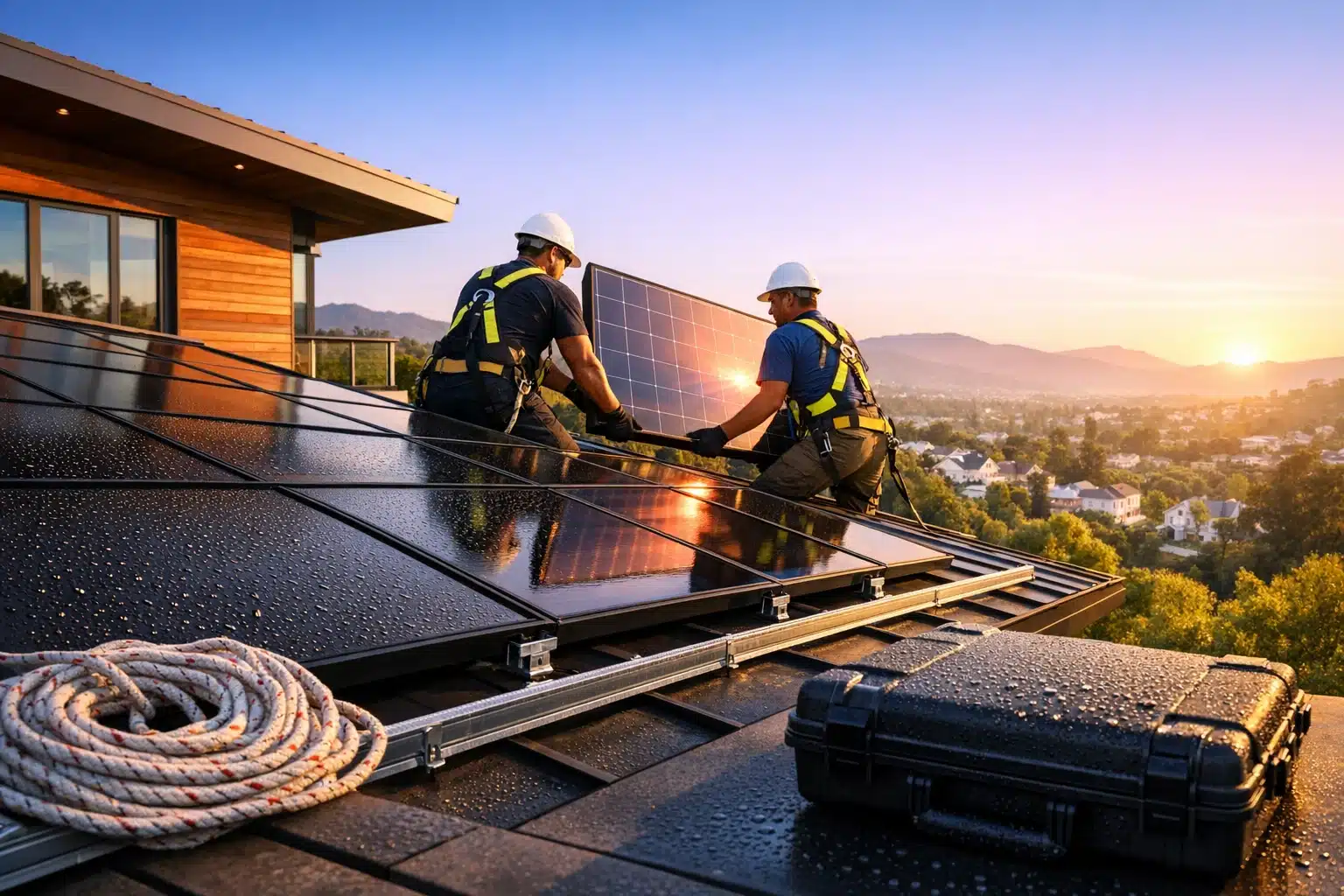
 Artificially generated image
 Solar Panel Installer Jobs: Roles, Responsibilities, and Career Paths
The rise of solar power has turned rooftops, warehouses, and open fields into active worksites for a fast-growing trade: solar panel installation. For people who enjoy practical problem-solving, outdoor routines, and work connected to the energy transition, this field offers more than entry-level labor. It combines construction know-how, electrical awareness, safety discipline, and real opportunities to move up.
Outline:
- How solar panel installer jobs fit into the wider clean energy economy
- The main duties, tools, and workflow on a typical jobsite
- The skills, certifications, and safety knowledge needed to succeed
- Pay factors, job outlook, and pathways into leadership or related roles
- A practical conclusion on who this career suits best and how to get started
1. Understanding the Role of a Solar Panel Installer
A solar panel installer, often called a solar photovoltaic or PV installer, helps build the systems that convert sunlight into usable electricity. At first glance, the job can seem straightforward: place panels in the sun and connect them. In reality, the work sits at the meeting point of construction, electrical systems, engineering plans, and field safety. Installers do not simply carry panels from a truck to a roof. They prepare surfaces, align mounting hardware, secure racking, help route wiring, inspect system components, and support testing before a system is turned on.
This role matters because every expansion of solar energy depends on crews who can turn plans into functioning infrastructure. Utility companies may announce large clean energy targets, developers may design ambitious projects, and homeowners may request lower electricity bills, but none of it becomes real until installation teams do the physical work. In that sense, solar installers are among the workers who make the energy transition visible. They are the people on ladders at dawn, on warehouse roofs by midmorning, and beside long rows of steel racks where open land becomes a power plant.
The job changes depending on the project type. Residential crews usually work on homes and small buildings. Their tasks may require more customer interaction, tighter roof spaces, and close attention to appearance because homeowners care about how the finished array looks from the street. Commercial installers often work on larger flat roofs, schools, office buildings, and industrial facilities where system size increases and coordination becomes more complex. Utility-scale crews may spend weeks or months on ground-mounted solar farms, where repetition is higher, machinery is more common, and travel may be part of the routine.
It is also useful to compare solar installers with neighboring trades. They overlap with electricians, but they are not always the same. Licensed electricians typically handle certain code-sensitive electrical connections, inspections, or sign-offs, depending on local rules. Installers may work closely with them while focusing more on structural mounting, system layout, and field assembly. Compared with general construction laborers, solar installers need a more specific understanding of PV equipment, energy production basics, and safe system handling.
According to the U.S. Bureau of Labor Statistics, solar photovoltaic installers are projected to grow much faster than the average for all occupations, a sign that demand is tied to broader investment in renewable energy. For job seekers, that makes this field especially relevant. It is a trade shaped by practical skill, not just paperwork, and its value grows each time another roof or field is chosen to catch the sun.
2. Daily Tasks, Tools, and Jobsite Workflow
The daily rhythm of a solar installer is built around preparation, precision, and teamwork. A typical day often starts with a review of plans, safety checks, and a quick discussion of the site layout. Crews confirm where racking will be placed, how materials will be moved, what weather conditions may affect the schedule, and which tasks belong to each team member. On some jobs, this happens in a parking lot before sunrise. On others, it takes place beside a half-finished array where coffee cups sit near coils of wire and hard hats line the edge of a truck bed.
From there, the hands-on work begins. Installers may measure roof areas, locate rafters, mark mounting points, and set anchors or attachments. They assemble racking systems, lift panels into position, bolt modules to frames, and help route conduit or cabling between equipment. Depending on the employer and local regulations, they may also assist with inverters, disconnects, combiner boxes, grounding components, and battery-related hardware. Every step must follow design documents and electrical code requirements, because a system that looks neat but fails inspection is not a finished job.
Although the sequence varies, many crews move through a familiar workflow:
- Site review and hazard assessment
- Material staging and tool preparation
- Mounting and structural installation
- Panel placement and fastening
- Wiring support, labeling, and equipment setup
- Testing, cleanup, and documentation
The tool list reflects the hybrid nature of the trade. Installers commonly use drills, impact drivers, torque wrenches, measuring tools, levels, saws, conduit benders, multimeters, and rope or lift systems for moving equipment safely. Personal protective equipment is equally important. On roofs, fall protection is essential. On hot sites, hydration and sun protection matter more than newcomers often expect. A summer roof can feel less like a workplace and more like a skillet, which is why pacing, planning, and safety habits are not optional extras.
The job can differ sharply across settings. A residential crew might complete most of a small home system in a day or two, juggling roof angles, attic access, and homeowner questions. A commercial team may spend much longer coordinating with facility managers, crane operators, or electricians while dealing with large roof spans. Utility-scale projects add earthmoving equipment, pile driving, repetitive module installation, and broader logistics. In each case, quality depends on consistency. Panels must be aligned, hardware must be torqued correctly, and labels must match plans. That attention to detail is what separates a rushed installation from a reliable energy asset expected to last for decades.
3. Skills, Training, Certifications, and Safety Requirements
One reason solar installation attracts career changers is that the field offers more than one entry point. Some workers start straight from high school with strong mechanical ability and a willingness to learn on the job. Others arrive from roofing, electrical work, warehouse operations, or general construction. A growing number come through trade schools, community college programs, workforce development initiatives, or clean energy boot camps. There is no single doorway, but there are clear skills that employers value again and again.
First, a solar installer needs physical competence and spatial awareness. The work involves lifting, climbing, balancing, kneeling, measuring, and handling tools in changing weather. Second, technical understanding matters. Installers should be able to read plans, follow installation manuals, identify system components, and understand basic electrical concepts such as voltage, current, grounding, and circuit protection. Third, reliability matters more than many applicants expect. Crews depend on punctuality, safe habits, and the ability to follow instructions without cutting corners.
Useful skills and qualifications often include:
- Basic construction or mechanical experience
- Comfort with heights and outdoor conditions
- Blueprint and schematic reading
- Math for layout, spacing, and measurement
- Knowledge of hand and power tools
- Strong communication and teamwork
- Driver’s license or ability to travel to jobsites
Training can range from informal mentoring to structured instruction. On-the-job training is common, especially for entry-level helpers, because many techniques are easiest to learn in the field. Formal programs, however, can shorten the learning curve. Trade schools may teach PV system fundamentals, code basics, fall protection, and equipment identification before a worker ever steps onto a roof. Certifications can also strengthen a candidate’s profile. OSHA 10 or OSHA 30 training is often valuable, and credentials associated with solar knowledge, such as NABCEP-focused coursework or entry-level certificates, may help when applying for competitive roles.
Safety deserves special attention because it is woven into every stage of the job. Solar crews face fall hazards, electrical hazards, heat exposure, repetitive strain, and risks related to lifting or tool use. A strong safety culture means more than wearing a harness. It includes inspecting anchors, checking ladders, locking out circuits where needed, staying hydrated, and speaking up when conditions are wrong. In many companies, the best installers are not the fastest workers; they are the people who combine speed with discipline.
There is also an important comparison between solar installation and purely classroom-based careers. In an office role, a mistake may mean a delayed email or a spreadsheet fix. On a roof or active site, a mistake can damage equipment, fail an inspection, or injure someone. That is why solid training, steady judgment, and respect for procedure are essential. For motivated workers, though, the learning process can be rewarding. Each skill mastered becomes immediately visible in the quality of the finished system.
4. Pay, Job Outlook, and Career Paths in the Solar Industry
For many job seekers, interest in solar begins with values but becomes serious when they understand the career potential. Pay in this field varies widely, and that variation is shaped by location, project type, experience, certifications, overtime, union presence, and the balance between construction work and electrical responsibility. Entry-level workers may begin as installers, helpers, or laborers supporting experienced crews. With time, their earnings often improve as they become faster, safer, and capable of handling more technical tasks independently.
Residential installation often offers a quicker entry into the industry, though starting wages may be lower than those on larger commercial or utility projects. Commercial jobs can pay more because system scale is larger, coordination demands are higher, and the work may require stronger familiarity with industrial roofing, conduit runs, or code-driven procedures. Utility-scale roles may offer travel pay, longer project cycles, and opportunities to work on major energy infrastructure, though the schedule can be less predictable and the sites may be farther from home.
Career progression is one of the strongest reasons to consider this trade. A typical ladder may look like this:
- Installer helper or laborer
- Solar installer or PV technician
- Lead installer or crew lead
- Site supervisor or foreman
- Project manager, operations coordinator, or quality inspector
- Electrical specialist, system designer, estimator, or sales consultant
Some workers use solar installation as a launch point into licensed electrical work. Others move into system design software, permitting, inspections, maintenance, energy storage, or commercial sales. A few eventually start their own installation businesses after gaining field experience, understanding local permitting, and building a network of suppliers and subcontractors. In that way, solar can function both as a destination and as a platform for later specialization.
The outlook remains strong because solar adoption is influenced by several long-term forces: falling equipment costs over time, corporate sustainability targets, grid modernization, energy resilience concerns, and government or utility support in many regions. While policy changes can affect the pace of projects, the underlying demand for skilled workers continues as installed systems need construction, maintenance, expansion, and occasional replacement of components.
Compared with some traditional jobs that offer stability but limited movement, solar installation can provide unusually visible advancement. A worker who starts by staging rails and sorting hardware may, within a few years, be training new hires, coordinating inspections, or managing multi-crew sites. That upward path is not automatic, and it rewards initiative, but it is real. For people who like to see effort turn into responsibility, the industry offers more than a paycheck. It offers a route through a growing sector where practical experience still carries significant weight.
5. Conclusion: Is Solar Installation the Right Career for You?
If you are weighing whether solar panel installation fits your goals, the honest answer is that this career rewards a specific kind of person. It suits those who like visible results, steady movement, and work that feels tangible at the end of the day. You can point to a finished array and say, without any corporate fog, “We built that.” For many people, that alone is deeply satisfying. Yet the field also demands more than enthusiasm for renewable energy. It asks for stamina, patience, accuracy, and respect for safety rules that protect both workers and future system owners.
The challenges are real. You may work in heat, cold, wind, or glare. You may spend long hours on roofs, in open fields, or traveling between sites. Some days involve repetitive tasks, while others require quick adaptation when roof conditions, delivery schedules, or inspections shift unexpectedly. There can also be seasonal changes in workload depending on region and market conditions. If you strongly dislike physical labor, outdoor exposure, or early starts, this job may feel exhausting rather than energizing.
At the same time, the rewards are practical and meaningful. Solar installers gain transferable skills in construction, safety, electrical awareness, project coordination, and equipment handling. The work connects to a growing industry rather than a shrinking niche. It can lead to supervisory roles, technical specialties, or related careers in storage systems, EV infrastructure, operations, design, and energy services. For younger workers, it can be a solid first trade. For career changers, it can provide a more hands-on alternative to desk-based work.
Before committing, ask yourself a few direct questions:
- Do I enjoy physical work that produces a clear result?
- Can I follow technical instructions carefully and consistently?
- Am I comfortable with heights, tools, and team-based routines?
- Would I value a career path connected to long-term energy demand?
- Am I willing to keep learning as equipment and standards evolve?
If most of those answers are yes, solar installation is worth serious attention. A smart next step is to research local employers, look for entry-level installer roles, compare trade school options, and earn basic safety training that improves your application. Talk to working installers if possible; their day-to-day perspective will tell you more than polished recruitment pages. For readers considering where to place their time, effort, and ambition, this field offers a grounded option: skilled work, real progression, and a front-row seat to one of the most important infrastructure shifts of the modern economy.