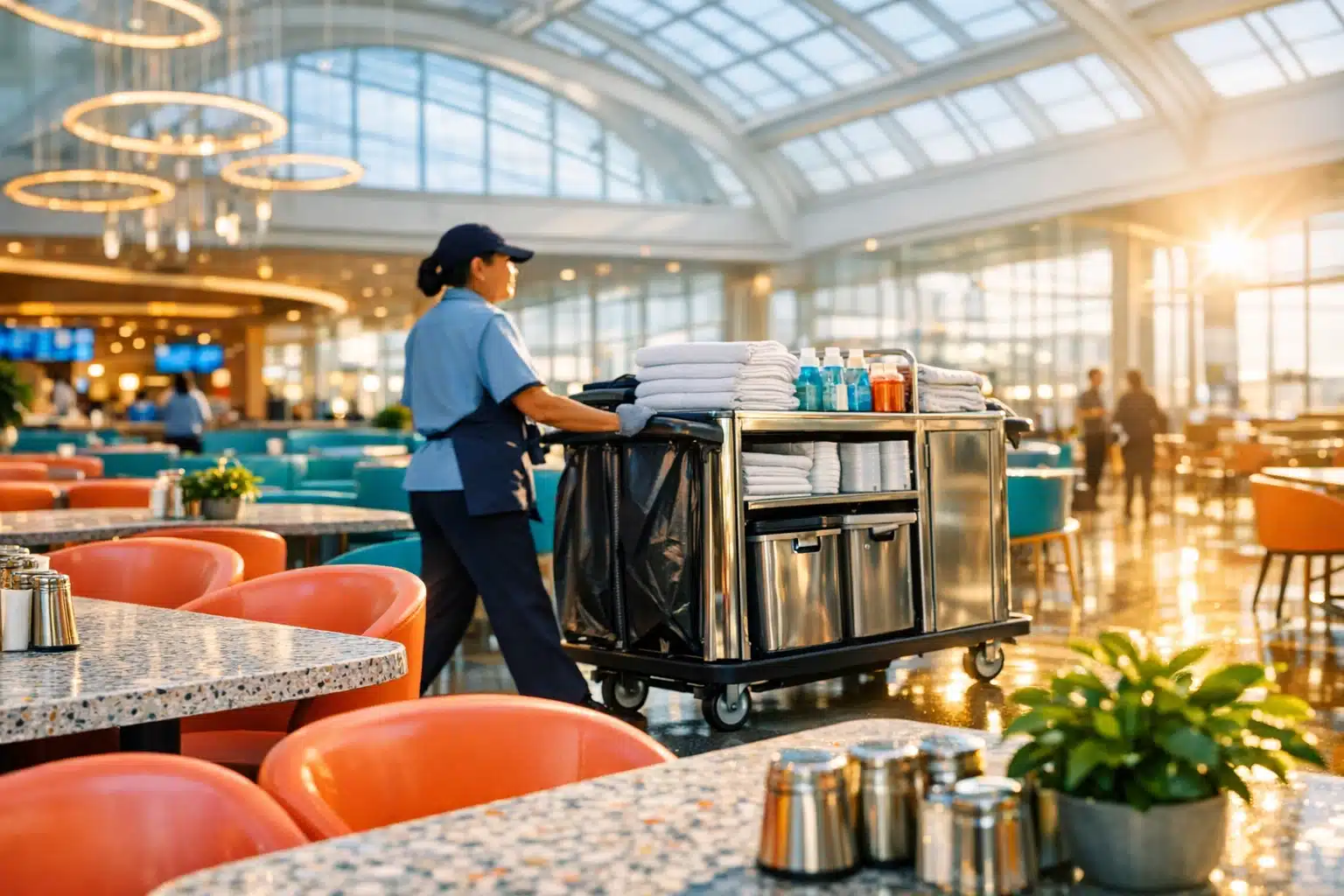
 Artificially generated image
 Airport Night Shift Cleaning Careers: Your Guide to Entering the Field
When the final boarding calls fade and the crowds thin, another crew steps forward to reset the airport for the next wave of travelers. Overnight cleaners sanitize restrooms, clear food courts, polish floors, empty bins, and respond to spills before dawn exposes every missed detail. For job seekers, this role can offer steady work, practical training, and a foothold inside a fast-moving transport environment built on safety, timing, and teamwork.
Article Outline
- What airport night cleaning work actually involves
- Skills, qualifications, and security requirements
- How to apply, interview, and improve your hiring chances
- Pay, schedules, benefits, and career progression
- How to decide whether this path fits your goals and lifestyle
What Airport Night Shift Cleaning Work Really Involves
Airport cleaning after dark is more complex than many people expect. At first glance, it may sound similar to janitorial work in an office or shopping center, yet airports operate like small cities with stricter safety rules, broader public exposure, and longer operating hours. Even during quieter overnight periods, flights may still arrive, security staff remain on duty, and essential services continue. That means cleaning teams work around moving equipment, late passengers, airline crews, vending areas, and sometimes urgent turnaround requests. The setting feels almost cinematic at times: polished floors under bright lights, gate screens flickering with departure times, and a crew moving briskly so the morning rush meets a space that feels reset.
Typical duties depend on the airport, employer, and assigned zone. Some cleaners stay in public areas such as terminals, waiting gates, and baggage claim halls. Others focus on staff corridors, offices, elevators, escalators, or secure sections that require access credentials. Teams often follow timed checklists and route maps rather than vague instructions, because consistency matters in a building that can welcome tens of thousands of people on a busy day.
- Cleaning and disinfecting restrooms, sinks, mirrors, and baby-changing stations
- Vacuuming carpets and sweeping or machine-scrubbing hard floors
- Emptying waste and recycling containers
- Wiping seating, counters, railings, kiosks, and touch points
- Responding quickly to spills, weather-related mess, or food court debris
- Restocking soap, paper towels, tissue, and sanitation supplies
Compared with daytime cleaning, overnight work usually allows deeper tasks because foot traffic is lower. Floor restoration, detailed restroom sanitation, and larger waste runs are easier when crowds are thinner. Compared with hotel housekeeping, the work is less private-room focused and more about high-volume public hygiene. Compared with office cleaning, the pace can be faster and more visible, especially when a delayed flight suddenly increases activity in an area that looked quiet five minutes earlier.
The role matters because cleanliness shapes the passenger experience immediately. A spotless restroom, an odor-free waiting area, and a clean floor near security checkpoints signal order and professionalism. Employers know this. In many cases, cleaners are judged not only by what they remove, but by what travelers never notice because the environment simply works. If you like practical tasks, visible results, and a shift that keeps moving, this field can feel surprisingly satisfying.
Skills, Qualifications, and Security Requirements You Will Likely Need
One reason airport night cleaning attracts many applicants is that it usually does not require a college degree. Entry-level openings often focus more on reliability, physical stamina, and willingness to work unusual hours than on formal education. Still, this is not a casual walk-in role. Airports are security-sensitive workplaces, and employers look for people who can follow rules, show up on time, and handle repetitive tasks without cutting corners.
Most employers want applicants who can stand, walk, bend, lift, and push equipment for long stretches. Job ads commonly list lifting expectations in the 20 to 50 pound range, although exact requirements vary. You may handle carts, liners, wet floor signage, mops, vacuums, or ride-on floor machines if trained. Basic reading ability is useful because cleaners often work from supply labels, safety instructions, and task checklists. Some jobs involve limited customer interaction, so simple, polite communication matters too. Even on an overnight schedule, you may still be asked for directions by a traveler who missed a connection or by a staff member looking for a gate-side facility.
Security requirements are one of the biggest differences between airport work and standard custodial jobs. Depending on the country and the area you will access, employers may require identity verification, work authorization documents, employment history checks, criminal background screening, or an airport badge for secure zones. Roles near airside locations can involve additional scrutiny. Being honest on applications is essential, because badge approval can fail when details do not match official records.
- Consistent attendance and punctuality
- Ability to follow sanitation and safety procedures
- Comfort with overnight, weekend, and holiday schedules
- Physical endurance for walking, lifting, and repetitive motion
- Respect for security rules and restricted areas
- Willingness to learn equipment use and chemical handling basics
There are also differences between employers. A major international hub may require more layered onboarding than a regional airport. An in-house facilities department may offer longer orientation, while a contracted cleaning company may hire faster but expect immediate schedule flexibility. Previous experience in cleaning, hospitality, warehousing, retail closing shifts, or building maintenance can help, yet many employers will train people who bring the right attitude. In simple terms, the strongest entry profile is not “expert cleaner.” It is “dependable worker who listens, learns, and keeps standards steady at 3 a.m. when supervision is lighter and the work still matters.”
How to Get Hired: Job Search, Resume Tips, Interviews, and Onboarding
Getting into airport cleaning usually starts with knowing where these jobs are posted. Some airports hire custodial staff directly through their own careers pages, but many use contractors in facilities management, janitorial services, or aviation support. That means one airport may have openings listed under several company names rather than under the airport brand itself. A smart search includes the airport website, city or regional government job boards when relevant, large cleaning contractors, airline service companies, and mainstream job platforms. Search terms such as “airport cleaner,” “overnight janitor,” “custodial associate airport,” and “terminal cleaning” often surface different listings for similar work.
Your resume does not need fancy language, but it does need proof that you can handle routine, pace, and responsibility. Hiring managers respond well to specifics. Instead of writing “responsible for cleaning,” show scale, consistency, and habits that translate to an airport environment.
- Cleaned public areas, restrooms, and high-touch surfaces in a busy retail setting
- Worked closing or overnight shifts with minimal supervision
- Operated floor care equipment or used cleaning chemicals safely
- Handled waste removal, restocking, and checklist-based tasks
- Maintained attendance and arrived on time for fixed schedules
Interviews are usually practical rather than abstract. Employers may ask whether you can work weekends, how you handle repetitive duties, whether you have used cleaning equipment before, or how you respond when a spill creates a hazard. They may also ask about customer contact, because airports remain public-facing environments even after midnight. Good answers sound calm and concrete. For example, if asked about a spill, mention isolating the area, placing warning signs, cleaning according to procedure, and notifying a supervisor if the issue affects safety or requires specialized support.
After the interview, onboarding can take longer than expected because of background checks and badge processing. Plan for paperwork, identity documents, and possible waiting periods. Some employers also require drug screening or medical clearance depending on local law, client policy, or union conditions. Training may cover chemical safety, equipment handling, emergency procedures, infection control basics, and airport-specific access rules.
One useful comparison: applying for airport cleaning is closer to applying for a secure facility job than for a small office janitorial post. Accuracy matters. If your employment dates are sloppy, if you omit required details, or if you treat the process casually, you can lose time or miss the role entirely. On the other hand, applicants who are organized, upfront about availability, and ready with documents often stand out fast. In a field built on dependable routines, a tidy application says something before the first shift even begins.
Pay, Schedules, Benefits, and Long-Term Career Growth
Compensation in airport cleaning varies widely, and that is worth understanding before you apply. Pay depends on region, airport size, employer type, union coverage, overnight differentials, and whether the role is full-time or part-time. In general, cleaning work sits in an entry-level wage bracket, but airport jobs can sometimes pay more than standard building cleaning because of security requirements, odd hours, harsher operating conditions, or collective bargaining agreements. Weekend work, public holiday coverage, and overtime may also raise total earnings. That means two cleaners doing similar tasks at different airports can have noticeably different paychecks.
Scheduling is one of the biggest trade-offs. Overnight shifts may begin in the late evening and run into early morning, often spanning periods when public transport is limited and sleep routines become harder to manage. Some workers prefer this rhythm because the environment is quieter, supervision can feel less intense, and the workday avoids daytime family obligations. Others find the body-clock disruption difficult after several months. Compared with day-shift janitorial work, overnight airport roles often offer fewer interruptions from crowds but more pressure to finish large-area tasks before morning flights build momentum.
Benefits also vary. Full-time roles may include paid time off, health coverage, retirement contributions, uniforms, and shift premiums. Contracted positions sometimes offer leaner packages, though this depends heavily on the employer and local labor market. If stability matters to you, ask direct questions during the interview about minimum weekly hours, overtime policy, break structure, and whether schedules rotate or stay fixed.
- Cleaner or custodial associate
- Lead cleaner or zone lead
- Floor technician or specialist equipment operator
- Supervisor or shift coordinator
- Facilities, environmental services, or building maintenance roles
Career growth is real, especially for workers who learn equipment, maintain solid attendance, and build trust with managers. Airports need people who understand procedures, access rules, and the flow of the building. A cleaner who consistently handles a busy terminal section may later move into team leadership, quality inspection, supply coordination, or broader facilities work. Some workers also use the role as a foothold into the wider airport ecosystem, moving toward airline support, ground services, warehouse logistics, or maintenance administration. The job may start with mops, machines, and checklists, but it can also open doors inside an industry that values operational discipline.
Conclusion: Is Airport Night Shift Cleaning the Right Entry Point for You?
If you are looking for glamorous job titles, this path may not immediately grab you. If you are looking for practical work that matters every single day, it deserves a serious look. Airport cleaning is one of those careers people often overlook until they realize how much an aviation hub depends on invisible routines. Before sunrise, cleaners help shape first impressions, reduce hygiene risks, remove hazards, and prepare shared spaces for thousands of people. It is hands-on work with clear standards and visible results.
For the right person, the appeal is straightforward. You do not usually need advanced credentials to begin. You can build experience quickly. You can learn procedures, equipment use, and workplace discipline in an environment where consistency is valued. You may also gain access to a broader employment network inside transport and facilities operations. That makes the role especially relevant for job seekers changing industries, re-entering the workforce, or seeking a dependable foothold without waiting years for formal qualifications.
Still, the fit has to be honest. Overnight schedules can challenge sleep, commuting, and social life. The work is physical. Standards stay high even when energy dips. Security rules are strict, and shortcuts are a bad idea. In other words, this is not easy money or passive employment. It is solid work for people who can be dependable when the terminal is quiet and the clock feels slow.
If you want to move forward, keep the next steps simple and concrete.
- Search both airport and contractor job listings
- Prepare a resume that highlights attendance, cleaning, service, or shift work
- Gather identity and work documents before applying
- Be clear about your overnight availability from the start
- Ask about pay structure, benefits, badge processing, and training
For readers considering this field, the main takeaway is clear: airport night shift cleaning can be a stable, respectable starting point with room to grow. It rewards discipline more than flash, and it suits people who take pride in doing essential work well. If that sounds like you, this could be more than a job opening on a board. It could be the first step into a working world that never fully powers down.