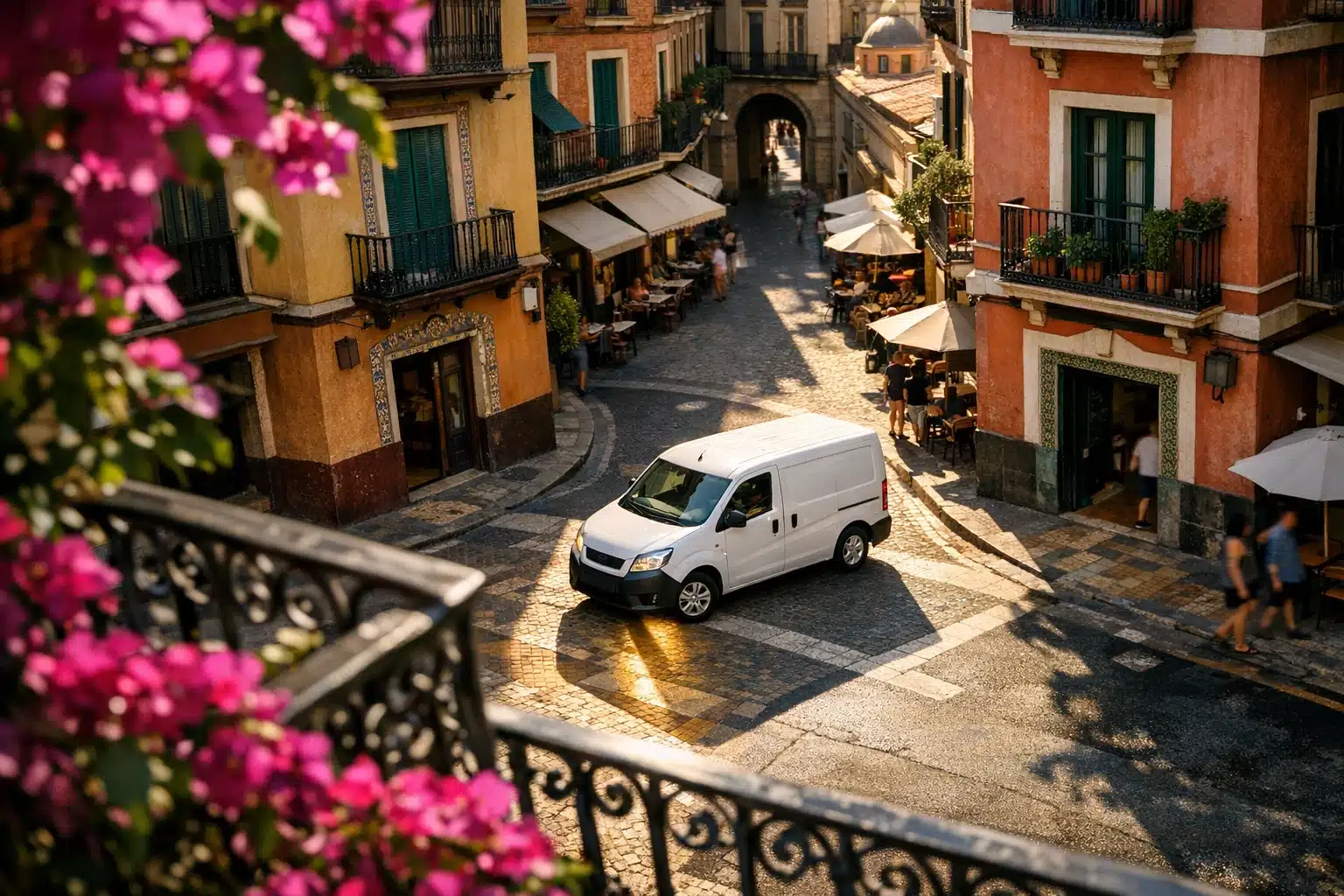
 Artificially generated image
 Working in Spain as a Delivery Driver: A Practical Guide to Finding Local Jobs
Spain’s delivery sector attracts students, new arrivals, career switchers, and anyone who wants a job that starts with movement rather than a desk. Food apps, grocery services, and parcel firms need drivers in busy urban areas, especially where tourism, office life, and late-night dining keep orders flowing. Yet the work is not just about speed; it also involves paperwork, vehicle choices, local language, and smart job hunting. This guide breaks those pieces into practical steps you can use.
Why Delivery Driving in Spain Appeals to So Many Job Seekers
Delivery driving sits at an interesting crossroads in the Spanish labor market. It is practical, visible, and closely tied to how people live now: ordering lunch to the office, groceries to an apartment block, medicine to a neighborhood pharmacy counter, or a last-minute parcel to a home outside the city center. For job seekers, that means one important thing: this kind of work often reflects real daily demand, not a passing idea. When streets are busy and households rely on convenience, drivers become part of the rhythm of the city.
For many people, the appeal begins with accessibility. Compared with professions that require a formal degree, delivery work can offer a faster route into paid employment. That does not mean it is effortless. It means the barrier to entry is often lower, especially for roles where employers prioritize reliability, punctuality, route awareness, and legal work status over advanced credentials. In major cities such as Madrid, Barcelona, Valencia, Seville, and Málaga, the need for drivers tends to increase around dense restaurant zones, business districts, transport hubs, and residential neighborhoods with high online ordering activity.
This is also a useful job for people building a life in Spain. A delivery role can help you improve Spanish, understand how local districts connect, and develop routines that make a new city feel less abstract. One week you are checking addresses in Lavapiés or Ruzafa; the next, you know which avenues slow down at lunch, where parking becomes a battle, and which neighborhoods order most heavily on rainy nights. A city stops being a postcard and turns into a map you can read.
To give the article a clear structure, here is the roadmap it follows:
• where delivery jobs are usually found
• how platform work compares with direct local hiring
• what documents and legal conditions matter most
• how earnings, expenses, and schedules really work
• how to apply, get hired faster, and turn short-term work into a more stable plan
Delivery work is not ideal for everyone. It can be physically tiring, weather-dependent, and uneven from one employer to another. Still, for the right person, it can be a realistic path to local jobs, income, and practical integration into Spanish working life. That balance, between opportunity and day-to-day reality, is what matters most when deciding whether to pursue it.
Where the Jobs Are and How to Find Local Openings
If you want delivery work in Spain, the smartest approach is to search locally rather than vaguely. Demand is not spread evenly across the country. It tends to cluster in urban centers, commuter belts, tourist hotspots, and logistics corridors. Food delivery is strongest where restaurants are dense and customers expect convenience. Grocery and rapid retail delivery appear more often in large cities. Parcel driving and last-mile distribution are usually connected to warehouses, industrial zones, and suburban routes. In other words, one type of delivery job may be abundant in central Barcelona, while another is more common near a logistics park outside Zaragoza or Madrid.
Job seekers should compare several channels instead of relying on one app or one listing site. In Spain, you will often find openings through:
• general job boards such as InfoJobs and Indeed
• LinkedIn for larger courier, supermarket, and logistics employers
• local restaurant groups that recruit directly
• supermarket delivery services and dark-store operations
• temp agencies handling warehouse and route-based jobs
• neighborhood Facebook groups, local classifieds, and community networks
• direct walk-ins or email applications to courier depots and restaurant chains
Language matters in the search itself. Useful Spanish keywords include repartidor, conductor de reparto, mensajero, reparto de paquetería, logística de última milla, and conductor con moto or conductor con furgoneta. Searching only in English can cause you to miss many local listings.
It also helps to understand the difference between app-based and direct-hire roles. Platform work can look attractive because it appears fast and visible, but local employers may offer more stable schedules, clearer supervision, or better support with equipment. A neighborhood restaurant may need a rider for dinner shifts. A supermarket chain may recruit for structured time slots. A parcel company may prefer drivers who can handle repeated routes and scanning systems. These are different jobs wearing the same broad label.
Timing can improve your chances. Hiring often picks up before tourist peaks, around holiday shopping periods, and when restaurants expand outdoor dining seasons. Weekend-heavy employers may recruit before summer, while parcel firms can increase staffing before major retail periods. When you apply, show that you understand local reality. Mention the district you can work in, your vehicle type, your schedule flexibility, and whether you already have the right documents. Employers are not just looking for someone who can drive; they want someone who can start, adapt, and show up consistently.
Documents, Legal Rules, and the Choice Between Bike, Scooter, and Car
Before chasing shifts, sort out your legal and practical basics. This is the part many applicants underestimate, yet it often determines how quickly you can move from interest to actual work. In Spain, your right to work depends on your nationality and residence status. Citizens of EU and EEA countries usually have a simpler path, although registration and tax or social security steps may still apply. Non-EU nationals generally need valid work authorization. Because regulations can change and individual situations differ, it is wise to verify your case with official Spanish sources or a qualified adviser before committing to a job.
Beyond work eligibility, employers commonly ask for a core package of documents. Depending on the role, this may include:
• identity document or passport
• NIE or relevant foreigner identification number where applicable
• social security number
• Spanish bank account for salary payments
• valid driving license for scooter, motorcycle, car, or van roles
• vehicle papers and insurance if you use your own vehicle
• proof of address or empadronamiento in some situations
• mobile phone with data access for route and order management
One major point of comparison in Spain is employee status versus self-employed status. In recent years, the legal treatment of riders has received much more attention, especially in food delivery. Some companies have moved toward employee models, while other delivery arrangements can still involve freelance or autónomo structures. The difference matters. Employees may have wages, scheduling rules, and employer contributions organized for them. Autónomos usually have more administrative responsibility, including their own tax and social security obligations, and they may also shoulder more of the business risk. Never assume two delivery offers are equivalent just because both involve carrying orders.
Your vehicle choice shapes the job as much as your contract does. Bicycles are cheaper to run and ideal in dense urban neighborhoods, but they demand physical stamina and are harder in steep areas or bad weather. Scooters are common for food delivery because they balance speed and agility, though fuel, maintenance, insurance, and licensing add costs. Cars and vans suit parcel or grocery work better, especially when order size is larger, but parking and traffic can be frustrating in older city centers. Think of the vehicle as part of your business toolkit. The right choice is not the fastest one on paper; it is the one that matches the routes, the city, and the real economics of your shift.
Pay, Expenses, Schedules, and the Reality of a Working Day
The biggest mistake new applicants make is looking only at headline earnings. Delivery work in Spain can produce decent income for some workers, but gross pay and real take-home money are not the same thing. What you earn depends on several moving parts: city, employer, contract type, time of day, vehicle, number of deliveries, weather, traffic, and whether your costs are covered or pushed onto you. A role that sounds profitable in a job ad may feel very different once you subtract fuel, repairs, mobile data, insurance, or unpaid waiting time.
Pay structures vary. Some jobs offer a regular hourly wage, especially in more formal employment arrangements. Others combine a base rate with productivity elements, such as number of deliveries or completed routes. Tips can help in some settings, especially in hospitality-heavy areas, but they should never be treated as guaranteed income. In many cities, the busiest windows are still predictable: lunch, dinner, weekends, rainy evenings, and special event periods. Mid-afternoon can be quieter, which means more waiting and less momentum. That matters because downtime changes the value of each hour you spend available for work.
Here is a practical way to think about costs before accepting a role:
• bike: low operating cost, higher physical effort
• scooter: moderate speed and flexibility, plus fuel and maintenance expenses
• car: suitable for larger orders, but parking, congestion, and running costs rise quickly
• own vehicle: more independence, but more financial responsibility
• company vehicle: less personal risk, though availability and employer rules vary
A normal shift also contains hidden labor that job ads rarely describe. You may wait for restaurants running behind schedule. You may lose time in apartment blocks with no lift or poor access instructions. You may circle for parking, contact customers who do not answer promptly, or deal with bursts of orders followed by silence. On a good evening, the city feels like a chain of small victories: one hot bag, one buzzing intercom, one signed package after another. On a rough one, every red light seems personal.
This is why experienced drivers judge jobs by pattern, not promise. They ask: Are routes compact or scattered? Is support responsive? Are schedules predictable? Do I know when demand spikes? A realistic view of delivery work is not pessimistic; it is protective. When you understand the economics of the job, you can choose better employers, manage your time more intelligently, and avoid being impressed by numbers that look strong only before expenses and delays are counted.
Final Thoughts for Job Seekers: How to Get Hired Faster and Build Something Stable
If you are serious about working in Spain as a delivery driver, speed matters, but clarity matters more. Start by preparing a simple, local-friendly application. A concise CV in Spanish can make a clear difference, even if your language skills are still improving. Emphasize the details employers care about immediately: your city or district, your right to work, your availability, the type of vehicle you use, your driving license, and any previous delivery, hospitality, warehouse, or customer-facing experience. Reliability is a major selling point in this sector, so show it in the way you communicate. Reply promptly, arrive on time, and keep your documents ready in one folder.
You can improve your odds further with a short list of practical habits:
• apply in Spanish when possible, even if basic
• search using local job terms, not just English titles
• contact smaller employers directly instead of waiting for public ads
• ask about contract type, equipment, insurance, and schedule before accepting
• calculate your weekly costs before deciding a rate is good enough
• learn the geography of the areas where you want to work
Do not underestimate soft skills. Delivery work is operational, but it is also human. You interact with dispatchers, restaurant staff, warehouse teams, reception desks, and customers. A calm tone, a clean appearance, and basic problem-solving can help you stand out. Employers often remember the person who handled confusion well more than the one who spoke the fastest in the interview.
For many people, delivery driving is a first step rather than a final destination. It can lead to warehouse coordination, route planning, team supervision, retail logistics, customer support, or broader transport roles. The experience teaches punctuality, city navigation, digital workflow habits, and practical communication under pressure. Those are transferable skills, and they have value beyond one job title.
If you are a new arrival, a student, or someone rebuilding your work life, delivery jobs in Spain can offer a realistic bridge into the local economy. They will not solve everything overnight, and they are not identical from one employer to the next. But with careful job searching, proper documents, and a clear view of pay versus cost, they can provide income, routine, and a better understanding of how work actually moves through Spanish cities. Start local, ask precise questions, and choose the role that fits your goals rather than the one that only sounds busy. That is usually the difference between a rushed start and a workable path forward.