2-Night Cruise from Plymouth to St Malo: Route Overview, Itinerary Ideas, and Practical Tips
Introduction and Article Outline
A 2-night cruise from Plymouth to St Malo occupies a sweet spot between a day trip and a full holiday. It gives travellers a change of country, language, food, and rhythm without the planning load of a longer journey. For couples, families, and solo passengers alike, this short crossing can feel delightfully cinematic: you leave Devon in the evening, watch the coast fade into dusk, and step into the stone-lined atmosphere of Brittany the next day ready to explore.
Although many people call it a cruise, this is usually better understood as a ferry-based mini break. That difference matters because expectations shape the experience. A short Channel crossing will not offer the scale of a large ocean cruise with multiple sea days and expansive entertainment decks, but it can deliver something that many travellers value even more on a busy calendar: efficiency. Your transport and overnight accommodation happen in the same trip, and the destination itself becomes the centrepiece.
St Malo is particularly well suited to this format. The walled old town, known as Intra-Muros, is compact, walkable, and visually striking, with granite streets, sea views, and easy access to shops, creperies, beaches, and ramparts. The port arrival also feels dramatic in a way airports rarely do. Instead of fluorescent terminals and baggage belts, you approach Brittany by water, often with gulls circling and the old walls rising ahead.
To make the rest of this guide easier to use, here is the article outline:
- How the Plymouth to St Malo route works, including timing, boarding, and arrival.
- What kind of day ashore is realistic on a 2-night mini cruise.
- Itinerary ideas for foot passengers and for travellers taking a car.
- How cabins, dining, weather, and season affect comfort and value.
- The practical tips that help first-time passengers avoid common mistakes.
For readers living in Devon, Cornwall, Somerset, or nearby parts of the South West, Plymouth can also be a strategically useful departure port. Reaching a western port instead of driving across southern England may reduce stress before the holiday has even begun. In other words, the appeal of this short sailing is not just what happens in France. It is the whole shape of the journey: manageable, atmospheric, and surprisingly restorative for something that fits inside two nights.
Route Overview: What the Journey Usually Looks Like
The Plymouth to St Malo route is commonly used for short breaks and longer self-drive holidays, with services typically operated as overnight sailings. Exact timetables vary by season, vessel, and day of travel, so it is important to treat published schedules as dynamic rather than fixed. In broad terms, a 2-night trip usually means boarding in Plymouth in the evening, sleeping onboard, arriving in St Malo the next morning, spending most of the day ashore, then returning by overnight sailing and arriving back in the UK the following day.
Crossing time is often in the region of 8 to 10 hours, though sea conditions, port movements, and operational factors can shift that slightly. That is a useful middle ground. It is long enough to justify booking a cabin and settling in for the night, yet short enough that the trip still feels compact. Compared with a long drive to the Channel Tunnel or a rushed flight-and-hotel combination, the route can feel gentler. Instead of spending hours on motorways, transfers, and check-ins at several points, you check in once, board, and let the sea do the distance.
There are a few practical stages worth understanding before departure:
- Check-in often closes well before sailing, commonly around 60 to 90 minutes beforehand, though travellers should always verify the current cut-off with the operator.
- Foot passengers and vehicle passengers may follow different boarding procedures, so arrival instructions matter.
- Border formalities have changed in recent years, meaning passport validity and any current EU entry requirements should be checked carefully before travel.
- Weather in the western Channel can affect comfort, especially in winter or during unsettled periods.
Arrival in St Malo is part of the attraction. The port sits close to the historic core, and that proximity is significant for short-break travellers. A route is only truly convenient if the last mile is simple. Here, many passengers can be exploring the old town relatively quickly after disembarkation. Foot passengers may use local transport or taxis if needed, while motorists can head farther into Brittany.
It is also worth comparing this route with alternatives. Portsmouth offers more connections overall, and the Channel Tunnel provides maximum flexibility for drivers, but Plymouth has a strong niche advantage for travellers in the South West who want to avoid a long eastward drive first. That trade-off between fewer departure options and better regional convenience is one of the key reasons this route continues to appeal.
Itinerary Ideas: How to Use a Short Day in St Malo Well
A 2-night mini cruise stands or falls on one question: what can you realistically do in the hours between arrival and return boarding? The answer is more than many first-time travellers expect, but less than ambitious planners sometimes hope. On a typical mini-cruise schedule, you may have roughly 8 to 10 hours in or around St Malo. That is enough time for a rewarding day, provided you avoid trying to see all of Brittany at once.
The simplest and often strongest option is a walkable St Malo day. Intra-Muros is tailor-made for short visits because the highlights cluster closely together. You can stroll the ramparts, explore narrow streets lined with shops and cafes, visit Saint-Vincent Cathedral, browse food stores for Breton biscuits or salted caramel, and pause for lunch with a sea view. The city was heavily damaged during the Second World War and later rebuilt with care, which adds depth to the visual experience. What looks ancient often carries a layered story of destruction and restoration.
A classic foot-passenger itinerary might look like this:
- Morning: walk from the port area into the old town and complete a circuit of the walls.
- Late morning: visit the cathedral and spend time in the small streets away from the busiest gates.
- Lunch: choose a creperie for galettes, seafood, or a simple fixed-price menu.
- Afternoon: head to Plage de Bon-Secours or another waterfront spot, then shop or sit with coffee before returning to the terminal.
If you are travelling with a car, you gain options, but discipline still matters. Cancale is a popular add-on for oyster lovers and coastal views, while Dinan offers a very different mood, with timber-framed buildings and a river setting that feels almost storybook in places. The risk, however, is turning a relaxing break into a time trial. On a short cruise, St Malo itself is often enough, and staying local usually means lower stress.
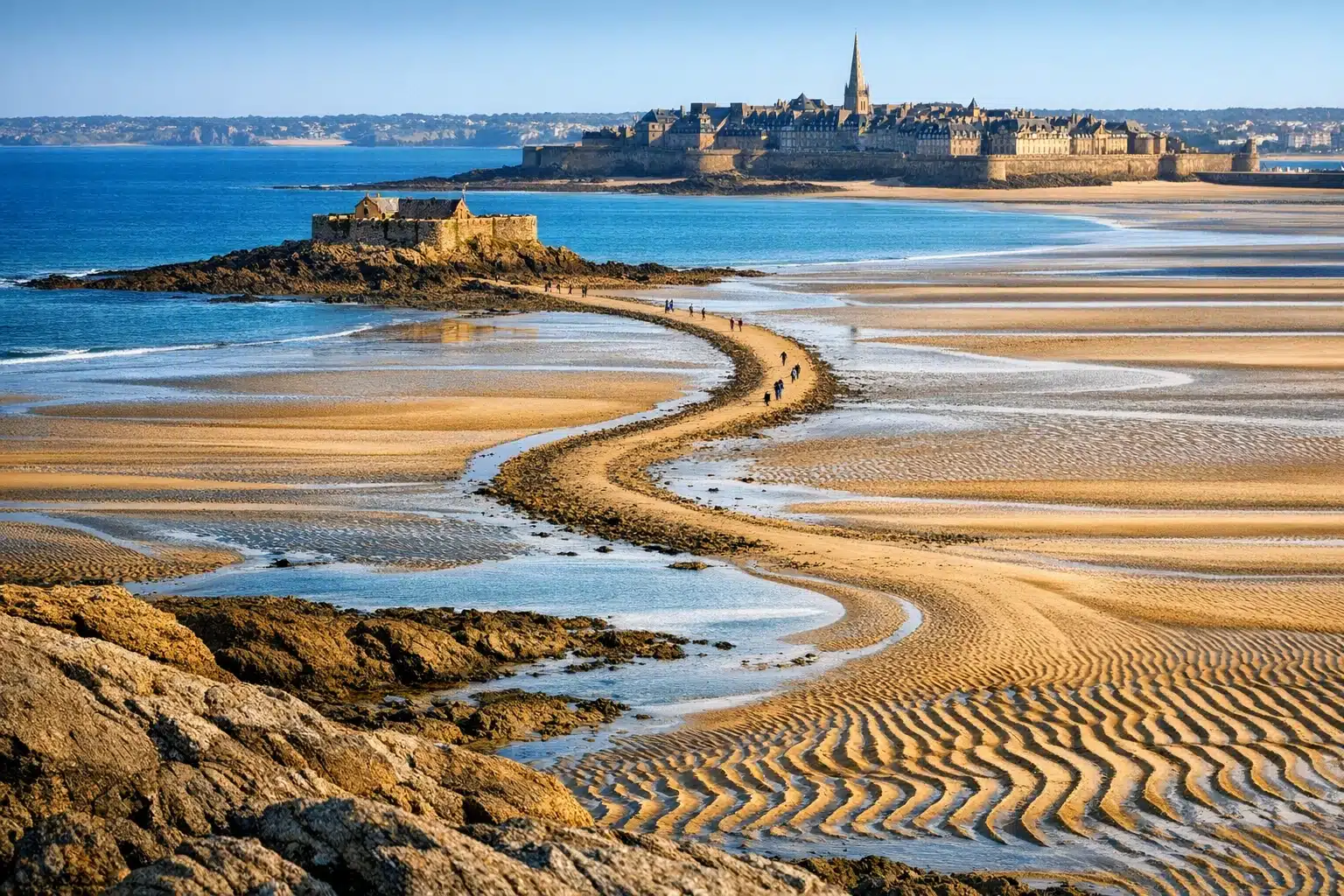
There is also a tide factor worth noting. The Bay of Saint-Malo is known for some of the highest tidal ranges in Europe, and the changing waterline can dramatically alter the look of beaches, islands, and harbour edges over the course of a day. That shifting scenery adds a quiet kind of theatre to even a simple walk. One hour the sea glitters close beneath the walls; later the sand stretches out, exposing routes and textures that were hidden before. For travellers with limited time, that visual change makes even a compact itinerary feel richer.
Onboard Experience, Accommodation Choices, and Seasonal Comparisons
The onboard part of the trip deserves more attention than many travellers give it. Because this is an overnight crossing in each direction, your comfort at sea has a direct effect on how much you enjoy the day ashore. The biggest decision is usually whether to book a cabin. For most passengers, especially on a 2-night trip, the answer is yes. A cabin offers privacy, a place to shower, somewhere to leave a small bag, and above all the possibility of real sleep. Reclining seats or public lounges may suit some budget-conscious travellers, but saving money can feel less worthwhile if you arrive tired and underpowered.
Cabin choice also shapes the tone of the trip. Inside cabins are usually the practical option and often sufficient for a simple overnight crossing. Outside cabins with a window can feel more enjoyable, especially when daylight departure or arrival aligns with your schedule, but the value depends on whether you expect to spend much waking time in the room. On a short sailing, many passengers prefer to put extra money into meals or a slightly better itinerary ashore rather than a premium cabin category.
Dining is another area where expectations help. Ferry dining is not the same as destination dining, but it can still be part of the holiday mood. Booking an evening meal saves hassle, especially on busy departures. Breakfast timing matters too, since a decent meal before disembarkation can help you use the day better once in France. A simple rule applies here: avoid turning the ship into an afterthought. If you plan the onboard hours sensibly, the whole trip feels smoother.
There are also useful comparisons to make:
- Summer usually offers longer daylight, warmer weather, and a livelier atmosphere in St Malo, but fares can be higher and ports busier.
- Shoulder season often delivers better value and a calmer feel, though weather can be less predictable.
- Travelling with a car adds flexibility and can make sense for couples or families, yet foot-passenger travel is often easier for a pure St Malo visit.
- Compared with flying, the ferry may take longer, but it reduces luggage restrictions and can remove the need for car hire.
If you are prone to motion sickness, preparation is sensible rather than dramatic. The Channel can be calm, but not always. Packing medication, choosing a midship cabin if possible, and getting fresh air on deck when conditions allow are straightforward steps. A good mini-cruise does not require luxury. It requires small decisions that protect sleep, reduce friction, and leave space for the pleasure of waking up somewhere new.
Practical Tips Before You Book and Before You Board
The most successful 2-night trips usually feel easy not because they are effortless, but because the traveller has quietly dealt with the details in advance. Start with documentation and timings. Check passport validity early, confirm boarding cut-offs, and read the operator instructions rather than relying on memory from older ferry trips. For UK travellers in particular, entry procedures for France have evolved in recent years, and the safest habit is to verify official guidance close to departure. Printing or downloading confirmations, cabin details, and booking references can also save time if mobile signal or battery life becomes inconvenient.
Budgeting deserves a realistic approach. Prices vary sharply according to season, demand, cabin type, and whether you bring a vehicle. A foot-passenger mini cruise in a quieter period may represent good value, while a summer sailing with a car and upgraded cabin can feel closer to the cost of a longer land-based break. The key question is not simply whether the fare looks cheap. It is whether the package works for your priorities. If you want ease, atmosphere, and a short sea journey from the South West, the route may justify a higher headline price than a basic flight because it bundles transport, accommodation, and a distinctive travel experience.
A practical packing list for this route is usually short:
- Passport and booking documents.
- A small overnight bag separate from luggage stored in the car, if driving.
- Comfortable walking shoes for cobbles, ramps, and waterfront paths.
- A light waterproof layer, since Channel weather can turn quickly.
- Medication, including anything for motion sickness if needed.
- A power bank, since a long travel day can drain phones faster than expected.
Once in St Malo, simplicity pays off. Reserve one or two priorities instead of creating a military-grade schedule. A rampart walk, an enjoyable lunch, and time by the sea often leave a better memory than squeezing in multiple extra stops. If you do want to venture beyond the old town, watch the clock generously. Port travel has less elasticity than city sightseeing, and missing boarding is not the sort of souvenir anybody wants.
Conclusion for Weekend and Short-Break Travellers
For travellers who want a compact escape without the logistical sprawl of a full holiday, a 2-night cruise from Plymouth to St Malo is an unusually smart option. It suits people who enjoy the journey as much as the destination, value walkable historic places, and prefer a short, vivid change of scene over a rushed checklist of attractions. Book with realistic expectations, give yourself a comfortable cabin, and keep the day ashore focused. Do that, and this small crossing can feel bigger than it looks on the calendar: part transport, part travel ritual, and part Breton city break wrapped into one memorable weekend.