4-Night Golf Resort Stay in Scotland
A four-night golf resort stay in Scotland offers a practical way to combine famous fairways, comfortable lodging, and enough time to settle into the rhythm of the trip. It suits players who want more than a rushed weekend but do not need a full week away. With long summer daylight, compact travel distances, and courses ranging from classic links to inland parkland, Scotland makes a short golf break feel surprisingly complete. This guide explains how to plan the stay, choose the right region, estimate costs, and shape each day for strong golf and genuine rest.
1. Why a 4-Night Golf Break Works So Well
A four-night resort stay sits in a sweet spot between convenience and depth. It is long enough to justify flights or rail travel, yet short enough to fit around work schedules, school calendars, or a limited annual leave balance. For many golfers, that balance matters as much as the destination itself. Scotland is especially well suited to this format because many of its major golfing regions are compact, scenic, and connected to airports in Edinburgh, Glasgow, Aberdeen, or Inverness. Once you arrive, you can often stay in one base and reach multiple courses without spending half the holiday in a car.
That efficiency is part of the appeal. A four-night stay usually gives you three full golfing days and part of an arrival or departure day. In practice, that means many visitors can fit in:
- Two headline rounds on courses they have always wanted to play
- One easier or less formal round to keep the pace relaxed
- Time for a lesson, short-game session, or resort practice facilities
- Evenings for proper dinners, local whisky, or simply recovering after wind and walking
It is also a smart format from a stamina perspective. Scottish golf, particularly links golf, can be more physically demanding than some first-time visitors expect. Uneven lies, firm turf, sea air, and strong winds make even moderate courses feel lively. Walking is common, and the weather can change in one round from bright sun to a sideways drizzle. With four nights, you have enough time to absorb that experience without turning the trip into a test of endurance.
From a planning angle, the structure is simple. The basic outline of a successful stay looks like this:
- Choose one region rather than trying to cover the whole country
- Book a resort or hotel that gives easy access to two or three good courses
- Mix one prestigious round with one or two less pressured options
- Leave breathing room for weather delays, travel, and rest
- Budget for meals, transfers, and add-ons such as caddies or club hire
In other words, a four-night golf trip is not a compromise version of a bigger holiday. In Scotland, it can be the ideal shape of the experience. You arrive with anticipation, settle in quickly, play enough golf to feel immersed, and leave before fatigue steals the shine from the final day. That rhythm is one reason short Scottish golf breaks have become so popular among couples, friends, corporate groups, and serious players seeking a concentrated taste of the country’s golfing culture.
2. Choosing the Right Region and Resort Base
The biggest planning decision is not only which resort to book, but which region best matches your expectations. Scotland has well over 500 golf courses, and they are not all variations of the same seaside test. Some areas offer iconic links and dense golf clusters, while others provide inland layouts, luxury resort settings, or quieter landscapes that trade celebrity for atmosphere. Picking the right base can shape the entire mood of the holiday.
For first-time visitors, St Andrews and the wider Fife area are often the natural starting point. The draw is obvious: historic status, a concentration of respected courses, and a town whose streets feel stitched into golf itself. A stay here suits travelers who want to be close to famous names, traditional links terrain, and a walkable destination with restaurants, pubs, and coastal views. The trade-off is cost and competition. Tee times in this part of Scotland can be difficult to secure, and accommodation prices tend to reflect the region’s global reputation.
East Lothian, just east of Edinburgh, is another strong option and often a very efficient one. It combines excellent golf with easier airport access, making it ideal for a compact stay. Golfers who want variety often appreciate East Lothian because the area has a rich mix of established links, scenic coastal courses, and quality hotels within manageable driving distance. Compared with the most famous parts of Fife, it can feel slightly less ceremonial and more flexible.
Ayrshire on the west coast is a classic choice for players drawn to dramatic links landscapes and storied championship venues. The golf can be thrilling, especially when the wind is up and the sea seems to be part of the routing. Resort stays here often lean toward a fuller destination experience, where the hotel, spa, dining, and surrounding courses all work together. It is a strong fit for groups that want premium facilities rather than a purely town-based trip.
If your priorities lean toward scenery, tranquility, and a broader resort atmosphere, Perthshire and parts of the Highlands deserve serious attention. These areas are less about ticking off famous links and more about enjoying space, service, and a rounded holiday. They often work well for mixed-interest travel, where one guest may be deeply invested in golf while another values wellness, hiking, or sightseeing.
When comparing bases, think in practical terms:
- How far is the resort from the airport or rail connection?
- Do you want traditional links, inland parkland, or a mix?
- Are you chasing name recognition, convenience, or value?
- Will non-golf amenities matter to your group?
The right answer depends less on prestige than on fit. A famous postcode is exciting, but the best short golf holiday is usually the one with the least wasted motion and the most comfortable rhythm from breakfast through the final putt.
3. A Smart 4-Night Itinerary: How to Pace the Stay
The strongest four-night itinerary does not try to squeeze every possible round into the calendar. Instead, it uses pacing as a form of strategy. Scotland rewards golfers who leave room for weather, travel, and simple enjoyment. A practical model is to arrive on day one, play three rounds over the next three days, and depart on the fifth day after breakfast or a light morning activity. That schedule sounds simple, yet its value lies in how it balances ambition with recovery.
On arrival day, the best move is usually restraint. If you land early and feel fresh, a short warm-up round, academy session, or time on the practice ground can help you adjust to turf conditions and wind without placing too much pressure on the day. Jet lag, airport delays, and changing weather can make a full championship round feel more demanding than expected. Think of the first day as a soft opening, not the main performance.
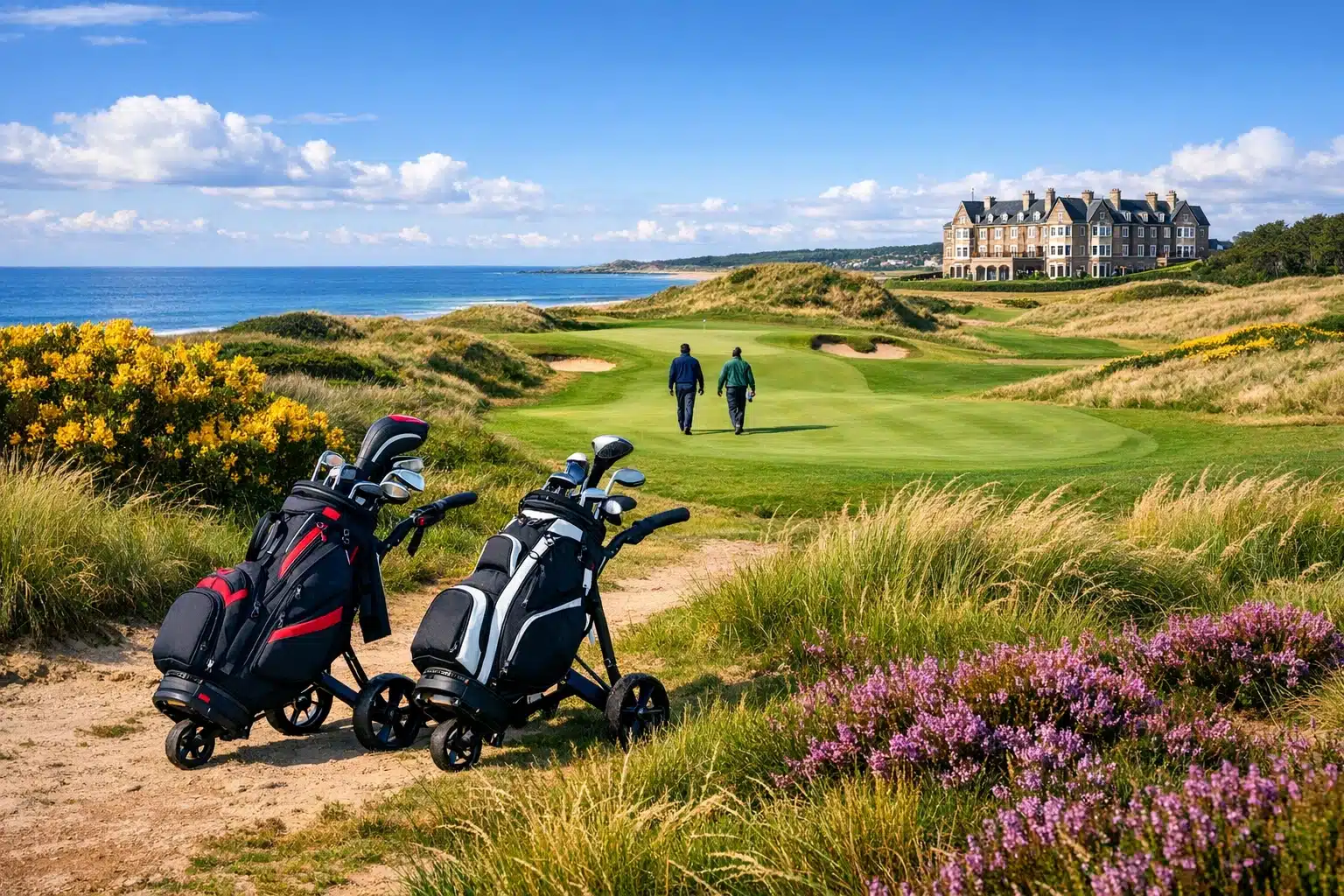
Day two is often the right moment for the marquee course. By then, you know the resort layout, your clubs are sorted, and your body has settled. Breakfast feels less hurried, the drive to the first tee is calmer, and you can give the round the attention it deserves. This is where many travelers schedule their most anticipated experience, whether that means a historic links, a championship venue, or the course with the highest green fee. If the sky is clear and the light stretches into evening, the whole day can feel cinematic: gorse glowing gold, distant surf behind the dunes, and that peculiar Scottish half-light lingering over the 18th green as if the day is in no rush to finish.
Day three works well as a contrast round. Rather than choosing another brutally demanding test, many golfers enjoy a course that offers a different style or tempo. It might be a shorter layout, a heathland or parkland design, or a fourball better-ball match that keeps the mood lively. This is also a good point in the trip for a caddie, a lesson, or a long lunch if your group wants to slow the pace.
By day four, fatigue can quietly appear, especially in the legs and lower back after links walking. The best final round is usually memorable without being punishing. A scenic course close to the resort is often ideal. Keep the evening relaxed, settle the bill, and avoid a late-night rush before departure.
A useful daily rhythm looks like this:
- Early breakfast and weather check
- Round or practice block with flexible tee time planning
- Late lunch or clubhouse meal
- Short recovery window, spa visit, or local walk
- Unhurried dinner and an early look at the next day’s forecast
This approach gives the trip shape. You still play serious golf, but the stay feels like a holiday rather than a logistical exercise.
4. Costs, Booking Strategy, and What to Pack
Budgeting a Scottish golf resort stay is less about finding one magic number and more about understanding the moving parts. Total cost can vary sharply depending on region, season, resort standard, and the fame of the courses included. A traveler booking shoulder season dates and mixing one premium round with two moderately priced rounds may spend far less than someone targeting peak summer at a top-name venue. The practical lesson is simple: value in Scotland often comes from balance rather than bargain hunting.
Accommodation is usually the largest fixed cost after flights or long-distance transport. Resort rooms can range from comfortable mid-market options to luxury properties with spas, fine dining, and concierge booking support. In many regions, prices rise noticeably between late spring and early autumn, when daylight is long and demand is strongest. Green fees can be equally variable. A standard resort course may be relatively accessible, while a celebrated championship or heritage course can cost several times more. Club hire, trolley rental, caddie fees, and gratuities should also be factored in from the start rather than treated as afterthoughts.
A realistic budget plan often includes:
- Accommodation for four nights
- Three rounds of golf, possibly at different price tiers
- Airport transfer, rental car, rail, or private transport
- Breakfast, dinners, drinks, and snacks between rounds
- Practice balls, caddie services, or club storage fees
- Travel insurance and weather-ready clothing if you need to buy it
Booking timing matters. For highly sought-after destinations, tee times and the best resort inventory can disappear months ahead, especially for summer weekends. Booking early gives you the widest choice and the best chance of pairing preferred lodging with preferred courses. That said, shoulder season can be an excellent compromise. April, May, September, and October often bring lower pressure on reservations, cooler temperatures, and rates that can be more manageable than peak midsummer.
Packing deserves more attention than many visitors expect. Scotland’s climate can shift quickly, and being underprepared changes the tone of a trip fast. You do not need to pack for extreme conditions, but you do need layers and waterproof confidence. A sensible golf bag for Scotland usually includes:
- A waterproof jacket and waterproof trousers
- Two pairs of golf shoes if possible
- Several gloves and extra socks
- Mid-layers for wind and temperature changes
- A wool hat or cap and a small umbrella
- A yardage book holder or notebook if you like strategic play
The smartest packing principle is this: plan for change, not disaster. If the weather stays kind, great. If it turns, you will still enjoy the trip instead of merely enduring it. Good planning does not remove uncertainty from Scottish golf; it turns uncertainty into part of the charm.
5. Conclusion: Who This Trip Suits Best and How to Make It Worthwhile
A four-night golf resort stay in Scotland is especially well suited to travelers who want quality over volume. It works for the golfer chasing a first meaningful taste of Scottish courses, the returning player who prefers one region at a time, the couple combining golf with comfort, and the small group that values shared experience more than frantic course collecting. It is also a practical format for people with limited time, because it delivers a real sense of place without demanding a long absence from home or work.
The target audience is broader than low-handicap purists. Strong players will appreciate the strategic demands of links golf, but mid-handicappers and social golfers can enjoy these trips just as much if the course mix is chosen well. The key is to avoid building the holiday around status alone. One famous round can be thrilling; three ultra-demanding rounds in rough weather may leave some guests exhausted. A better strategy is to combine aspiration with realism. Choose a signature course, match it with one or two enjoyable supporting rounds, and let the resort environment do part of the work. Comfortable rooms, easy breakfasts, on-site practice areas, and dependable dining matter more on short trips than many people assume.
To get the most value from the stay, focus on decisions that improve flow:
- Stay in one region instead of trying to sample the whole country
- Reserve tee times early for high-demand courses
- Build in one lighter afternoon or easier round
- Budget honestly for extras instead of being surprised later
- Choose season and destination according to your priorities, not just reputation
There is also something emotionally satisfying about the four-night format. It begins with anticipation, settles into routine quickly, and ends while the trip still feels fresh. You leave with vivid memories rather than travel fatigue: the sound of spikes on a clubhouse floor, a long approach running firm across the links, a late dinner after wind-burned cheeks and laughter over missed putts. That compactness is not a limitation. It is part of the design.
For readers considering this kind of holiday, the most useful takeaway is straightforward. Scotland does not require an extravagant two-week pilgrimage to be rewarding. A carefully planned four-night stay can deliver world-class golf, regional character, and enough breathing room to enjoy both. If you choose the right base, keep the itinerary disciplined, and prepare for the weather with good humor, a short Scottish golf break can feel complete in all the ways that matter.