14-Night Rarotonga All-Inclusive Resort
Two weeks in Rarotonga gives a traveler something a quick island break rarely delivers: enough time to stop performing relaxation and actually feel it. A 14-night all-inclusive resort stay is especially relevant here because the Cook Islands shine at an unhurried pace, where lagoon swims, market visits, and long dinners matter as much as headline excursions. This guide explains the appeal, the trade-offs, and the practical details that turn a dream booking into a well-planned holiday.
Outline: the sections below examine why a longer stay suits Rarotonga, what all-inclusive packages usually cover, how to shape two rewarding weeks without overloading the calendar, how the value compares with other island holidays, and which booking choices make the trip easier for couples, families, and slow-travel seekers.
Why Fourteen Nights Fits Rarotonga So Well
Rarotonga is not a destination that begs to be conquered. It invites you to soften your pace. As the largest island in the Cook Islands and the main arrival point for most visitors, it blends practical convenience with classic South Pacific scenery: a mountainous green interior, a fringing lagoon, village communities, and a coastal road that loops the island in roughly 32 kilometers. On paper, that can make Rarotonga seem small enough for a short stay. In practice, that compact scale is exactly why fourteen nights often makes more sense than five. There is enough to do, yet not so much that the trip becomes a race.
A longer stay changes the emotional math of the holiday. If you fly a significant distance to get there, the first day or two can disappear into airport transfers, check-in, a grocery stop, and the pleasant confusion of shifting into island time. On a four- or five-night break, those logistical edges take a large bite out of the experience. With two weeks, they fade into the background. You can spend the first days settling in, learning the beach conditions near your resort, and deciding whether you want active mornings and lazy afternoons or the reverse. By the second week, the island starts to feel familiar rather than visited.
That sense of familiarity matters because Rarotonga rewards repetition in the best way. The same lagoon can look silver at dawn, turquoise at noon, and ink-blue under evening cloud. A café you liked on day three may become your trusted lunch stop on day ten. The Saturday Punanga Nui Market in Avarua can be a quick browse for one traveler and a cultural anchor for another, with food stalls, produce, crafts, and music offering a more local texture than resort life alone. Even simply riding the local bus or driving the ring road becomes easier and more enjoyable once you are not trying to squeeze every stop into one frantic afternoon.
Compared with larger island destinations where distance demands constant transport planning, Rarotonga lets visitors build a gentle routine. Compared with ultra-luxury destinations that can feel visually stunning but socially insulated, it still offers everyday contact with local life. Fourteen nights gives you time for both: the polished comfort of a resort and the slower discovery that turns a holiday into a memory with depth.
What “All-Inclusive” Usually Means in Rarotonga
The phrase “all-inclusive” sounds simple, but in Rarotonga it can mean different things depending on the property. This is important because the Cook Islands are not dominated by massive resort complexes in the same way some Caribbean destinations are. Many accommodations are smaller, quieter, and more boutique in style. That often makes the atmosphere more personal, but it also means package structures can be less standardized. One resort may include all meals, airport transfers, selected drinks, and non-motorized water sports, while another may use the same phrase for breakfast, dinner, and a limited activities program.
As a result, travelers should read the inclusions with care instead of relying on the label alone. Common features of a genuine all-inclusive stay in Rarotonga often include:
• accommodation for the full fourteen nights
• daily breakfast, lunch, and dinner
• tea, coffee, and some standard beverages
• airport transfers
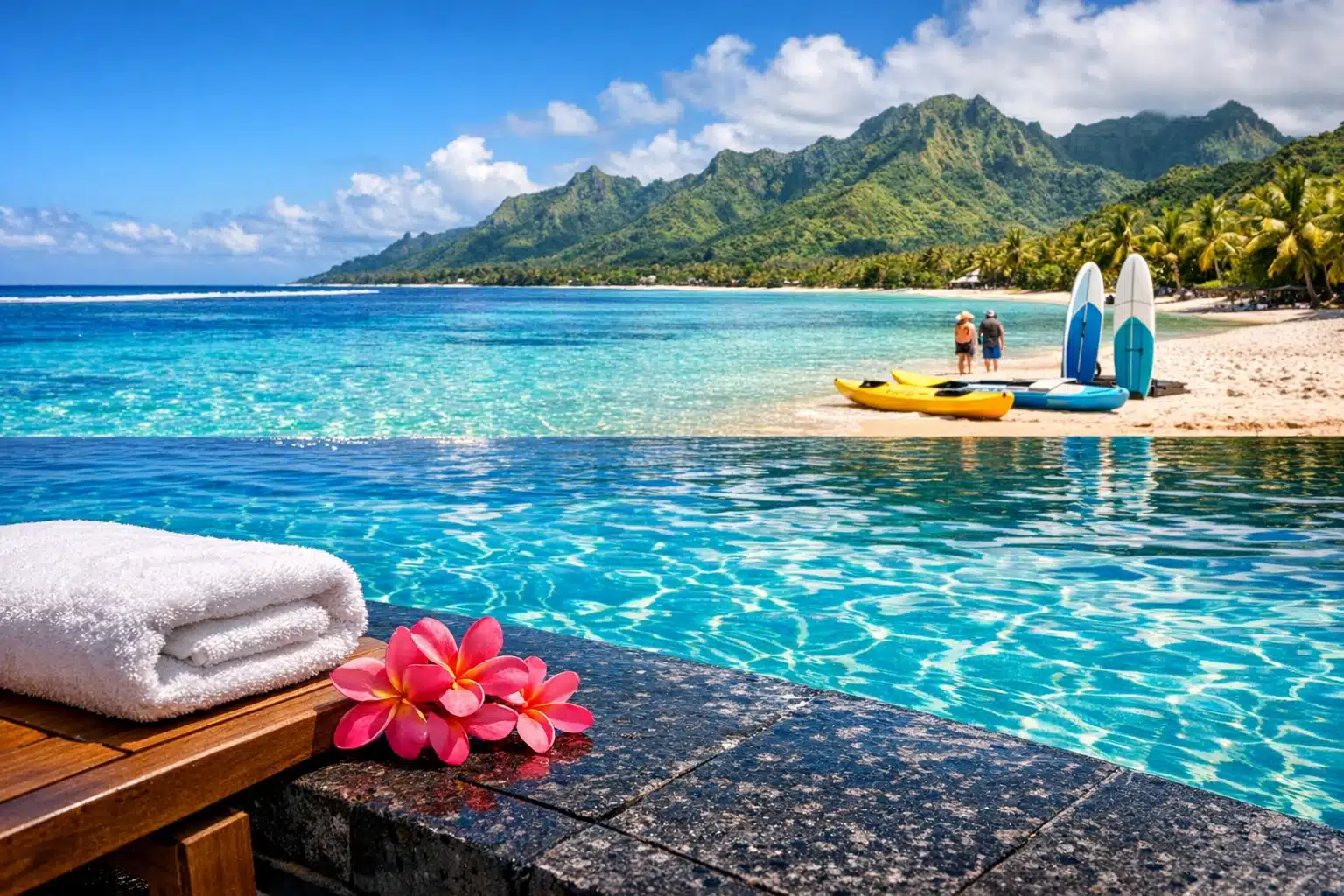
• access to kayaks, paddleboards, or snorkeling gear
• occasional cultural nights or entertainment
What is often not included is equally important:
• premium alcohol
• spa treatments
• diving trips and fishing charters
• off-site island tours
• scooter hire or car rental
• private dining experiences
This distinction shapes the real value of the holiday. If you expect a resort where every cocktail, excursion, and indulgence is automatically covered, some Rarotonga properties may feel more selective than expected. On the other hand, if your goal is predictability, comfort, and fewer daily spending decisions, a well-designed all-inclusive package can still work beautifully. Many travelers appreciate not having to think about three meals a day, especially on an island where dining out for two weeks can add up quickly.
There is also a useful comparison to make between all-inclusive, full-board, half-board, and room-only stays. Room-only options offer maximum freedom and can suit travelers who plan to explore cafés, roadside grills, and markets regularly. Half-board packages are often a good middle ground for visitors who want breakfast and dinner sorted but still want lunch off-property. Full-board reduces food planning even further. All-inclusive becomes most attractive when the resort also includes transfers, activities, and enough dining variety to prevent menu fatigue over two weeks.
The best approach is practical rather than romantic. Ask for sample menus, activity schedules, beverage lists, and any blackout conditions before booking. A resort can still be excellent even if it is not endlessly inclusive. What matters is clarity. Clear expectations create relaxed travelers, and relaxed travelers are much more likely to enjoy a two-week stay on an island built for easy breathing.
How to Spend Fourteen Nights Without Overplanning the Trip
The secret to enjoying fourteen nights in Rarotonga is not filling every day. It is giving the island enough room to unfold. A common mistake with longer tropical stays is assuming each day must justify itself through an outing, a booking, or a photo-worthy event. Rarotonga works better when the schedule has rhythm. Think of it as a song with verses and pauses: a market morning, a lagoon afternoon, a walk at sunset, then a day when doing very little feels exactly right.
A balanced two-week stay usually mixes resort time with selected island experiences. The island’s lagoon is a natural starting point. Snorkeling is often strongest in areas where the water is calm and clear, though conditions vary with weather and tide. Many resorts lend equipment, and even repeated sessions can feel different as light, fish activity, and wind shift through the day. Beyond the water, visitors often enjoy a cross-island walk or guided hike through the lush interior. The route to Te Rua Manga, also known as The Needle, is well known, but it is not a casual flip-flop stroll, so footwear, weather awareness, and honest fitness assessment matter.
A simple structure can help. For example:
• Days 1 to 3: arrive, rest, learn the resort layout, enjoy nearby swimming areas, and adjust to the pace
• Days 4 to 6: explore Avarua, visit the market if timing fits, book one guided activity, and try a few meals outside the resort
• Days 7 to 10: take on a bigger outing such as a hike, lagoon cruise, cultural show, or spa day
• Days 11 to 14: repeat favorite experiences, leave room for weather changes, and avoid cramming the final days
This kind of framework keeps the holiday from becoming either chaotic or dull. It also lets travelers respond to mood. Some mornings on Rarotonga seem designed for ambition, with bright skies pulling you toward a paddleboard or an island drive. Others arrive wrapped in soft cloud, inviting a book, a slow breakfast, and the kind of nap nobody defends because nobody needs to. That flexibility is one of the biggest advantages of a longer stay.
Couples may use the extra time for alternating social and private days. Families can spread activities out so children are not overloaded. Solo travelers often find that two weeks creates a comfortable blend of independence and routine. Instead of chasing highlights, you begin recognizing patterns: which beach is best before lunch, when the road is quietest for a circular drive, and which evening light makes the lagoon look almost unreal. That is when the trip stops feeling arranged and starts feeling lived.
Cost, Value, and How Rarotonga Compares with Other Island Escapes
A 14-night all-inclusive resort stay in Rarotonga is rarely the cheapest tropical holiday at first glance, but the headline number does not tell the full story. Value depends on what is bundled, how often you would otherwise dine out, and what kind of traveler you are. Long-haul island trips often become expensive through small, repeated purchases: breakfasts, coffees, beach gear rentals, transfers, and last-minute activity bookings. When meals and some recreation are already covered, the spending pattern becomes far more stable. For travelers who like to know the shape of the budget before departure, that predictability is often worth paying for.
Rarotonga also occupies an interesting middle ground in the South Pacific. Compared with ultra-premium destinations such as Bora Bora, it can feel more grounded and generally more accessible while still delivering the lagoon, palms, and romantic atmosphere many people want. Compared with larger resort-heavy destinations such as parts of Fiji, Rarotonga can feel more intimate and less sprawling. You are not typically paying for endless scale or nonstop entertainment. You are paying for a setting where simplicity is part of the appeal. For some travelers, that is excellent value. For others who want multiple restaurants, big nightlife, or a packed roster of in-house attractions, a different destination may fit better.
Season also affects value. The drier months, often considered the most popular, usually bring higher demand and potentially stronger rates. Warmer, wetter periods can sometimes offer lower prices, although travelers must accept greater humidity and a higher chance of rain. A smart comparison is not just peak season versus off-season, but cost versus experience style. If you plan to spend most days in the lagoon and evenings outdoors, weather becomes a larger factor. If you mainly want scenic rest with occasional excursions, shoulder periods may offer a better balance.
For practical budgeting, it helps to divide likely costs into categories:
• fixed costs: flights, accommodation package, transfers, insurance
• semi-fixed costs: one or two tours, a rental car or scooter, possible child-related extras
• flexible costs: drinks outside package limits, spa visits, shopping, café stops, gifts
This framework makes comparison easier. An all-inclusive stay may cost more upfront than room-only lodging, yet become competitive once food and transport are added back in.
In short, Rarotonga tends to offer its best value to travelers who prioritize ease, scenery, and a slower holiday style over constant novelty. If your idea of luxury is fewer decisions and more time near water, the numbers often make more sense than they first appear.
Final Thoughts: Who Should Book a 14-Night Rarotonga Resort Stay
A two-week all-inclusive stay in Rarotonga suits a specific kind of traveler, and that is a strength rather than a limitation. This trip is ideal for people who want their holiday to breathe. Couples celebrating a honeymoon, anniversary, or simply a long-delayed break often appreciate the way fourteen nights removes pressure. There is time for special dinners, quiet mornings, and the lovely luxury of not needing every day to outperform the last one. Families can benefit too, especially if they prefer one comfortable base instead of changing hotels and repacking bags. With children, predictability around meals and easy beach access can make a meaningful difference.
It can also work well for solo travelers and remote workers taking leave who want restoration rather than social overload. Rarotonga is scenic, manageable, and easier to understand over time than a larger, more fragmented destination. Still, it is not the perfect fit for everyone. Travelers who crave nonstop nightlife, large-scale shopping, or a constant flow of major attractions may find two weeks too quiet unless they actively enjoy slower routines. Likewise, those who want every premium indulgence bundled into the room rate should examine package details closely, because “all-inclusive” on this island often means thoughtful coverage, not unlimited extravagance.
Before booking, a few final checks can protect the experience:
• confirm exactly which meals, drinks, and activities are included
• ask whether menus change enough for a two-week stay
• review transfer arrangements and check-in times
• consider the season and your tolerance for humidity or rain
• decide whether you want to remain mostly at the resort or explore the island regularly
These questions are not glamorous, but they are powerful. They turn a hopeful booking into an informed one.
If you are the kind of traveler who values warm water, manageable adventure, and a holiday that gradually loosens your shoulders instead of tightening your schedule, a 14-night Rarotonga all-inclusive resort stay can be a very smart choice. It offers more than beach time. It offers continuity: enough days to notice the island’s subtle changes, enough comfort to settle in, and enough freedom to let the trip become your own. For readers weighing whether two weeks is too long, the better question may be whether a shorter stay would leave the island just when it was starting to feel right.