Customized Jewelry for Her: Gift Ideas, Styles, and Personalization Tips
Customized jewelry sits in a sweet spot between fashion and memory, which is why it keeps appearing for birthdays, anniversaries, graduations, and thoughtful self-gifting. A ring, necklace, or bracelet becomes more than an accessory when it carries initials, a date, a birthstone, or even a handwritten message. This guide explains how to choose a piece that looks polished, feels personal, and lasts beyond the moment it is unwrapped.
Outline: What This Guide Covers Before You Choose a Piece
Before diving into gemstones, engravings, and chain lengths, it helps to understand the landscape of customized jewelry. The term can describe several very different products. On one end, there are ready-made pieces with one personal element added, such as a bracelet engraved with initials. On the other end, there are fully bespoke designs created from scratch around a sketch, a story, or a specific stone. Both options can be meaningful, but they serve different needs, budgets, and timelines.
This article is organized to move from broad decisions to finer details. Think of it as a map before a journey through velvet boxes and tiny shining hinges. First, it looks at why personalized jewelry often feels more memorable than standard gifts. Then it compares popular styles for women, including necklaces, rings, bracelets, earrings, and charm-based pieces. After that, it examines the materials and craftsmanship that affect comfort, durability, and long-term value. Finally, it explains how to place an order wisely, present the gift well, and care for it once it becomes part of her routine.
- Why personalization adds emotional depth to a gift
- Which jewelry styles suit different personalities and occasions
- How engraving, birthstones, coordinates, and symbols compare
- What to know about gold, silver, platinum, plating, and gemstone strength
- How to budget, order, package, clean, and store the finished piece
An outline matters here because customized jewelry is rarely a casual purchase. Even a modest piece involves decisions that affect wearability. A beautiful script font may look elegant online but become hard to read in a tiny pendant. A slim ring may feel perfect aesthetically yet prove impractical for everyday use if sizing is uncertain. A softer gemstone may suit occasional wear but not constant contact with hard surfaces. By approaching the category step by step, buyers can avoid common missteps and focus on what matters most: creating something that reflects her taste rather than the seller’s default template.
The sections ahead are designed for several kinds of readers: partners planning a milestone gift, parents shopping for a daughter, friends organizing a group present, and women choosing something personal for themselves. The goal is not to sell a fantasy. It is to make the process clearer, calmer, and more enjoyable, so the final piece feels intentional from the first idea to the final clasp.
Why Customized Jewelry Often Feels More Meaningful Than a Standard Gift
Jewelry has always carried symbolism beyond ornament. Across cultures, people have used rings, pendants, amulets, lockets, and brooches to signal love, loyalty, memory, identity, and status. Personalization builds on that long tradition by turning a decorative object into a marker of a specific relationship or moment. A necklace with a child’s initials does not simply match an outfit; it represents a bond. A bracelet engraved with a graduation date does more than shine under a sleeve; it quietly marks the end of one chapter and the beginning of another.
This is why customized jewelry often succeeds where generic gifts can feel forgettable. A standard item may be attractive, but it can also feel interchangeable. Personal details change that equation. When a piece includes coordinates from a first trip together, a birthstone linked to a family member, or a line copied from a handwritten note, the object starts to hold narrative weight. It becomes a small archive she can wear.
There are practical advantages as well. Personalization can help match the gift to her real style rather than a broad trend. If she prefers minimal clothing and clean silhouettes, a slim bar necklace with discreet engraving may fit naturally into her wardrobe. If she enjoys layered looks, stacked birthstone rings or a charm bracelet might be a better fit. The best custom piece does not merely announce effort; it slips into her life as if it was always meant to be there.
- For anniversaries, dates and coordinates often feel intimate without being flashy
- For new mothers, initials, names, or birthstones are common and wearable choices
- For graduations, motivational words, zodiac motifs, or class years can work well
- For self-purchases, symbolic designs can celebrate independence, healing, or achievement
Another reason these gifts resonate is that they balance sentiment with longevity. Flowers fade. Chocolates disappear. Trend-driven accessories can look dated after one season. A thoughtfully designed custom piece, by contrast, can remain relevant for years because its meaning is personal, not seasonal. Even when styles shift, names, memories, and family milestones do not lose their significance so easily.
That said, meaning is not created by adding more details. In fact, restraint often produces the strongest result. One birthstone, one date, or one line of engraving can feel elegant and heartfelt, while too many symbols may crowd the design. The emotional power lies in specificity, not excess. A piece that captures one clear story usually feels more sincere than one trying to capture every story at once.
Popular Styles for Her and the Best Ways to Personalize Them
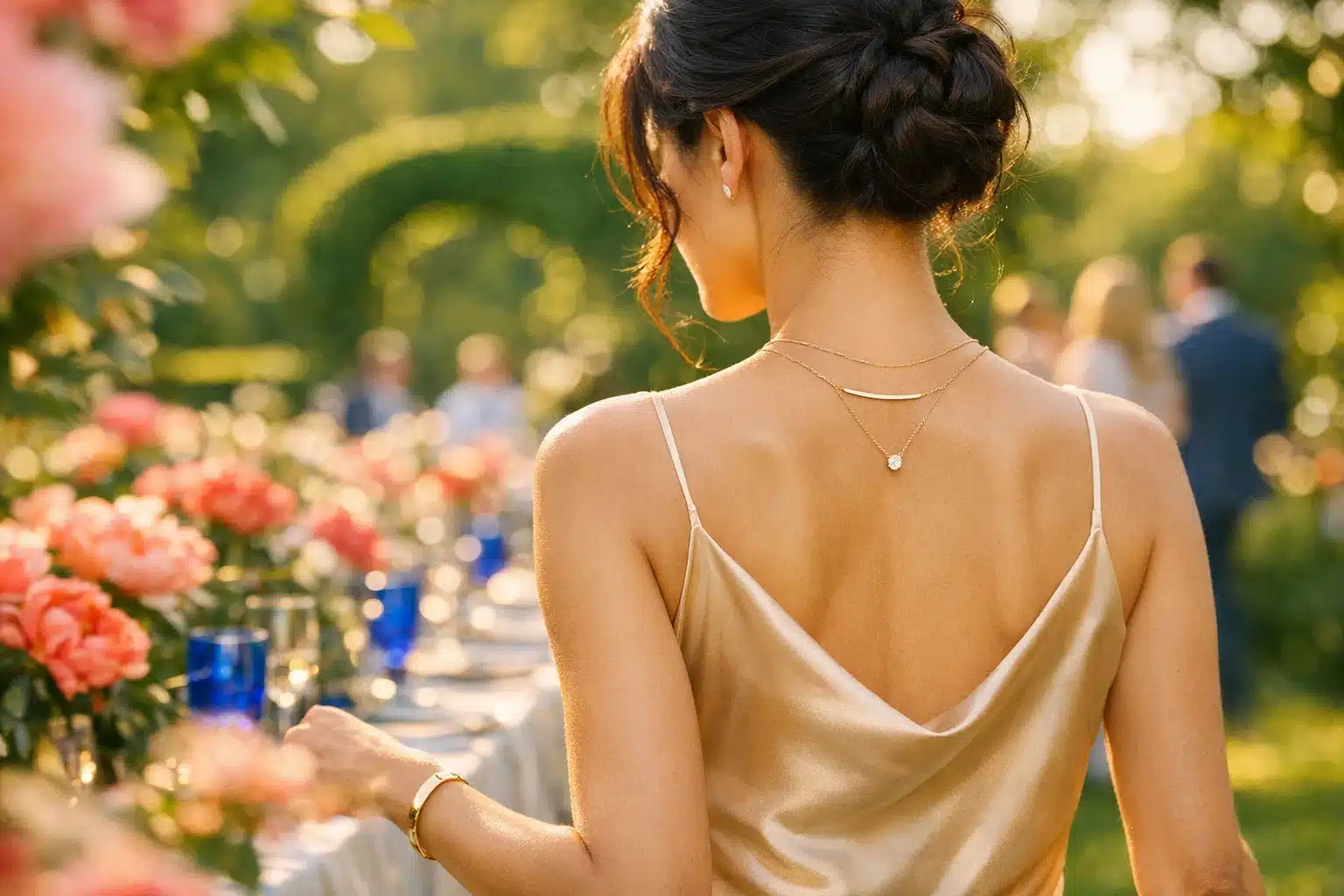
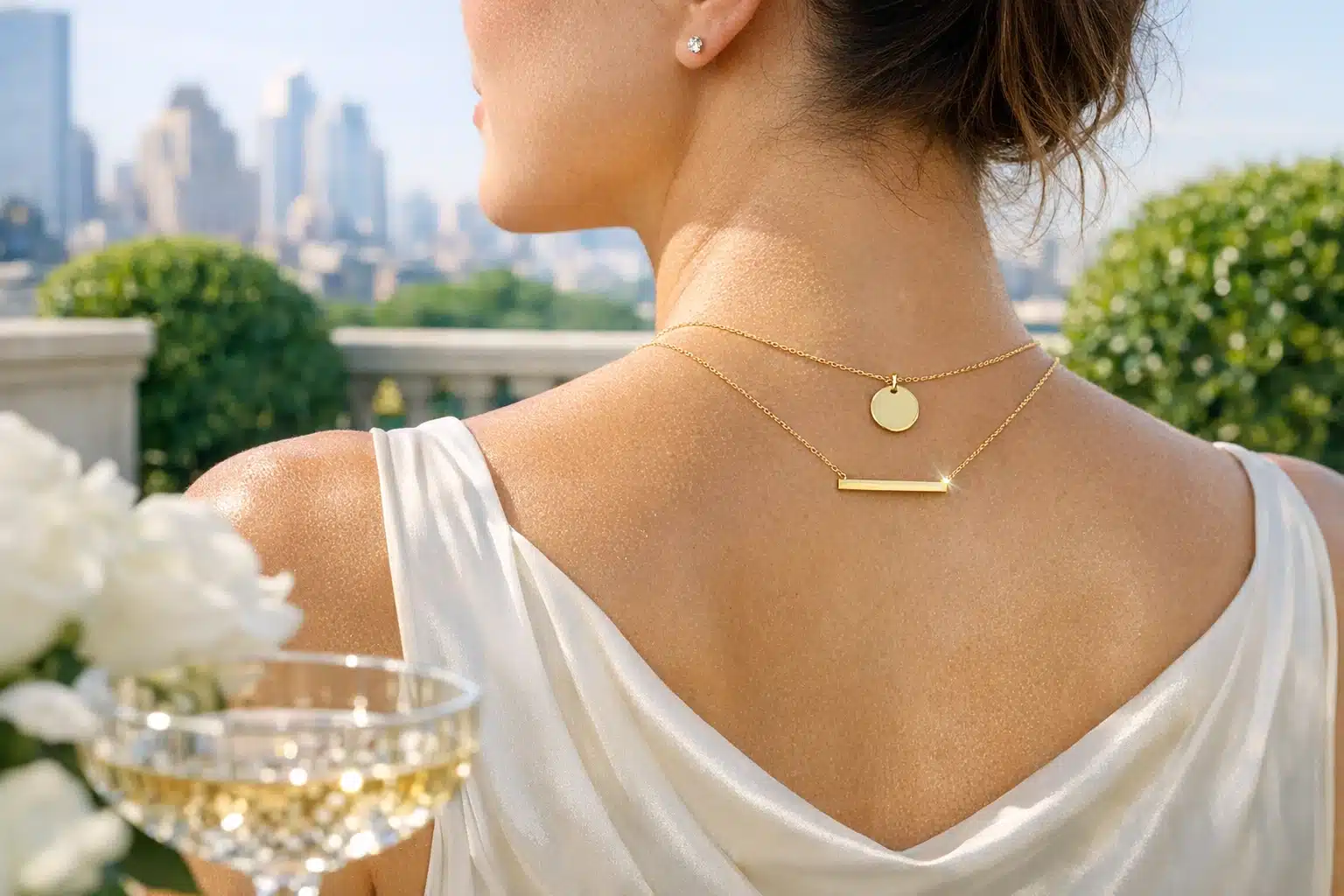
Once the emotional purpose is clear, the next step is choosing the format. Different jewelry types offer different visual effects, comfort levels, and personalization options. Necklaces are among the most popular because they are easy to size, widely visible, and simple to layer with existing pieces. A nameplate necklace creates an expressive look, while a disc pendant with initials or a short message feels quieter. Bar necklaces work especially well for coordinates or dates, and lockets offer a more classic, memory-focused direction.
Bracelets are slightly more understated. They are ideal for people who like meaningful accessories that do not dominate an outfit. Engraved cuffs can carry short phrases, while chain bracelets with small charms allow a gradual build over time. This makes them especially good for milestone collecting. One charm can represent a graduation, another a trip, another a family event. The bracelet becomes a timeline around the wrist.
Rings are deeply personal but require more caution. They sit close to the body, are touched constantly, and often carry strong symbolic meaning. Stacking rings with birthstones are versatile and contemporary. Signet rings can hold initials or symbols and have a long heritage appeal. However, rings demand accurate sizing, and that makes surprise gifting more difficult unless the recipient’s size is already known.
Earrings are less often customized with text because there is limited space, but they can still be personalized through stone choice, shape, or symbolic motif. Birthstone studs, celestial designs, floral silhouettes, and custom drops based on a sketch or emblem can all work beautifully. Earrings tend to emphasize style first and personal meaning second, which is not a weakness; it simply changes how the customization is expressed.
- Engraving is best for names, dates, coordinates, and brief phrases
- Birthstones add color and family symbolism without requiring text
- Initials are timeless and often suit minimalist tastes
- Handwriting engravings feel intimate and distinctive
- Zodiac or symbolic motifs work well when overt text feels too direct
Choosing the right personalization method depends on the balance between visibility and privacy. Some women love a clear nameplate that becomes part of their signature style. Others prefer a hidden engraving on the back of a pendant or inside a ring band, known only to the wearer and the giver. Neither approach is better. One is a spotlight, the other a whisper.
Design style should also match her daily life. If she works with her hands, a high-set stone ring may snag or feel impractical. If she usually wears crewnecks and sweaters, a shorter chain might disappear under clothing while a medium pendant length shows more consistently. If she already mixes metals, two-tone jewelry can blend easily into her collection. The smartest customized jewelry does not chase trends blindly; it fits the rhythm of her wardrobe, her habits, and her personality.
Materials, Gemstones, and Craftsmanship: What Quality Looks Like in Real Terms
A personalized design can be lovely in concept and disappointing in reality if the material quality is weak. This is where buyers need to slow down and read the specifications. Metal choice affects color, durability, maintenance, skin comfort, and price. Sterling silver is a common starting point and contains 92.5% pure silver, which is why it is often marked as 925. It offers a bright, cool tone and generally costs less than solid gold, though it can tarnish over time and benefits from occasional polishing.
Gold comes in several purities, each with trade-offs. Fourteen-karat gold contains 58.5% pure gold and is widely valued for balancing durability with a rich appearance. Eighteen-karat gold contains 75% pure gold and has a warmer tone, but it is slightly softer. For everyday pieces, many shoppers choose 14K because it resists wear well. Platinum is denser, naturally white in tone, and often favored for fine jewelry because of its strength and hypoallergenic reputation, though it is usually more expensive and heavier on the body.
Buyers should also distinguish between solid gold, gold-filled, vermeil, and gold-plated jewelry. These are not interchangeable terms. Gold-plated pieces have a thin surface layer and tend to wear down faster with friction, moisture, and daily contact. Vermeil uses sterling silver as the base metal with a thicker gold layer than standard plating. Gold-filled jewelry has a mechanically bonded outer layer that is generally more durable than plating. Solid gold remains the most durable premium option for frequent wear.
Gemstones deserve the same level of attention. If the piece includes a stone, hardness matters. Diamonds rank 10 on the Mohs scale, sapphires and rubies rank 9, while softer stones such as opal are more vulnerable to scratching or cracking. That does not mean softer stones should be avoided, only that they are better suited to careful wear. Lab-grown diamonds and lab-created sapphires can offer the same chemical identity as mined counterparts, often with lower cost and clearer sourcing information.
- Check for metal hallmarks such as 925, 14K, or 18K
- Ask whether stones are natural, lab-grown, treated, or simulants
- Look for secure clasps, smooth finishing, and sturdy links
- Read dimensions carefully because product photos can make items seem larger
- Confirm whether the engraving is laser, hand, or machine based
Craftsmanship is visible in small details. Prongs should look even. The underside of a ring should feel smooth. Chain links should move freely without catching. Engraving should be legible and centered. A good custom piece does not need to be extravagant, but it should feel intentional in the hand. In jewelry, quality is often not loud. It is quiet confidence rendered in metal.
How to Choose, Order, Present, and Care for Customized Jewelry
After deciding on style and materials, the final stage is where many buyers either make the purchase confidently or get overwhelmed by small decisions. A useful starting point is to define the purpose of the piece in one sentence. Is it meant to celebrate a milestone, mark a relationship, honor a family connection, or serve as an everyday signature item? That answer will simplify almost everything else, from price range to design complexity.
Budget should come next. Customized jewelry exists at many levels, from affordable sterling silver pendants to high-end custom gold pieces with diamonds or sapphires. Setting a budget early prevents emotional overspending and helps narrow the field. It is also wise to account for hidden costs such as chain upgrades, premium fonts, extra engraving lines, rush production, gift packaging, shipping, and resizing. A piece advertised at a moderate base price can become significantly more expensive once options are added.
Ordering wisely means asking practical questions before checkout. Production time matters because custom work often cannot be returned as easily as ready-made jewelry. If the gift is tied to a birthday or anniversary, ordering several weeks ahead is safer than assuming a quick turnaround. Sizing matters most for rings and fitted bracelets. If the purchase is a surprise, consider pieces that need less precision, such as adjustable bracelets or necklaces with extender chains.
- What metal is used, and is it solid, plated, filled, or vermeil
- How long will production and shipping take
- What parts of the order can be changed after purchase
- Is a preview provided before engraving or stone setting
- What care instructions are recommended for that exact piece
Presentation can elevate even a simple design. A custom message card, a short explanation of the symbol or date, or a handwritten note can help the recipient understand the thought behind the piece. This is especially helpful when personalization is subtle, such as hidden coordinates or an engraving on the reverse side. The reveal becomes part of the gift.
Care is the final piece of the puzzle. Jewelry lasts longer when stored separately to prevent scratching, removed before swimming or heavy cleaning, and wiped gently after wear to reduce buildup from oils, lotion, and perfume. Soft pouches, lined boxes, and occasional professional checks are worthwhile for finer pieces. Rings with stones benefit from periodic inspection to ensure settings remain secure. Chains should be clasped before storage to reduce tangling.
A custom piece is at its best when it blends meaning, fit, and craftsmanship without strain. The aim is not to create the most elaborate object possible. It is to choose a design she will actually reach for, whether she is dressing for work, dinner, travel, or an ordinary Tuesday that becomes memorable only because something thoughtful rests at her collarbone or wrist.
Conclusion: Choosing a Piece She Will Truly Keep
For gift givers, the strongest customized jewelry choice is usually the one that reflects her real taste, not the most dramatic option on a product page. For women buying for themselves, the best piece often marks a turning point, a relationship, or a personal value in a way that feels stylish rather than sentimental for sentiment’s sake. If you focus on wearability, material quality, and one clear personal detail, the result is far more likely to become part of everyday life. In the end, customized jewelry works because it joins beauty with memory, creating an object that can be worn often and understood deeply.