Discover Luxury Beach Resort Escapes Around the World
Luxury beach resorts do more than place a beautiful room beside the sea; at their best, they combine setting, design, service, privacy, and local character into a trip that feels thoughtfully shaped from arrival to departure. For travelers balancing limited vacation time with significant budgets, understanding what truly defines quality has become more important than ever. From coral-ringed islands to dramatic coastal cliffs, today’s options span very different styles. This guide compares leading regions, explains what sets them apart, and helps you choose a stay that fits your season, pace, and expectations.
Outline
1. What luxury really means in a beach resort setting, from architecture and service to privacy and sustainability. 2. The distinct appeal of the Indian Ocean and Southeast Asia, where lagoon villas, tropical landscapes, and strong wellness cultures dominate. 3. The strengths of the Caribbean and Latin America, especially for easier access, family-friendly formats, and lively local character. 4. The varied personalities of the Mediterranean, the Middle East, and the South Pacific, where scenery, seasonality, and atmosphere differ dramatically. 5. A practical guide to choosing the right resort based on travel goals, timing, room category, total cost, and on-the-ground logistics.
What Defines a Truly Luxurious Beach Resort
A luxury beach resort is not simply an expensive property near water. Price can signal exclusivity, but the real difference lies in how a resort shapes the entire experience, from the first airport greeting to the final breakfast overlooking the tide. The most impressive resorts combine several elements at once: a memorable natural setting, thoughtful design, attentive but unobtrusive service, generous space, and a strong sense of place. If any one of those is missing, travelers often notice. A giant suite feels less special if the beach is crowded, the dining is forgettable, or the staff interaction is stiff rather than warm.
Design is one of the clearest points of comparison. Some resorts emphasize minimalism, using pale stone, local timber, and open-air pavilions to make the landscape the star. Others lean into romance and drama, with cliffside terraces, plunge pools, or overwater villas where the sea becomes part of the room itself. Neither approach is inherently better. What matters is coherence. When architecture, interiors, and landscaping reflect the surrounding destination rather than imitate a generic luxury formula, the stay feels richer and more grounded.
Service is equally important, and it often separates good resorts from exceptional ones. The best beach properties anticipate needs before they become requests. That might mean seamless transfers after a long-haul flight, flexible meal timing, staff who remember preferences without turning familiarity into performance, or activities that are easy to arrange without friction. Travelers paying premium rates increasingly expect this kind of polish, and with good reason. In many high-end markets, nightly prices can range from several hundred dollars to several thousand, especially during peak season, so the standard is understandably high.
There are also practical markers of luxury that are easy to overlook when browsing photographs:
• Room-to-beach distance and privacy levels
• Quality of the swimming beach at different tides
• Included amenities such as breakfast, non-motorized watersports, or airport transfers
• Dining variety for stays longer than three nights
• Sustainability practices, especially in fragile marine environments
Finally, the meaning of luxury changes with the traveler. For one couple, it is total seclusion and a private deck above a lagoon. For a family, it may be a spacious villa, a calm swimmable bay, and a children’s club that is genuinely well run. For an active traveler, luxury can mean immediate access to reef snorkeling, sailing, hiking, or diving rather than endless indoor opulence. In other words, the best resort is rarely the flashiest one. It is the one that matches personal priorities with unusual precision.
Indian Ocean and Southeast Asia: Lagoon Living, Wellness, and Tropical Refinement
If luxury beach travel had a dream palette, the Indian Ocean and Southeast Asia would provide much of it: brilliant water, soft white sand, lush vegetation, and architecture that blurs the line between indoors and outdoors. Yet these destinations are far from interchangeable. The Maldives, Seychelles, Bali, Phuket, and other regional favorites each deliver a distinct version of luxury, and understanding those differences can save travelers from booking a visually stunning resort that does not suit their style.
The Maldives is perhaps the most iconic example of the high-end island escape. Spread across nearly 1,200 islands, the country is famous for overwater villas, extraordinary marine life, and resorts that often occupy their own private island. For travelers seeking privacy, calm, and direct access to the sea, it is difficult to rival. House reefs can allow guests to snorkel straight from their villa or jetty, and many resorts treat transfers by speedboat or seaplane as part of the arrival ritual. The trade-off is equally clear: the experience can be deeply resort-centric. If you want village life, street food, shopping districts, or lots of cultural wandering, the Maldives is not usually the strongest fit.
The Seychelles offers a different rhythm. Its 115 islands are known for granite boulders, forested interiors, and beaches that feel cinematic without appearing overly manufactured. Larger islands mean more opportunity to combine resort comfort with independent exploration, hiking, and island-hopping. The mood can feel less isolated than the Maldives and more geographically varied. Travelers who want luxury with a stronger sense of landscape beyond the resort footprint often find the Seychelles compelling.
Southeast Asia adds another layer: value and cultural depth. Bali, for example, blends upscale beachfront stays with temples, craft traditions, rice terraces, and a strong wellness scene. Luxury here often extends beyond the room into spa rituals, culinary experiences, and off-resort excursions. Phuket and Koh Samui offer easier access, lively dining, and a broad range of resort styles, from private pool villas to family-friendly compounds. Compared with the Indian Ocean, these destinations may offer less absolute seclusion, but they frequently provide better cultural range and more flexibility for varied budgets.
Seasonality matters. The Maldives is typically driest from roughly December to April, while Bali’s drier months tend to fall between April and October. Travelers should also compare:
• Transfer complexity after international arrival
• Reef quality versus pure beach aesthetics
• Whether the trip is meant for retreat, exploration, or a mix of both
• The balance between all-inclusive convenience and destination dining outside the resort
In short, the region rewards clarity. If you want a polished castaway fantasy, the Maldives often leads. If you want granite-framed beaches and wider island exploration, the Seychelles stands out. If you want tropical luxury with culture, cuisine, and a little more movement, Southeast Asia remains exceptionally strong.
Caribbean and Latin America: Accessible Luxury with Energy, Culture, and Variety
For many travelers, especially those coming from North America, the Caribbean and nearby parts of Latin America occupy a sweet spot in luxury travel. Flight times can be manageable, the weather is appealing for much of the year, and the range of resort formats is impressively broad. Here, luxury does not always mean total isolation. Often it means easier access, warmer social energy, vivid food cultures, and the freedom to choose between adults-only quiet, multigenerational convenience, or a more active beach holiday with sailing, diving, golf, and local excursions.
Turks and Caicos is often associated with classic beach luxury: clear turquoise water, long powdery sands, elegant low-rise resorts, and a laid-back atmosphere that rarely feels chaotic. Grace Bay, in particular, is frequently praised for its beach quality and easy swimming conditions. This makes the destination ideal for travelers who want high-end relaxation without the logistical complexity of remote transfers. St. Lucia, by contrast, is better for those who like their luxury with topography. Its dramatic Piton mountains, rainforest excursions, and romantic hillside resorts create a more theatrical experience. The beaches may not always be the sole star, but the overall setting is memorably cinematic.
Mexico’s Riviera Maya offers a different advantage: scale and variety. Within a relatively accessible stretch of coastline, travelers can find intimate boutique resorts, large all-inclusive properties, wellness-focused hideaways, and villas designed for families or groups. The surrounding region also adds cenotes, archaeological sites, and a substantial dining scene. Costa Rica’s Pacific coast, especially areas such as Papagayo, appeals to travelers who want beachfront comfort combined with wildlife, surfing, or rainforest adventure. In these destinations, luxury often comes with a stronger sense of movement beyond the sun lounger.
There are practical considerations that matter here more than glossy brochure language:
• Hurricane season officially runs from June through November, with higher weather risk often concentrated in late summer and early autumn
• Beach conditions vary greatly by island, coast, and season
• Some resorts emphasize all-inclusive ease, while others are better for independent dining and local exploration
• Family programming can range from basic babysitting to sophisticated children’s clubs and teen activities
Another strength of the Caribbean and Latin America is personality. Music, cuisine, and community life often feel more present than in ultra-contained private-island resorts. That energy can be a major advantage for travelers who want luxury without silence so complete that it borders on detachment. If your ideal trip includes a polished room, a warm sea, a memorable cocktail at sunset, and the option to step beyond the property for culture or adventure, this part of the world offers some of the most balanced choices available.
Mediterranean, Middle East, and South Pacific Escapes: Drama, Heritage, and Remote Beauty
Some beach destinations seduce with softness; others win through contrast. The Mediterranean, parts of the Middle East, and the South Pacific belong to the second group. These regions often pair luxury beach stays with striking geology, strong cultural identities, and a sense that the setting is doing more than simply looking pretty in a brochure. The water may still be dazzling, but the mood differs from the serene castaway model of the Maldives or the tropical ease of the Caribbean. Here, travelers often choose between sophistication, dramatic scenery, and far-flung remoteness.
The Mediterranean is especially appealing for travelers who want their beach holiday stitched into a broader cultural landscape. Greece offers island resorts where whitewashed architecture, village tavernas, and yacht-filled bays create a sense of timeless summer ritual. Sardinia and the Balearic Islands can feel more polished and fashion-forward, while Portugal’s Algarve combines cliff-backed beaches with excellent golf and reliable hospitality. In much of the Mediterranean, the luxury experience extends beyond the resort gate. Guests often divide their days between beach clubs, old towns, boat trips, and long dinners that begin after sunset. The season, however, is narrower than many tropical destinations. Late spring through early autumn is generally strongest, and shoulder months often offer better value with fewer crowds.
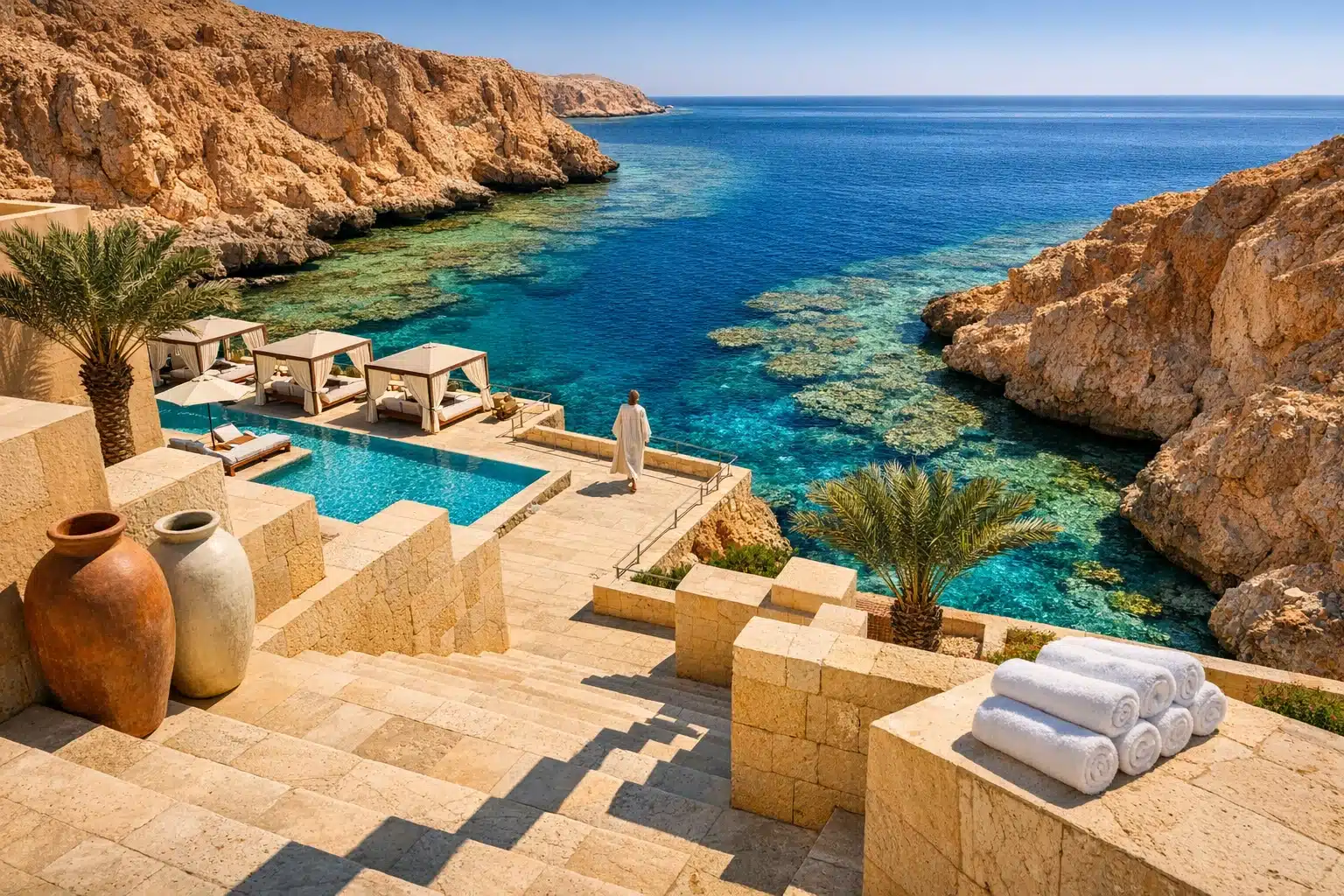
The Middle East offers a contrasting type of beachfront luxury. Along the Red Sea and in parts of Oman or the United Arab Emirates, resorts often focus on winter sun, immaculate service, warm-weather reliability, and excellent marine access. Coral reefs in the Red Sea can be superb for snorkeling and diving, while desert-meets-sea landscapes create a mood that is both stark and elegant. In midsummer, heat can be intense, so timing matters more than travelers sometimes realize. These destinations often suit guests who want a high-comfort resort stay with strong infrastructure and short transfer times once in the region.
The South Pacific, meanwhile, remains the benchmark for remote romance. Bora Bora is famous for lagoon color and overwater villas framed by volcanic peaks, while Fiji combines softer pricing in some areas with warm hospitality and broad appeal for couples, families, and divers. French Polynesia and Fiji both reward travelers willing to accept longer flight times in exchange for uncommon beauty and a slower emotional tempo. The sea feels less like scenery and more like atmosphere itself.
When comparing these regions, consider the following:
• Mediterranean: best for culture, beach clubs, village life, and summer glamour
• Middle East: best for winter sun, polished infrastructure, and reliable resort service
• South Pacific: best for remoteness, iconic lagoon settings, and milestone trips
Each region excels, but in a different register. One hums with history, another shines with precision, and another whispers with distance. Choosing well depends on whether you want your luxury wrapped in culture, convenience, or pure geographical wonder.
How to Choose the Right Luxury Beach Resort for Your Travel Style
Once travelers move beyond dream imagery and destination envy, the smartest question becomes simple: what kind of luxury actually fits this trip? A honeymoon, anniversary journey, family holiday, and solo reset may all call for a beach resort, yet they do not need the same setting, room type, schedule, or service style. Choosing well means looking past the headline rate and understanding how the property functions in real life. The room may be gorgeous, but if the beach is tidal, dining options are repetitive, or transfer times consume most of a short holiday, the experience can feel surprisingly flat.
Start with purpose. Couples often value privacy, quiet, and atmosphere after dark, which can make adults-only resorts, villa stays, or more remote islands particularly attractive. Families usually benefit from calm swimmable beaches, connecting rooms or multi-bedroom residences, flexible dining, and programming that keeps children engaged without reducing the property to a theme park. Active travelers should pay attention to reef access, dive operations, surf conditions, hiking, or nearby boating. Wellness-focused guests may care more about spa depth, sleep quality, healthy menus, and the overall pace of the resort than about oversized suites.
Budget planning should also be more detailed than “nightly rate times number of nights.” In luxury beach travel, the visible price is often only the starting point. Remote destinations may require seaplane, boat, or helicopter transfers. Meal plans can add substantially, particularly on private islands where outside dining is impossible. Taxes, service charges, premium activities, and private excursions can also shift the final spend quickly. A resort that looks cheaper at first glance may ultimately cost more than a property that includes breakfast, airport transfers, watersports, and evening drinks.
A practical selection checklist can help:
• How long is the total journey, door to door?
• Is the destination in its ideal weather window?
• Are the room categories meaningfully different, or mostly cosmetic?
• Can you comfortably spend several days on the property without dining fatigue?
• Does the beach match your priorities: swimming, snorkeling, surfing, walking, or views?
• Is the resort’s sustainability approach credible, especially in coral and island environments?
Finally, read the resort through your own temperament, not someone else’s fantasy. Some travelers are happiest in an intimate 30-villa property where every face becomes familiar by the second day. Others want a larger resort with multiple restaurants, a lively bar, and enough activity to avoid stillness. There is no universal best choice. The right luxury beach resort is the one that removes friction, respects your time, and lets the days unfold with a little more ease than ordinary life allows. When that match happens, the trip stops feeling expensive and starts feeling worthwhile.
Conclusion for Travelers Seeking a Luxury Beach Escape
Luxury beach resorts are no longer a single category but a wide global spectrum, ranging from remote overwater sanctuaries to culturally rich coastal retreats and highly polished family-friendly compounds. For couples planning a special celebration, the emphasis may fall on privacy and atmosphere; for families, convenience and beach safety often matter more; for experienced travelers, the deciding factor may be whether a resort reflects its destination rather than merely decorating it. The best choice usually comes from matching region, season, and resort style to the mood of the trip. If you approach the search with clear priorities instead of chasing a generic idea of luxury, you are far more likely to find a beach escape that feels personal, memorable, and genuinely restorative.