Explore 3 Night Mini Cruise Getaways From Southampton
A 3 night mini cruise from Southampton offers a practical way to sample life at sea without committing to a full week away. For couples, friends, solo travellers, and first-time cruisers, these short sailings combine easy embarkation, a change of scenery, and enough onboard time to test whether cruising suits your style. With European ports close by and rail links to the terminal, they turn a long weekend into a compact holiday that feels refreshingly different.
Outline and Why Southampton Is Such a Strong Starting Point
Before comparing specific getaway styles, it helps to map out the structure of this guide. The article looks at:
• the appeal of short cruises from Southampton
• common 3-night itinerary patterns
• the difference between Belgian, French, and Channel Island style sailings
• onboard experience, budgeting, and cabin choices
• which option works best for different types of travellers
Southampton is one of the UK’s main cruise gateways, and that matters more than many first-time passengers expect. A short cruise works best when the journey to the ship is simple. Southampton has direct rail connections from London, motorway access for drivers, and a well-developed port area used to processing large numbers of passengers efficiently. For many people in southern England, it offers a no-flight holiday that starts with far less stress than an airport queue, an early security slot, and the familiar dance of luggage restrictions.
The relevance of a 3-night cruise has grown as travellers look for shorter, more flexible breaks. Not everyone can take a full week away, and not everyone wants to spend heavily on a longer voyage before knowing if cruising actually suits them. A mini cruise solves both problems. It gives you a realistic taste of embarkation day, cabin life, sea days, dining rooms, entertainment schedules, and shore excursions. In other words, it is not just a holiday; it is also a useful trial run.
There is also a psychological advantage to a short sailing. A weekend at sea feels distinct from a hotel stay because the setting keeps shifting. One evening you are leaving the Solent with the shoreline fading into dusk, and by the next morning the ship has become its own little moving town, complete with breakfast queues, theatre listings, and passengers debating whether to choose the spa, the promenade, or another coffee. Even on a brief itinerary, that sense of transition can make a short break feel more eventful than its calendar length suggests.
That said, expectations need to be realistic. A 3-night cruise is usually about sampling rather than seeing everything. You will not have time for multiple deep-dive port visits or long, slow days at leisure in several destinations. Instead, the value comes from balance:
• one manageable destination or coastal call
• enough onboard time to enjoy the ship
• minimal annual leave use
• easier budgeting than a longer cruise
For travellers who want convenience, variety, and a genuine change of scene, Southampton-based mini cruises occupy a useful middle ground between a city break and a full holiday at sea.
Classic Mini Cruise Style: Belgian and Northern European City-Break Routes
Among the most popular 3-night getaway concepts from Southampton are the short Northern European sailings that combine a sea-going weekend with a compact city break. The best-known example is a call at Zeebrugge, the Belgian port often used as the gateway to Bruges. This type of itinerary works especially well for travellers who want a destination with recognisable charm and easy sightseeing. Bruges, with its canals, market squares, and medieval architecture, fits the mini-cruise format because it rewards even a limited amount of time. You can stroll, sample local food, browse chocolate shops, and still feel you have experienced somewhere distinctive rather than merely passing through.
One reason these itineraries are so appealing is their rhythm. On a short cruise, timing is everything. Belgian city-break sailings often deliver a comfortable sequence: departure from Southampton, a full evening onboard, a port call that feels substantial rather than rushed, and a final night back at sea. For people who are curious about cruising but do not want every day packed with excursions, this balance is ideal. You get one focused destination instead of several fragmented stops.
There are also practical strengths. Zeebrugge is positioned to serve popular day-trip routes into Bruges, and organised transfers are commonly available. That makes the destination manageable for first-timers. The same general logic can apply to other short Northern European options when available, such as ports linked to Dutch or coastal city visits. The key appeal is similar: relatively short sea distances from southern England make these itineraries feasible within a 3-night window.
When comparing this style of getaway with French or Channel Island alternatives, the atmosphere tends to feel more “mini city break” than “coastal unwind.” The emphasis is usually on:
• sightseeing on foot
• cafés, museums, and historic streets
• buying a few edible souvenirs
• taking photographs rather than spending hours in transit
There are trade-offs, of course. Weather in Northern Europe can be changeable even in warmer months, and a short port call means careful planning matters. If your priority is a long lunch, canal-side wandering, and a destination with postcard appeal, this route style is often the strongest candidate. If you want beaches, a slower pace, or a more regional French flavour, another itinerary type may suit you better.
Still, for many travellers, this is the mini cruise in its purest form: an easy departure from Southampton, a night of sea air and shipboard anticipation, a compact European city experience, and a return journey that lets you enjoy dinner, a show, and the quiet satisfaction of having gone somewhere meaningful without needing a full week away.
French Coast and Channel Islands Options: Better for Scenery, Food, and a Slower Pace
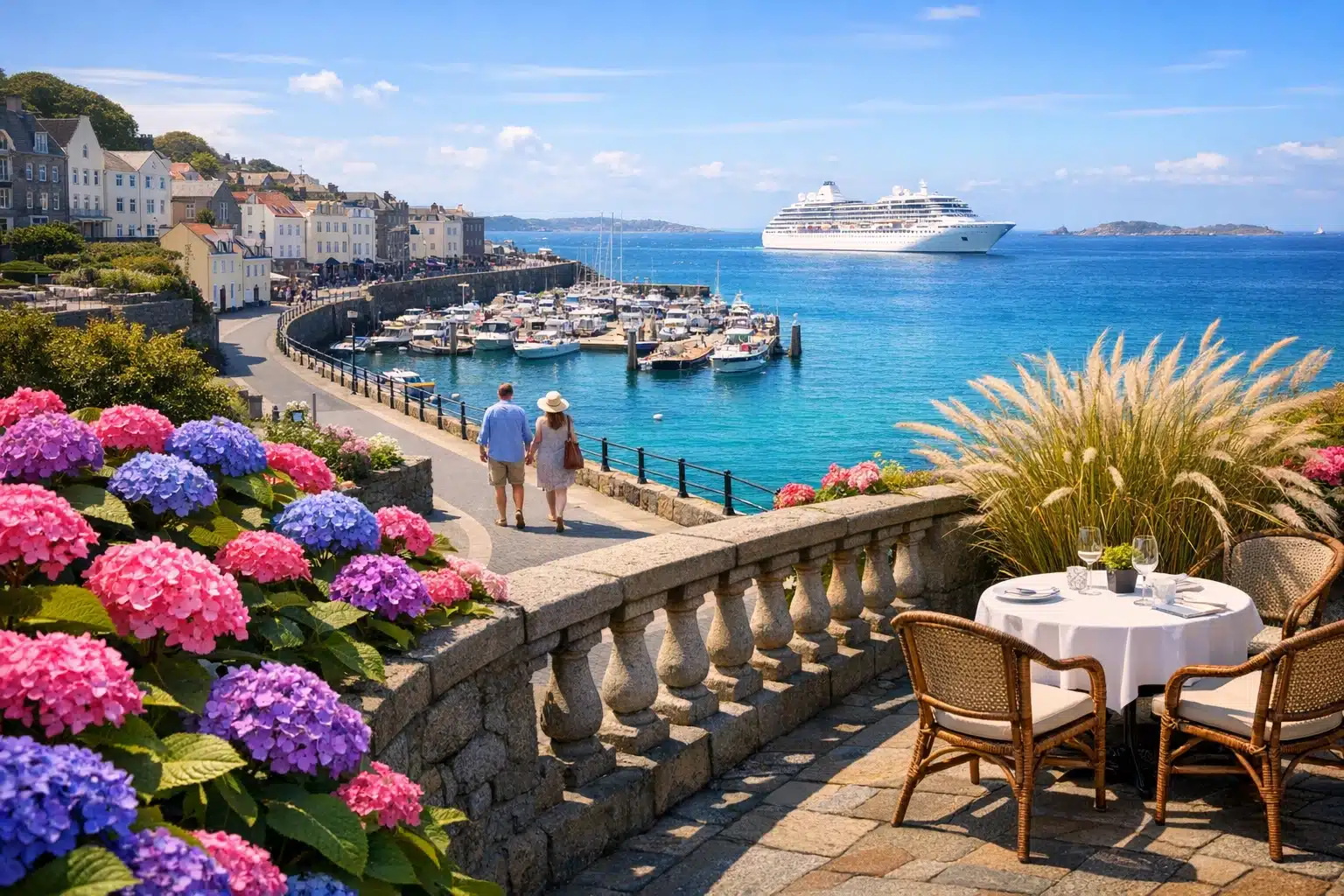
If Belgian mini cruises lean toward the classic city-break model, French coast and Channel Island sailings often deliver a softer, more relaxed alternative. These routes can include ports such as Cherbourg, Le Havre, or St Peter Port in Guernsey, depending on season and operator. What makes them attractive is not simply geography, but mood. A French coastal call tends to invite long walks, bakery stops, seafood lunches, harbour views, and a gentler sightseeing pace. For some travellers, that feels far more restorative than trying to “do” a famous city in a few concentrated hours.
Cherbourg, for instance, has the advantage of relative proximity to southern England, which makes it well suited to short itineraries. It offers an approachable Normandy gateway feel, with maritime history, waterfront areas, and access to regional character without the intensity of a major capital-style visit. Le Havre, by contrast, can appeal to travellers interested in architecture or those considering onward trips linked to Normandy’s wider heritage. Guernsey brings yet another variation: a Channel Island atmosphere with a blend of British familiarity and continental influence, often paired with attractive seafront settings and a more leisurely holiday tempo.
This route category also tends to suit food-focused travellers. Even on a brief stop, French ports can be rewarding if your ideal shore day includes local pastries, market produce, cider, seafood, or simply a good coffee on a square where nobody seems in a hurry. That may sound like a small detail, but on a 3-night trip, pace matters. Because time is limited, destinations that are enjoyable without a packed schedule often feel more successful than places demanding a checklist.
Compared with Northern European city-break sailings, French and Channel Island routes frequently appeal to passengers who value:
• a calmer day ashore
• regional food and drink
• scenic waterfronts
• easier low-pressure exploring
• less emphasis on major landmark chasing
There are, however, practical nuances to consider. Some Channel Island calls may use tender boats rather than direct docking, and that can affect convenience, especially in unsettled weather. Port logistics vary, and a short cruise leaves little room for disruption. Travellers who prioritise certainty may prefer straightforward dock-and-go ports. On the other hand, if you are drawn to the idea of stepping off the ship into a smaller harbour setting where the day unfolds more slowly, that small extra complication may be worth it.
In short, these itineraries are excellent for couples, adult friends, and anyone who wants a change of scene without the intensity of full-scale urban sightseeing. They replace rush with atmosphere, and sometimes that is exactly what a long weekend needs.
What You Actually Get on a 3-Night Cruise: Cabins, Costs, Dining, and Time Onboard
One of the most common misunderstandings about mini cruises is that they are only about the destination. In practice, the ship itself is a large part of the experience, especially on a 3-night itinerary where onboard time is significant. That is why value should not be judged by fare alone. Two sailings with similar prices can feel very different once you factor in cabin type, dining inclusions, drinks, Wi-Fi, parking, gratuities where applicable, and shore transport.
Cabin choice is a good example. An inside cabin is often the cheapest route into a short cruise and can make sense if you plan to spend very little time in the room. For a budget-conscious traveller, that can be smart rather than stingy. But on a short break where atmosphere matters, an ocean-view or balcony cabin may noticeably change the feel of the trip. Waking to grey-blue water and early light at the window can make even a compact itinerary feel more expansive. The right choice depends on your habits, not on a universal rule.
Dining also deserves careful comparison. Many mini cruises include main dining rooms, buffet access, and basic entertainment in the fare. Specialty restaurants, premium coffees, drinks packages, spa treatments, and excursion add-ons are usually extra. For first-time cruisers, this can be the moment when a supposedly cheap getaway becomes less economical than expected. A sensible planning approach is to separate costs into three layers:
• base fare
• essential extras such as travel to Southampton and parking
• optional spend such as cocktails, treatments, or upgraded dining
Onboard schedules are usually busy enough that boredom is unlikely, even on a short trip. Typical offerings may include quizzes, theatre shows, live music, cinema screenings, deck walks, pools, talks, shopping, and casual lounges. A mini cruise is particularly good for people who like variety in small doses. You can have breakfast, watch the coastline dissolve into open water, read for an hour, wander through the atrium, and still be dressed for dinner by evening without feeling over-programmed.
There are some strategic tips worth keeping in mind. Arrive in Southampton with time to spare, especially if you are travelling by road. Check whether your fare includes a drinks package or onboard credit, because these can significantly affect overall value. And remember that short cruises can sometimes carry a more energetic social atmosphere than longer voyages, especially on weekend departures. That may be a plus if you enjoy lively evenings, but travellers seeking total quiet should research ship style and departure dates carefully.
The best mini cruise is not always the cheapest one. It is the one whose onboard offering matches how you actually like to travel.
How to Choose the Right Southampton Mini Cruise for Your Travel Style
For the target audience of this topic, the final question is simple: which 3-night mini cruise is actually worth booking? The answer depends less on the ship brochure and more on your reasons for going. A short sailing is a flexible product. It can be a test run, a birthday treat, a low-stress couple’s escape, or an easy substitute for a short-haul flight break. Choosing well means matching itinerary style to personal priorities.
If you are a first-time cruiser, the best option is usually one with straightforward logistics and one clear destination. Belgian city-break style sailings often work well because they combine a recognisable port call with enough ship time to understand the cruise routine. You get a clean sample of embarkation, dining, entertainment, and one day ashore without overcomplicating the trip. If you discover you love sea days, you can book longer next time with more confidence.
If you are travelling as a couple and want atmosphere over box-ticking, French coast or Channel Island itineraries may be the stronger choice. These tend to reward unhurried travellers who enjoy local food, harbour views, and the pleasure of not needing to race between landmarks. There is a quiet luxury in a simple day done well: coffee on deck, a slow arrival, a walk by the water, and dinner back on board as the ship eases away from port.
For friend groups, the decision often comes down to energy level. If your group wants a busier social scene, late-night entertainment, and a destination that encourages active exploring, a city-focused itinerary may land better. If the aim is conversation, scenery, and relaxed time together, the French or Channel Islands route has advantages. Solo travellers should also think about pace and comfort. Short cruises can be ideal for solo guests because they offer plenty of structure, but it is still wise to check pricing, as solo supplements can affect value.
In summary, Southampton’s 3-night mini cruises are most useful for travellers who want maximum contrast with minimum complication. They suit people with limited time, cautious first-time cruisers, and experienced holidaymakers who simply want a compact reset. The smartest way to choose is to ask three questions:
• Do I want a city break or a gentler coastal day?
• Is my priority price, onboard experience, or destination character?
• Am I testing cruising, or am I looking for a polished short holiday?
Answer those honestly, and the right mini cruise becomes easier to spot. For busy travellers who want a manageable escape with a real sense of departure, Southampton remains one of the most practical and rewarding places to begin.