Southampton to Greek Islands: Cruise Travel Guide
A cruise from Southampton to the Greek Islands turns the journey itself into part of the holiday, linking Britain’s busiest cruise port with some of the Mediterranean’s most storied shores. It suits travellers who like the ease of unpacking once, the rhythm of sea days, and the pleasure of arriving in several countries without airports at every step. Because these itineraries are longer and more varied than a standard fly-cruise, decisions about season, ship, cabin, and port strategy matter more. This guide sets out the route, costs, practical choices, and island highlights so you can plan with realistic expectations and more confidence.
Article Outline
- The structure of Southampton to Greek Islands itineraries and what makes them different from shorter Mediterranean cruises.
- The best times to sail, along with comparisons between mainstream, premium, and luxury cruise styles.
- How pricing works, what extra costs to expect, and which cabin types offer the strongest value.
- What to expect in key Greek island ports, including common transport challenges and sightseeing priorities.
- Who this cruise suits most, plus practical planning advice on packing, mobility, pacing, and final decision-making.
1. Understanding the Route: What a Southampton to Greek Islands Cruise Really Looks Like
A Southampton to Greek Islands cruise is not simply a Mediterranean beach break with a British departure point. It is usually a longer, more layered voyage that blends transit, relaxation, and destination sightseeing in a way that differs sharply from fly-cruise itineraries. Most sailings are round trips lasting roughly 14 to 18 nights, though some stretch beyond that if the ship also includes ports in Spain, Italy, Croatia, or Turkey. Because the vessel must travel from southern England into the eastern Mediterranean, expect several sea days on both the outbound and return legs. For many travellers, that is not a drawback but a major part of the appeal: morning coffee on deck, uninterrupted reading time, evening shows, and the quiet satisfaction of watching climates and coastlines gradually change.
The route itself often follows a practical pattern. Ships commonly depart Southampton, pass through the Bay of Biscay, call at Iberian or western Mediterranean ports such as Vigo, Lisbon, Cadiz, Malaga, or Barcelona, and then continue eastward toward Greece. Some itineraries reach the Greek islands after a stop in Sicily, Malta, or southern Italy. Others include the Adriatic before turning south. In mileage terms, this is a substantial journey, often covering well over 5,000 nautical miles on a round trip, which explains why cruise lines build in more sea time than you would see on a seven-night Aegean sailing.
It also helps to understand the difference between “Greek Islands” as a marketing phrase and the actual port list. One cruise may focus on iconic names such as Santorini, Mykonos, and Rhodes. Another may include Corfu and Crete but skip the Cyclades altogether. A third may mix island calls with mainland ports like Piraeus for Athens or Katakolon for Olympia. Reading the itinerary carefully matters because the Greek experience can vary significantly:
- Corfu leans green, Venetian, and walkable.
- Santorini is dramatic and photogenic, but often crowded and tender-dependent.
- Mykonos mixes beaches, whitewashed lanes, and nightlife energy.
- Rhodes offers one of the most rewarding old towns in the region.
- Crete can mean archaeology, mountain scenery, or long transfer times depending on the port.
The practical charm of sailing from Southampton lies in simplicity. For UK-based travellers, there is usually no outbound flight, no airport baggage rules to navigate at the start, and less stress about delays breaking the holiday before it begins. On the other hand, these cruises ask for patience. If your priority is maximum island time with minimum transit, a fly-cruise may suit you better. If you enjoy the gradual unfolding of a journey, however, this route feels less like a dash and more like a novel with a proper opening chapter.
2. When to Go and Which Ship Style Fits: Season, Weather, and Cruise Line Differences
Choosing the right departure month can shape the entire character of a Southampton to Greek Islands cruise. The route spans several climate zones, so weather is not uniform from embarkation to final port. A spring sailing from the UK may begin with brisk deck temperatures and a lively Bay of Biscay before moving into warm, bright Mediterranean conditions. By contrast, a peak-summer departure often reaches Greece during very hot afternoons, especially in exposed ports such as Rhodes or Heraklion. In practical terms, late May, June, September, and early October are often the most balanced periods for many travellers because they combine workable temperatures with fewer extremes than high summer.
Typical daytime temperatures in the Greek islands can sit around the low to mid-20s Celsius in late spring, rise into the high 20s or low 30s in July and August, and soften again in early autumn. That may sound simple, but comfort depends on your sightseeing style. Walking through a hilltop town like Fira in Santorini or exploring Rhodes Old Town under direct sun feels very different at 23C than it does at 33C. Shoulder-season sailings can also offer a calmer atmosphere in popular ports, especially when tender queues, cable car lines, and coach traffic are lighter.
Ship style matters just as much as season. Not every cruise line approaches this route in the same way. Mainstream lines usually offer the widest range of entertainment, dining options, and cabin categories. They tend to suit families, multigenerational groups, and travellers who want a lively ship during the many sea days. Premium lines often trade some of that scale for a quieter onboard mood, more refined dining, and better service ratios. Luxury and ultra-luxury lines usually include more in the fare, but they may depart from Southampton less often on this exact route.
A simple comparison can help:
-
Mainstream ships: more activities, broader age mix, stronger value for families, but often busier pools and embarkation spaces.
-
Premium ships: calmer atmosphere, generally stronger food and service, good for couples and seasoned cruisers, though fares are higher.
-
Luxury ships: smaller passenger numbers and more inclusions, often excellent for destination-focused travellers, but availability is narrower and pricing is significantly higher.
Sea-day comfort is another overlooked factor. On a route this long, the ship is not just transport; it becomes your temporary neighbourhood. Look closely at deck space, indoor lounges, thermal suites, lecture programmes, enrichment talks, and dining flexibility. Travellers who love long afternoons with a book may prefer a quieter vessel with ample outdoor seating. Families with children may value splash areas, clubs, and casual dining that can absorb the pace of a two-week trip. The Greek islands may be the headline, but the right season and ship type determine whether the journey feels restorative or tiring.
3. Budgeting the Voyage: Fare Types, Cabin Choices, and the Costs People Forget
The headline fare for a Southampton to Greek Islands cruise rarely tells the whole financial story. One of the advantages of cruising is that accommodation, transport between ports, and much of your food are bundled together. That makes budgeting easier than piecing together hotels, ferries, and flights across several countries. Still, longer itineraries generate extra costs that can surprise first-time bookers, especially when sea days increase onboard spending opportunities. A realistic budget should include not only the cruise fare but also transport to Southampton, pre-cruise accommodation if needed, gratuities, drinks, Wi-Fi, specialty dining, travel insurance, and shore excursions.
Cabin choice is one of the biggest pricing variables. Inside cabins are usually the least expensive and can work very well on a port-heavy itinerary, but on a two-week sailing with multiple sea days, some travellers find them too enclosed. Ocean-view cabins add natural light without the full premium of a balcony. Balcony cabins are often the sweet spot for this route because they give you private outdoor space during scenic sail-ins, warm evenings, and slow transit days. Suites add room and extra perks, though the jump in cost can be substantial and is not always necessary unless you truly value priority services or extra living space.
As a broad rule, balcony fares can sit roughly 25% to 60% above inside cabin prices depending on ship, season, and demand. Solo travellers may also face supplements unless the ship has dedicated single cabins. That is why it helps to compare price per day rather than total fare alone. A longer cruise with more inclusions can sometimes represent better value than a shorter trip with many add-ons.
Common extra costs include:
-
Parking in Southampton or rail travel to the port
-
One hotel night before embarkation for early, stress-free boarding day access
-
Daily gratuities if they are not prepaid
-
Drink packages or pay-as-you-go bar spending
-
Internet access, which can add up quickly on longer sailings
-
Excursions in ports where independent transport is limited or tender timing is tight
Another sensible comparison is between a Southampton departure and a fly-cruise starting in Athens or another Mediterranean hub. The Southampton option may cost more in cruise fare because of the extra nights and sea days, yet it can save money and hassle on flights, airport hotels, baggage fees, and transfers. For nervous flyers or travellers carrying formalwear, mobility aids, or a family’s worth of luggage, that convenience has real value. The smartest approach is to decide what matters most: lowest total price, highest comfort, or the simplest travel day. Once you know that, cabin and package decisions become far easier.
4. Making the Most of the Greek Islands: Port-by-Port Expectations, Excursions, and Smart Touring
The Greek islands are the emotional centre of this itinerary, but not all ports function the same way, and that difference affects how you should plan each stop. Some islands are easy to explore independently within minutes of the ship. Others require tender boats, shuttle buses, steep walks, or longer transfers to reach the places shown on postcards. Knowing which is which helps you avoid spending half the day in queues when you expected to be swimming in clear water or lingering over lunch in a harbour square.
Corfu is often one of the easiest and most rewarding calls for independent exploration. The island’s old town, shaped by Venetian influence, is compact enough for a self-guided wander if your docking position is convenient or a shuttle is offered. Arcaded streets, fortifications, cafés, and church squares give it texture beyond the typical beach-stop stereotype. Rhodes is another strong self-guided port, especially if the ship docks near the medieval old town. It suits travellers who enjoy history under their feet rather than only from a coach window. You can walk battlements, browse shaded lanes, and still have time for a waterfront lunch.
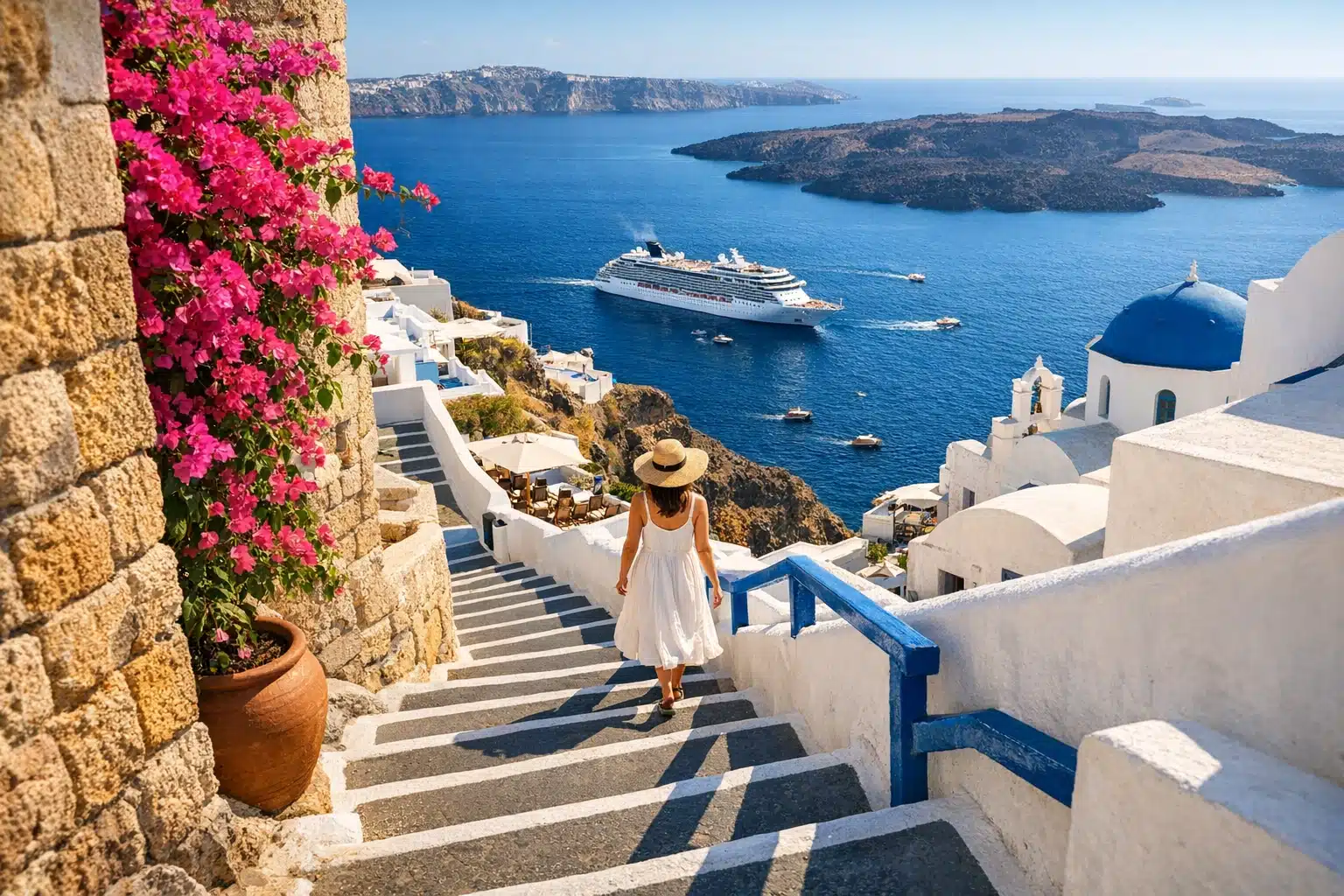
Santorini is more complicated. It is visually unforgettable, with whitewashed villages and caldera views that look almost stage-designed, but it is also one of the busiest cruise destinations in Europe. Many larger ships anchor offshore, meaning passengers tender in and then join others for the ascent to Fira. Depending on timing, this can involve queues for the cable car or a demanding climb. Mykonos can feel more straightforward, but its popularity means narrow lanes get crowded quickly, particularly when multiple ships are in port.
A useful strategy is to match each port with the right pace:
-
Choose independent walking in ports with compact old towns, such as Rhodes or parts of Corfu.
-
Book ship excursions in places where transport bottlenecks are common, such as Santorini.
-
Reserve beach days for islands where the transfer is easy and the timetable is generous.
-
Prioritise one or two major sights instead of trying to “complete” the island in a single call.
Crete deserves special mention because the experience depends heavily on the port. From Heraklion, many travellers head to the Palace of Knossos or the Archaeological Museum, while others prefer a less structured day in the city. If your itinerary calls elsewhere on the island, the rhythm may change entirely. In short, the Greek islands reward preparation. A little research on docking method, walking distance, heat exposure, and return timing can turn a rushed stop into a memorable day. When the bells ring in a hillside chapel and the harbour water throws back a hard blue shimmer, the scene feels effortless, but the most satisfying port days are usually the ones planned with a cool head beforehand.
5. Who This Cruise Suits Best: Packing, Practicalities, and Final Advice for Booking with Confidence
A Southampton to Greek Islands cruise suits travellers who value convenience at the start of the holiday and do not mind that the journey unfolds at a measured pace. It is especially appealing for UK-based passengers who prefer to avoid flights, for cruisers who enjoy sea days, and for couples or retired travellers who see the ship as part of the destination rather than merely a transfer tool. It can also work well for multigenerational groups if the vessel offers strong entertainment and child-friendly facilities, though families should think carefully about school-holiday pricing and the stamina required for longer itineraries. If your ideal trip means maximum time ashore, late nights in island towns, and very few days at sea, a shorter fly-cruise may fit better.
Practical preparation makes a noticeable difference. Weather on embarkation in Southampton can be cool and breezy even when Greece is hot, so packing for layered conditions is essential. Comfortable walking shoes matter more than people expect because Greek ports often involve stone streets, slopes, and uneven surfaces. Mobility is another issue worth honest consideration. Tender ports, steep viewpoints, and heat can be tiring, particularly for travellers with limited stamina. Reading accessibility notes before booking is far better than discovering restrictions once onboard.
A sensible packing checklist includes:
-
Light clothing for warm island afternoons
-
A cardigan, jacket, or wrap for departure days and breezy evenings at sea
-
Sun hat, sunglasses, and high-factor sunscreen
-
Refillable water bottle for excursions
-
Sturdy shoes with grip for cobbles, steps, and port walks
-
Any medications in hand luggage for embarkation day security
Before booking, compare itineraries more carefully than brochures encourage. Two cruises with the same broad label can feel very different depending on the balance of sea days, overnight calls, and western Mediterranean stops. Also check whether the schedule includes tendering, late arrivals, or short port times. Those details can affect whether you experience a place as a relaxed wander or a race against the clock.
For the right traveller, this route offers a rare combination: the familiarity of a Southampton departure, the restorative stretch of life at sea, and the layered beauty of the eastern Mediterranean. It is not the fastest way to reach the Greek islands, nor is it meant to be. It is a slower, fuller style of travel for people who enjoy the transition as much as the arrival. If that sounds like you, book the itinerary that matches your pace, spend thoughtfully where comfort matters, and let the voyage do what good sea travel has always done: widen the distance between daily routine and the horizon.