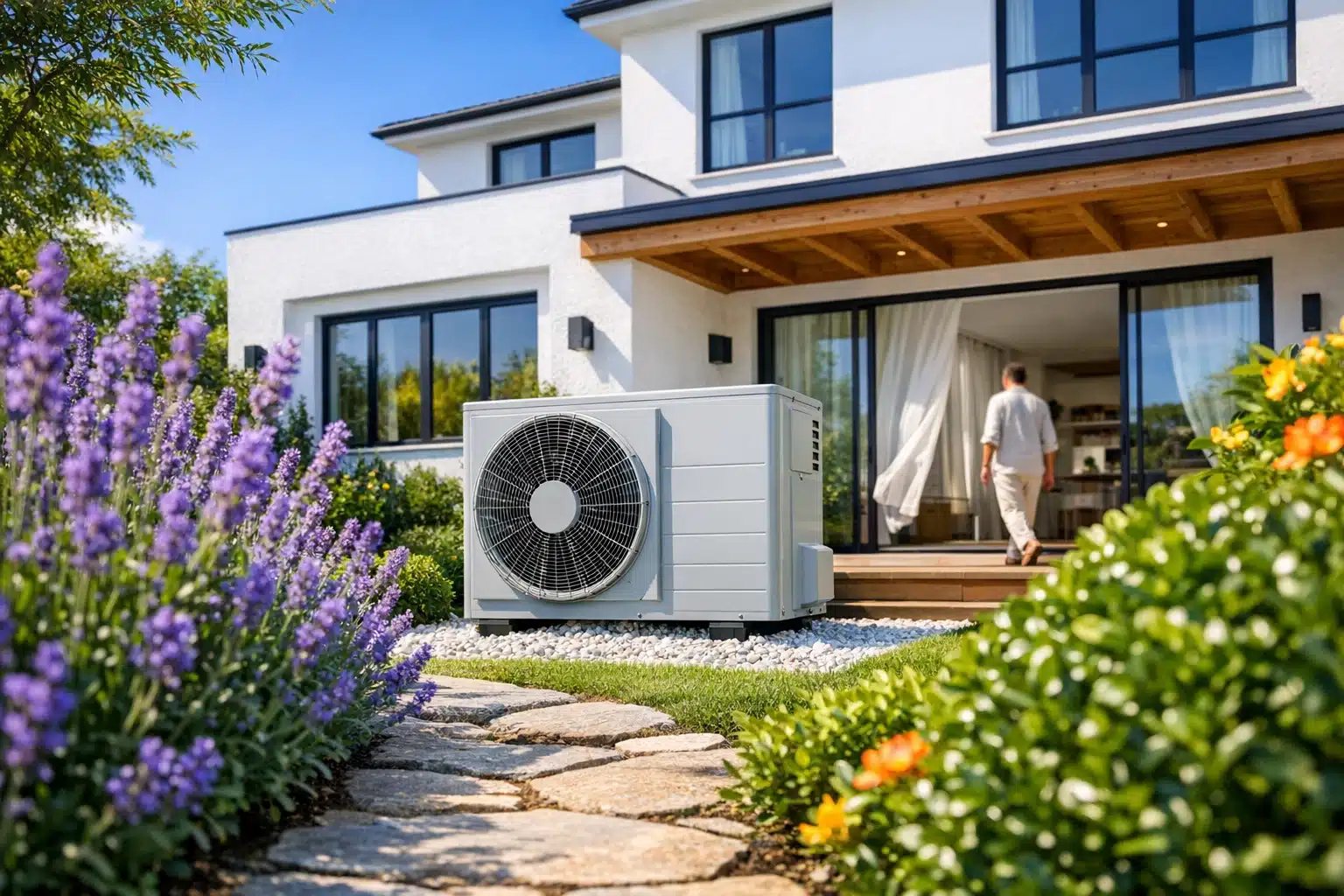
 Artificially generated image
 Understanding HVAC Systems: Seasonal Maintenance and Energy Efficiency for Residential Homes
An HVAC system works quietly in the background until a muggy afternoon or a freezing dawn reminds you how much comfort depends on it. For homeowners, understanding the basics is not just technical trivia; it influences utility costs, indoor air quality, and the life of expensive equipment. Seasonal upkeep can stop minor issues from becoming inconvenient breakdowns. Energy-efficient choices also make everyday comfort easier to manage.
1. Article Outline and the Core Purpose of a Residential HVAC System
Outline: 1. Define what HVAC means and why it matters in daily home life. 2. Break down the main system components and compare common residential setups. 3. Explain seasonal maintenance tasks for warm and cold months. 4. Explore practical ways to improve energy efficiency without sacrificing comfort. 5. Help homeowners make sensible upgrade, repair, and replacement decisions.
HVAC stands for heating, ventilation, and air conditioning, but the abbreviation hides a surprisingly important truth: this is one of the hardest-working systems in a house. It shapes comfort in summer and winter, affects humidity, supports indoor air circulation, and can strongly influence utility spending over the course of a year. In many homes, heating and cooling make up one of the largest shares of energy use, which is why even small improvements can have a noticeable effect over time.
At its simplest, an HVAC system has a few core jobs. It must produce warm or cool air, move that air where it is needed, and maintain conditions that feel comfortable for the people inside. Ventilation adds another layer by helping remove stale indoor air and reducing the buildup of moisture, odors, and airborne particles. When the system is working properly, you barely think about it. When it is neglected, though, the house can start sending hints: uneven room temperatures, rising energy bills, loud operation, weak airflow, or a thermostat that never seems satisfied.
For homeowners, understanding HVAC does not require engineering expertise. It means learning the practical relationships between equipment, maintenance, comfort, and efficiency. For example, a clogged air filter does not only make the system “dirty”; it can restrict airflow, force the blower to work harder, and reduce performance. Likewise, poor attic insulation is not only a building problem; it makes the HVAC system fight a tougher battle every hour of the day. The house and the mechanical system are partners, and when one struggles, the other compensates.
A helpful way to think about HVAC is to imagine the home as a living environment with its own rhythm. The equipment acts like the heart and lungs of that environment, circulating conditioned air while responding to changes outdoors and indoors. Once homeowners see that connection, routine maintenance and efficiency improvements stop feeling optional. They become part of protecting comfort, budget, and the long-term value of the home.
2. Main HVAC Components and the Differences Between Common Residential Systems
Most residential HVAC systems share several essential parts, even when their designs differ. These typically include a thermostat, a heating source, a cooling component, an air handler or blower, ductwork or another delivery method, and controls that regulate operation. In a traditional split system, the furnace or air handler is indoors while the condenser unit sits outside. The indoor evaporator coil absorbs heat from indoor air, and the outdoor unit releases that heat outside during cooling mode. In heating mode, a furnace burns fuel or uses electricity to warm air before it is distributed through ducts.
Homeowners often encounter a few common system types:
• Split systems: usually a furnace paired with central air conditioning
• Heat pumps: provide both heating and cooling by transferring heat rather than generating it directly
• Ductless mini-splits: use indoor wall or ceiling units and are useful where ductwork is limited
• Packaged units: combine major components in one cabinet, often installed outdoors or on rooftops
• Boilers and radiant systems: heat water rather than air and deliver warmth through radiators or floor tubing
Each option has strengths and trade-offs. A furnace with central AC is familiar and widely serviceable, especially in homes that already have ductwork. Gas furnaces are often rated by AFUE, or Annual Fuel Utilization Efficiency, which tells you how much fuel becomes usable heat over a season. Higher AFUE ratings generally indicate less waste. Air conditioners and heat pumps use cooling efficiency ratings such as SEER2, while heat pumps also use heating-related metrics such as HSPF2. These numbers do not tell the whole story, but they provide a useful starting point when comparing equipment.
Heat pumps have become especially important in conversations about energy efficiency because they move heat instead of creating it through combustion. In moderate climates, they can be highly efficient year-round. In colder areas, cold-climate heat pumps have improved considerably, though some homes still use backup heat for extreme winter conditions. Ductless mini-splits, meanwhile, offer flexibility and zoning benefits, making them attractive for additions, older homes, or households that want more room-by-room control.
The key comparison is not which system is universally “best,” but which one fits the home, climate, budget, and comfort goals. A large two-story house with existing ducts may benefit from a different solution than a compact home with a renovated attic suite. The smartest choice usually comes from matching the equipment to the building rather than chasing a feature list. A system that is correctly sized, properly installed, and thoughtfully maintained will usually outperform a more advanced system that is mismatched from day one.
3. Seasonal Maintenance: What to Check in Spring, Summer, Fall, and Winter
Seasonal maintenance is where many costly HVAC problems can be reduced or avoided. Residential systems operate under stress: summer heat loads push cooling equipment hard, while winter demands steady, reliable heating. A homeowner who pays attention to maintenance is not being overly cautious; that person is simply giving the system a better chance to perform efficiently and last longer. Many manufacturers and service professionals recommend at least annual service, and homes with heavy system use often benefit from inspections before both peak cooling and peak heating seasons.
In spring and early summer, the focus is usually on cooling readiness. A practical warm-weather checklist might include:
• Replacing or inspecting the air filter, often every 1 to 3 months depending on use and air quality conditions
• Clearing leaves, grass, and debris from around the outdoor condenser
• Checking that supply and return vents indoors are open and unobstructed
• Looking for water around the indoor unit that might signal a clogged condensate drain
• Listening for new noises such as rattling, buzzing, or strained startup sounds
Professional service during cooling season may include coil inspection, refrigerant checks, drain cleaning, electrical testing, and verification that the thermostat and blower are operating correctly. This matters because low refrigerant, dirty coils, or weak airflow can reduce efficiency and strain components. The system may still run, but it will often run longer and deliver less comfort for the electricity used.
In fall and early winter, heating equipment deserves equal attention. Furnaces should be inspected for burner performance, ignition reliability, airflow, and safety controls. Homes with combustion appliances should also have functioning carbon monoxide detectors. A neglected furnace is not merely inconvenient; it can raise safety concerns if heat exchangers, venting, or fuel-burning components are compromised. Heat pumps need cold-weather checks as well, including defrost function and outdoor unit condition.
Winter maintenance also includes common-sense habits. Keep vents clear of rugs and furniture. Watch for unusually dry or humid indoor conditions. Note whether some rooms feel much colder than others, since that may point to duct leakage, balancing issues, or insulation gaps. In some homes, leaky ducts can waste a meaningful share of conditioned air, especially when ducts run through unconditioned spaces like attics or crawl spaces.
Seasonal care is less glamorous than a shiny new appliance, but it often delivers outsized value. A technician may spot a worn capacitor, cracked belt, blocked drain, or weak igniter before it causes a no-cool or no-heat emergency. For the homeowner, that can mean fewer surprise repairs, steadier comfort, and better odds that the system reaches a reasonable service life.
4. Energy Efficiency in Real Homes: Beyond the Equipment Label
Energy efficiency is often discussed as if it begins and ends with buying newer HVAC equipment. In reality, the system’s efficiency on paper is only part of the story. Real household performance depends on installation quality, duct condition, thermostat settings, insulation, air sealing, and daily habits. A high-efficiency unit installed in a drafty, poorly sealed house can still deliver disappointing results. By contrast, a well-maintained mid-efficiency system in a tighter home may perform surprisingly well.
Start with the building envelope, because HVAC does not operate in isolation. If hot attic air seeps into living spaces in summer, or if winter heat escapes through gaps around doors, windows, and recessed fixtures, the equipment must work longer to hold the same temperature. Air sealing and insulation upgrades are often less exciting than a new thermostat, but they can reduce heating and cooling demand at the source. It is hard to win the comfort battle when the house itself keeps opening the gate.
Next, consider airflow and distribution. Dirty filters, crushed ducts, disconnected runs, and poorly balanced registers can make one room feel stale while another becomes too warm or too cold. In some homes, duct sealing can significantly improve comfort and reduce wasted energy. Ceiling fans can help too, not by lowering air temperature directly, but by improving air movement so rooms feel more comfortable at a slightly higher cooling setpoint.
Smart controls can also help, especially when they are used thoughtfully. Programmable and smart thermostats can reduce unnecessary runtime when occupants are away or asleep. However, no device is magical. If the schedule is inconsistent, or if someone constantly overrides the settings, the benefit shrinks. The most useful thermostat is the one that fits the household’s actual routine.
Homeowners looking at new equipment should learn a few practical efficiency concepts:
• SEER2 describes cooling efficiency over a season
• AFUE applies to furnaces and indicates how much fuel becomes heat
• Variable-speed blowers and inverter-driven compressors can improve comfort and part-load efficiency
• Proper sizing matters because oversized systems can short-cycle, while undersized systems may run continuously during extreme weather
Humidity management is another overlooked factor. Indoor relative humidity is often most comfortable when it stays in a moderate range, commonly around 30 to 50 percent. Excess moisture can make summer air feel heavier, while overly dry winter air can make a home feel less comfortable even at normal temperatures. Efficient comfort, in other words, is not just about temperature. It is about the whole indoor experience: airflow, moisture, stability, and the ability of the system to meet demand without waste.
5. A Practical Conclusion for Homeowners: Repairs, Upgrades, and Long-Term HVAC Decisions
For most homeowners, the big question is not whether HVAC matters. It is what to do next. Should you keep repairing an aging system, invest in maintenance, improve the house around it, or replace the equipment entirely? The answer usually depends on age, reliability, operating cost, and how well the system matches the home. Furnaces often last around 15 to 20 years, while central air conditioners and heat pumps commonly have somewhat shorter service lives, though climate, usage, and maintenance can shift those ranges in either direction.
A sensible decision framework starts with observation. If the house is comfortable, the utility bills are stable, and maintenance issues are minor, routine service and a few efficiency upgrades may be enough. If repairs are becoming frequent, airflow is inconsistent, or one floor always feels disconnected from the rest of the home, the problem may be larger than a single failed part. It could involve duct design, insulation weaknesses, outdated controls, or equipment that was never sized correctly in the first place.
When replacement becomes likely, homeowners should ask for more than a price quote. A trustworthy evaluation should consider:
• The size and layout of the home
• Existing insulation and air leakage conditions
• Ductwork condition and design
• Local climate and fuel availability
• Occupant preferences for zoning, humidity control, noise levels, and filtration
This is where professional load calculations matter. Bigger is not automatically better. An oversized air conditioner may cool fast but dehumidify poorly because it shuts off too soon. An oversized furnace may short-cycle and create uneven temperatures. Good sizing supports efficiency, comfort, and equipment longevity. Installation quality matters just as much. Even premium equipment can underperform if refrigerant charge, airflow, or duct connections are wrong.
The most practical takeaway for homeowners is refreshingly simple: learn the basics, maintain what you own, improve the home envelope where possible, and choose upgrades based on evidence rather than guesswork. Think of HVAC care less as a dramatic rescue mission and more as steady stewardship. A clean filter, a tuned system, sealed ducts, and realistic thermostat habits may not feel glamorous, but they build the kind of comfort people actually notice every day. For residential homes, the best HVAC strategy is usually the one that combines reliability, efficiency, and common sense in equal measure.


