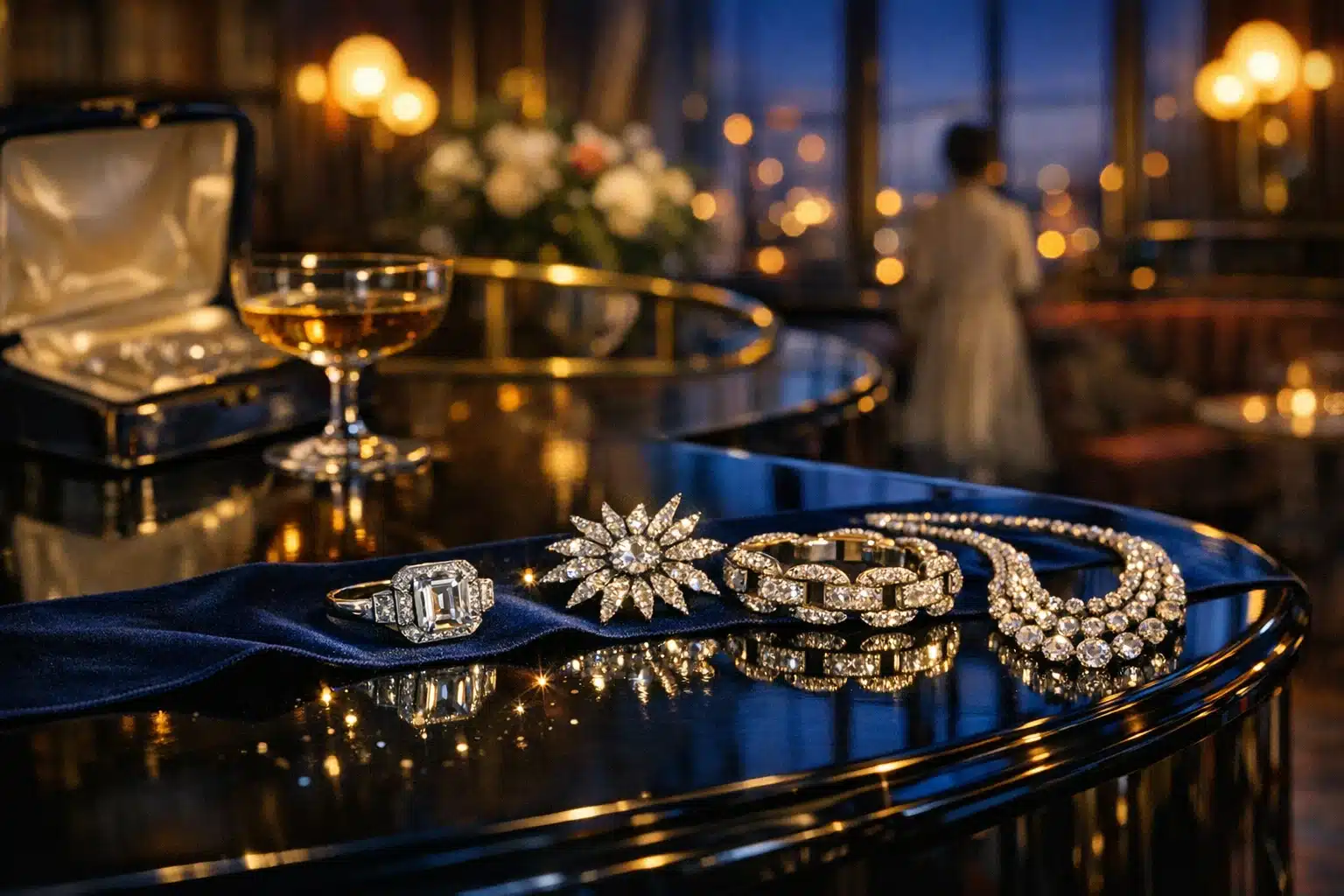
Vintage Jewelry Pieces That May Have Unexpected Market Value Today
Vintage jewelry often sits quietly in family boxes, antique shop trays, and estate drawers, yet some pieces that once felt merely sentimental now attract serious collector interest and stronger resale prices. Changes in fashion, precious metal costs, maker recognition, and growing respect for older workmanship have reshaped the market. For heirs, casual thrifters, and seasoned collectors alike, learning a few value signals can turn a dusty keepsake into a meaningful financial discovery.
Outline
- Why the market for vintage jewelry has shifted and what now drives demand.
- Which costume jewelry makers and categories can surprise owners with strong resale interest.
- How fine vintage jewelry gains value through metals, gemstones, period design, and workmanship.
- What to examine before selling, including hallmarks, condition, provenance, and appraisal types.
- How collectors, inheritors, and shoppers can decide whether to keep, appraise, consign, or sell.
Why Some Vintage Jewelry Commands More Attention Today
Jewelry value is rarely fixed in time. A bracelet ignored in one decade can return in another with fresh appeal, stronger demand, and a bigger price tag. That is one reason vintage jewelry surprises people so often. Market value grows from several overlapping forces: fashion cycles, scarcity, precious metal prices, historical interest, and the expanding reach of online resale platforms. A brooch that once seemed too formal for everyday wear may suddenly match current trends when maximalism comes back, or when younger buyers start mixing older accessories with modern clothing.
One major driver is the simple fact that certain materials and production methods are harder to find now. Older pieces were often made in smaller batches, assembled by hand, or finished with details that mass-market jewelry brands no longer use because labor costs are higher. Even costume jewelry can benefit from this shift. Buyers frequently notice the heavier settings, hand-wired beads, glass stones, and inventive clasps found in earlier pieces. Fine vintage jewelry benefits as well, especially when it contains high-karat gold, platinum, or hand-cut stones.
Another important factor is visibility. Decades ago, a local antique dealer might have been the only person evaluating a piece. Today, collectors compare sales across online marketplaces, auction houses, and specialist forums in minutes. That wider audience has helped lift categories that were once underestimated, including mid-century designer costume jewelry, Art Deco rings, and sculptural silver pieces from the 1960s and 1970s. Scholarship matters too. As books, archives, and collector communities document makers and design periods more carefully, unsigned objects remain difficult, but signed pieces become easier to place and easier to sell confidently.
- Fashion revivals can renew interest in older silhouettes and color palettes.
- Higher gold and silver prices can raise the floor value of fine jewelry.
- Online selling has connected niche collectors with overlooked regional inventory.
- Documented maker marks often convert uncertainty into buyer confidence.
It also helps to distinguish between sentimental value, scrap value, and collector value. Scrap value depends mainly on metal content. Collector value depends on design, rarity, condition, and demand. A plain broken gold chain may sell primarily for metal weight, while an intact signed necklace in a sought-after style may bring far more than its materials alone suggest. In other words, the market does not only ask, “What is this made of?” It also asks, “Who made it, how well, how rare, and who wants it now?” That combination is where unexpected value begins.
Signed Costume Jewelry: The Category That Often Surprises Owners
Many people assume valuable jewelry must be made of gold, platinum, or large gemstones. In practice, vintage costume jewelry often provides the biggest surprise because expectations start so low. Pieces created with base metals, rhinestones, glass beads, enamel, or plated finishes can attract vigorous bidding when they come from respected makers or represent strong period design. Names such as Trifari, Miriam Haskell, Schreiner, Eisenberg, Coro, Monet, Weiss, and DeLizza & Elster are familiar to collectors, though value varies enormously by era, design, and condition.
Signed costume jewelry tends to perform better because a mark gives buyers a clearer story. A simple signature on the back of a brooch or clasp can turn a generic-looking item into a collectible object with a documented place in jewelry history. Yet the signature alone is not enough. Common production pieces may remain modestly priced, while unusual forms rise sharply. Figurals, runway-influenced designs, dramatic bib necklaces, rare color combinations, and complete matched sets often draw the strongest interest. Even within the same brand, one necklace may sell for a small amount while another from a distinctive line may reach several hundred dollars or more.
Condition matters intensely in costume jewelry because wear is easier to spot and harder to forgive. Missing stones, clouded rhinestones, corrosion, replaced parts, or peeling plating can reduce appeal. Original finish, secure settings, and intact matching stones usually help. Boxes, advertisements, and documentation can also support value. For instance, a well-preserved mid-century set with earrings, necklace, and bracelet may outperform a single surviving piece because collectors love completeness.
- Highly collectible traits include unusual construction, rare colors, and complete parures.
- Designer signatures usually help, but demand differs widely between lines and decades.
- Excellent condition can separate an ordinary sale from a premium one.
As a broad guide, common signed pieces may sell in modest ranges, often from a few tens of dollars upward, while stronger examples can move into the low hundreds. Exceptional designs, rare collaborations, or hard-to-find sets may go much higher. Unsigned pieces should not be dismissed either. Some were made by important firms for department stores or private labels, and seasoned collectors sometimes identify them by construction clues such as stone settings, pin mechanisms, bead wiring, or the shape of a clasp. Vintage costume jewelry is the attic trunk of the market: open it carelessly and you see glitter, open it knowledgeably and you may see history with a price tag attached.
Fine Vintage Jewelry: Metals, Gemstones, and Craftsmanship That Add Real Market Weight
Fine vintage jewelry often carries an obvious baseline advantage because precious materials create intrinsic worth. A ring stamped 18K or a platinum bracelet already contains valuable metal, and when the piece also has strong design or historical character, the market can move well beyond scrap value. This is where many owners underestimate what they have. They may focus on the age of the piece or assume older means worn-out, when buyers may actually be seeking exactly that age because it points to a desirable design period or an older method of manufacture.
Different eras attract different audiences. Art Deco jewelry from the 1920s and 1930s is popular for its geometry, platinum settings, old European-cut diamonds, and architectural elegance. Retro jewelry from the 1940s is loved for bold gold forms, often larger in scale and richer in color. Mid-century pieces can appeal through sleek lines or imaginative gemstone combinations. Victorian and Edwardian pieces bring in collectors who appreciate sentiment, symbolism, and hand-finished details. The market does not reward every old item equally, but it often pays a premium for work that feels distinctive rather than interchangeable.
Gemstone style matters as much as gemstone size. Older diamonds cut by hand, including old mine cuts and old European cuts, may look different from modern brilliant cuts. Their softer sparkle and taller proportions attract buyers who want character rather than strict modern symmetry. Natural rubies, sapphires, emeralds, and pearls can also raise interest, especially when paired with period settings. However, not every gemstone piece is a windfall. Commercial-quality stones, heavy wear, or dated repairs may keep prices moderate. Pearl strands, for example, can be emotionally treasured yet sell for less than owners expect unless they are natural pearls, unusually fine cultured pearls, or attached to a notable maker.
- Metal purity sets a floor, but design and maker often determine the premium.
- Period styles such as Art Deco and Retro tend to have established collector demand.
- Hand-cut stones and handmade construction can make a piece more distinctive.
- Original settings usually matter more than later alterations.
One useful comparison is modern replacement cost versus secondary market value. A new ring from a retail jewelry chain may have a high store price but weak resale. By contrast, a vintage platinum ring with an old-cut diamond may hold or attract stronger buyer interest because it offers rarity, workmanship, and design identity. Fine vintage jewelry can feel like architecture in miniature: the metal is the foundation, the stone is the light, and the workmanship is the reason people keep looking. When all three are strong, unexpected market value becomes much easier to understand.
How to Evaluate a Piece Before You Sell, Appraise, or Store It Away
If you suspect a vintage jewelry piece may be worth more than expected, the first step is observation rather than cleaning or quick selling. Many owners accidentally reduce value by polishing too aggressively, replacing original parts, or accepting the first casual offer. A careful evaluation starts with basic identification. Look for hallmarks, signatures, patent numbers, country marks, metal stamps such as 9K, 14K, 18K, sterling, or platinum, and any maker insignia near clasps or on the back of settings. Use a magnifying loupe if possible. Small marks often carry outsized importance.
Next, assess the structure and condition. Is the clasp original? Are stones missing, chipped, or replaced? Has the metal been soldered or resized? Are pearls peeling, or is the finish on costume jewelry worn through? Condition is not just cosmetic; it affects buyer trust. Collectors generally prefer authenticity over heavy restoration, especially when replacement parts are modern and obvious. A modest amount of age wear may be acceptable, but undisclosed damage is not.
Documentation can also influence value. Family records, old receipts, original boxes, maker catalogs, or photographs of a piece being worn can support dating and provenance. Provenance does not need to involve a celebrity to matter. If it helps confirm origin, maker, or era, it can strengthen confidence. That said, an insurance appraisal and a resale estimate are not the same thing. Insurance values are often higher because they reflect replacement cost in a retail environment. Resale value reflects what buyers are currently paying in the secondary market.
- Take clear photos of the front, back, clasp, hallmark, and any damage.
- Weigh fine jewelry, but do not rely on weight alone to judge value.
- Search completed sales, not just asking prices, when comparing similar pieces.
- Consult a specialist for signed costume jewelry or period fine jewelry if the piece seems unusual.
For stronger items, it may be worth getting more than one opinion. A local jeweler may understand metal and stones well but not specialist costume jewelry. A general antiques dealer may recognize age but miss a rare maker. Auction houses can help for designer, period, or higher-end estate pieces, while independent appraisers provide structured evaluations for a fee. Think of the process like reading clues in a small mystery novel. Every mark, hinge, cut stone, and repair line says something. The goal is not just to learn what the piece is worth; it is to understand why.
Conclusion: What Collectors, Heirs, and Thrift Shoppers Should Do Next
For people who inherit jewelry, browse flea markets, or sort through older family possessions, the most practical lesson is simple: do not assume appearance tells the whole story. A quiet silver brooch, a rhinestone necklace in its original box, or a slightly old-fashioned gold ring may carry more market weight than a flashier modern piece. The wise move is not instant excitement or instant sale, but informed curiosity. Take time to identify the era, note the maker if one exists, inspect condition, and compare real selling data before deciding what to do.
Your next step depends on the kind of piece you have. If the jewelry is likely worth mainly metal content, a reputable jeweler or estate buyer may be the most efficient route. If it appears signed, rare, highly decorative, or strongly tied to a desirable period, a specialist dealer, auction house, or consignment platform may produce better results. Online marketplaces can widen exposure, but they also demand accurate descriptions, solid photography, and patience. Local sales are faster, yet convenience often comes with a lower offer. In short, every selling channel makes a trade-off between speed, effort, and price.
- Keep original boxes, receipts, and family notes together with the piece.
- Store jewelry separately to avoid scratches, tangles, and stone loss.
- Do not rush to clean antique or costume pieces without guidance.
- Seek a second opinion when an item seems unusual or especially well made.
There is also a strong case for keeping certain pieces rather than selling immediately. Vintage jewelry can diversify a personal collection, preserve family history, and sometimes appreciate as demand grows for under-recognized designers or periods. Even when values remain moderate, understanding what you own changes how you care for it. Instead of “old jewelry,” you begin to see design eras, craft traditions, and shifting tastes frozen in metal and stone.
For the target audience here, whether you are a collector hunting for overlooked gems, an heir wondering what not to discard, or a shopper scanning a tray at an estate sale, knowledge is the real upgrade. Market value often appears where attention has been missing. The best outcome is not merely selling high; it is making a smart choice based on evidence, timing, and the character of the piece in your hand.