10 Adult-Only Nudist Beaches in the UK
Britain is not the first place most people imagine for a clothes-free beach break, yet its coastline supports a small, varied naturist culture shaped by long sands, hidden coves, and a strong sense of local etiquette. For anyone planning a respectful visit, it helps to know which spots are officially recognised, which are simply long-established, and which demand more effort than their map pins suggest. This guide explores ten notable UK beaches and explains how they differ in scenery, access, privacy, and overall mood. That context can turn curiosity into a far smoother day out.
Outline and Ground Rules for Exploring Naturist Beaches in the UK
Before diving into the ten beaches themselves, it is worth clarifying what “adult-only” means in a British context. Most UK naturist beaches are public coastal spaces rather than gated resorts with age checks at the entrance. In practice, they tend to attract adult visitors because of the naturist setting, the often remote access, and the etiquette expected on arrival. That distinction matters, because accuracy matters more than hype. A useful guide should tell you not only where people go, but what kind of experience you can realistically expect once you get there.
The UK’s naturist beach scene is shaped by geography as much as by culture. On one end of the spectrum, you have easy-access places such as Brighton, where a newcomer can combine a beach visit with city conveniences, transport links, and a visible designated area. On the other, you have Highland coves and long dune systems where the appeal lies in quiet space, dramatic scenery, and the feeling that the coastline has widened around you. In between are beaches that are unofficial but well known, where naturist use has become customary over time even if formal signs are limited or absent.
This article is organised around a few practical questions that matter more than glossy descriptions:
-
Is the beach officially designated, long-established, or simply naturist-friendly?
-
How difficult is access, especially for first-time visitors?
-
What kind of terrain should you expect: sand, pebbles, dunes, or steep paths?
-
How much privacy does the location offer compared with nearby family beach areas?
-
What sort of visitor is it best suited to: beginners, confident naturists, walkers, or people seeking real seclusion?
It is also sensible to remember that British beachgoing comes with its own practical realities. Tides can dramatically change usable space. Wind exposure can be stronger than the forecast suggests. Mobile signal may weaken on remote coasts. Facilities range from city-level convenience to absolutely none. In short, a beach that looks idyllic in a photograph might feel completely different when you add a long walk, shifting weather, and a chilly breeze off the sea. That is why the comparisons in the sections below focus not just on appearance, but on comfort, atmosphere, and ease of use.
1 to 3: Brighton Naturist Beach, Studland Naturist Beach, and Fairlight Glen
Brighton Naturist Beach is often the most approachable starting point for curious first-timers, largely because it removes much of the uncertainty that can make a first naturist visit awkward. Located to the east of Brighton Marina, it is one of the UK’s best-known officially designated naturist beaches. The setting is urban rather than wild, and that is exactly why it works for many people. Transport links are straightforward, cafés and facilities are within reach, and the city’s generally open-minded seaside culture makes the experience feel less like an expedition and more like a normal day out with one important difference. The trade-off is texture rather than drama: this is a pebble beach, so it is practical to bring thicker towels, beach shoes, and realistic expectations about lounging comfort.
Studland Naturist Beach in Dorset offers a very different mood. It sits within a famous stretch of sandy shoreline backed by dunes and heath, and it has long been associated with British naturism. If Brighton feels structured and visible, Studland feels broader, softer, and more traditional. The sand underfoot, the open dune landscape, and the sweep of the bay give it a classic beach character that many people picture when they imagine naturist coastal escapes. It tends to appeal to visitors who want a recognisable naturist area without the city edge. The atmosphere is often described as relaxed rather than showy, and that quiet normality is part of its appeal.
Fairlight Glen, near Hastings, is the most secluded of the three. Reaching it usually involves a walk down through woodland or a steeper approach than casual beachgoers might prefer, and that effort naturally filters the crowd. The result is a place that feels tucked away from the ordinary rhythm of the promenade world. The cliffs and greenery add visual drama, and the beach’s smaller scale can make it feel more intimate than the wide-open sands of Studland. At the same time, it is less convenient, with fewer nearby comforts and more reason to check tide conditions before you set off.
If these three beaches were characters in a travel novel, Brighton would be the practical city friend who knows where everything is, Studland the elegant classic that never needs to raise its voice, and Fairlight Glen the quiet figure waiting beyond the trees for people willing to make the extra walk. For beginners, Brighton is easiest. For traditional sandy scenery, Studland has the edge. For privacy and a sense of escape, Fairlight Glen often leaves the stronger impression.
4 to 7: Morfa Dyffryn, Slapton Sands, Budleigh Salterton, and Pedn Vounder
Morfa Dyffryn in Wales is widely regarded as one of the standout naturist beaches in the UK, and it earns that reputation through scale as much as setting. This is a long, open sweep of sand backed by dunes, with a feeling of genuine space that many beaches simply cannot match. It has an established naturist area and a strong profile among regular visitors, which gives it a reassuring sense of legitimacy for newcomers. The walk from access points can be part of the experience, and once the dunes fall behind you, the beach opens into a broad, airy landscape where the sea and sky seem to have agreed to keep things uncluttered. Compared with more compact spots, Morfa Dyffryn feels less crowded by design.
Slapton Sands in Devon has a more understated character. Its long shingle shoreline and rural setting create a quieter, less polished atmosphere than postcard destinations farther west. This is not the place to expect resort-style convenience. Instead, its appeal lies in simplicity, low-key use, and a more local rhythm. Visitors who prefer less attention and fewer distractions may find that refreshing. The terrain, however, can be less forgiving than soft sand, especially if you are carrying bags or planning a long stay.
Budleigh Salterton also leans toward the practical and the pebbly. Known for its long pebble beach and striking red cliffs nearby, it tends to suit walkers and experienced beachgoers who do not mind trading softness for scenery and elbow room. A naturist visit here is more about choosing the right stretch and understanding the beach’s layout than following prominent resort-style cues. That makes it less beginner-friendly than Brighton or Morfa Dyffryn, but potentially more rewarding for people who value a quieter atmosphere over convenience.
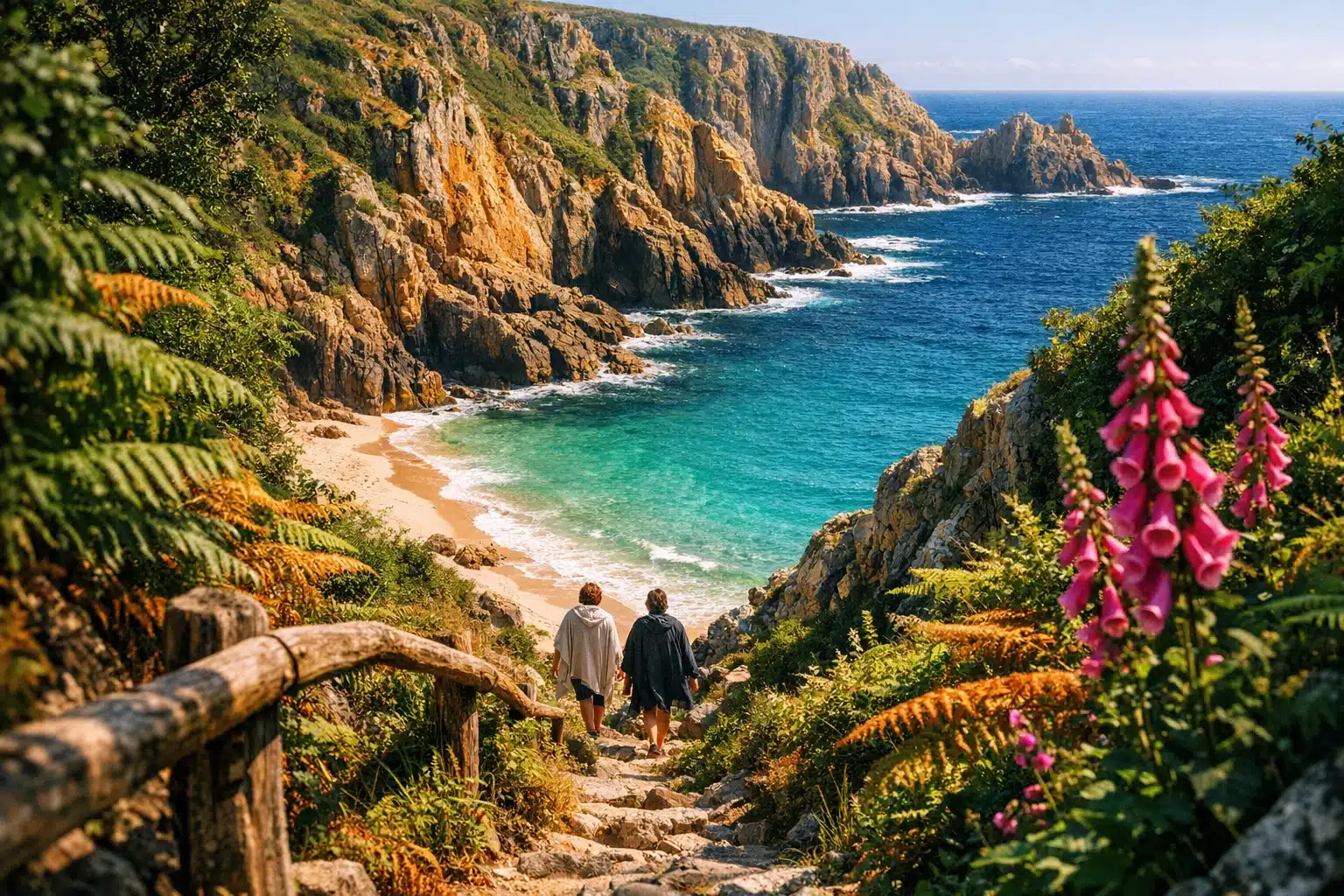
Pedn Vounder in Cornwall is the wild card of this group. It is visually spectacular, often celebrated for clear water, dramatic cliffs, and a cove-like feel that can look almost Mediterranean when the weather cooperates. Yet beauty comes with effort. Access can be steeper and more adventurous, and the naturist element is more informal than officially structured. That means confidence, discretion, and respect for the changing mix of visitors are important. It is the kind of place where the path down helps decide who ends up staying.
-
Morfa Dyffryn is strongest for scale, sand, and a recognised naturist setting.
-
Slapton Sands suits visitors who prefer a low-key, less commercial beach day.
-
Budleigh Salterton works best for walkers and people comfortable with pebble terrain.
-
Pedn Vounder is the scenic choice for adventurous visitors who do not mind extra effort.
Taken together, these four show how varied the UK naturist experience can be. One beach offers sweeping Welsh openness, another quiet Devon restraint, another a pebble-backed sense of space, and one a Cornish cove that feels like a secret briefly borrowed from brighter latitudes.
8 to 10: Holkham Naturist Area, Sillery Sands, and Crakaig Beach
Holkham, on the Norfolk coast, has long drawn visitors who want a vast, elemental beach experience rather than a heavily managed seaside day. The naturist use is associated with a more remote part of this famously expansive shoreline, and reaching the quieter area usually involves a decent walk. That walk is part of Holkham’s character. The transition from busier access points to open sand and dune-backed distance creates a gradual sense of separation, as if the beach is widening around you with every step. For many naturists, that measured journey is preferable to arriving directly in the middle of a designated zone. It makes the space feel earned rather than assigned.
What Holkham does especially well is scale. The beach feels broad, the skies feel even broader, and the landscape offers a kind of minimalist beauty that can be deeply calming. Facilities are not the point here. The point is the feeling of air, distance, and room to settle. Compared with Brighton, it is far less convenient. Compared with Studland, it feels more austere and less sheltered. For walkers, photographers, and people who like their naturist beach time wrapped in a larger coastal ramble, that is a strength rather than a limitation.
Sillery Sands, in the far northwest Highlands of Scotland, moves even further toward solitude. It is the sort of place that attracts people who value remoteness as much as the beach itself. Golden sand, clear water in good weather, and a sense of being well away from busy seaside circuits all contribute to its appeal. Yet a remote Scottish location means planning matters more: weather can change quickly, services are sparse, and self-sufficiency is essential. It is not difficult to understand why seasoned naturist travellers speak warmly of such places. The beach is not trying to entertain you. It is simply giving you space.
Crakaig Beach, another Highland option, has a similarly rugged appeal but often feels more intimate in scale. Rather than overwhelming with vastness, it draws attention through its quiet setting and the strong impression of being somewhere known mainly by people who seek it out deliberately. In practical terms, both Sillery Sands and Crakaig are better suited to confident visitors than to someone testing the waters for the first time. They reward preparation, calm expectations, and respect for natural conditions.
If the southern beaches can sometimes feel like variations on accessibility and atmosphere, these northern choices sharpen the contrast. Holkham balances reachability with grandeur. Sillery Sands leans into distance and wild beauty. Crakaig offers a more tucked-away experience with a distinctly rugged mood. None of them depend on spectacle. Their attraction lies in something quieter: the sense that the coastline has enough room for privacy, patience, and a different pace of beachgoing altogether.
Comparison Guide and Final Summary for Visitors
When you line up all ten beaches, the clearest pattern is that there is no single “best” naturist beach in the UK, only the one that best matches your comfort level, travel style, and idea of a good day by the sea. For beginners, official or highly recognisable locations usually make the most sense. Brighton Naturist Beach and Morfa Dyffryn are especially useful because they reduce ambiguity. You are less likely to spend the first hour wondering whether you are in the right place, whether the beach is genuinely used for naturism, or whether you should have kept walking. That clarity matters more than many first-time visitors expect.
For classic sandy atmosphere, Studland and Morfa Dyffryn stand out. For dramatic scenery, Pedn Vounder is hard to ignore, though it demands more confidence and care. For privacy and a quieter, more tucked-away mood, Fairlight Glen, Holkham’s more remote stretches, Sillery Sands, and Crakaig all have strong appeal. If comfort underfoot is a top priority, sandy beaches will likely feel more welcoming than Brighton, Slapton Sands, or Budleigh Salterton, where pebbles or shingle influence the whole experience.
A simple way to choose is to think less about prestige and more about practical fit:
-
Choose Brighton if you want easy logistics and a straightforward first visit.
-
Choose Studland or Morfa Dyffryn if you want a more traditional beach feel.
-
Choose Pedn Vounder if scenery matters enough to justify a trickier approach.
-
Choose Holkham, Sillery Sands, or Crakaig if solitude is the main goal.
-
Choose Fairlight Glen if you like the idea of privacy with a touch of hidden-coast drama.
Good etiquette improves every naturist beach, official or unofficial. Bring a towel to sit on. Avoid intrusive photography. Read the mood of the area rather than assuming all parts of a nearby beach operate the same way. Be friendly if others start a conversation, but do not treat the setting as an invitation to invade anyone’s space. In the UK, restraint and respect usually matter more than any written ruleboard.
For the target reader of this guide, the key takeaway is reassuringly simple. If you want a calm, respectful introduction to naturist beaches in the UK, you do not need a fantasy version of the coast. You need the right match between place and personality. Start with the beach that suits your comfort level, prepare for weather and walking conditions, and treat the space with the same courtesy you would expect from others. Do that, and these ten beaches offer not just novelty, but a genuinely different way to experience the British shoreline.