3-Night Cruises From Portsmouth: Routes, Prices, and Travel Tips
Short cruises from Portsmouth have become a practical choice for travellers who want a real break without using a full week of leave or paying for a long voyage. In only three nights, you can trade routine for sea views, compact port visits, and the pleasantly structured rhythm of life on board. These sailings matter because they suit first-time cruisers, busy couples, and weekend escape planners who value convenience as much as destination. Knowing the likely routes, fare ranges, and planning details makes it far easier to book a trip that feels good value from departure to return.
Outline: This article first explains why Portsmouth works well as a departure port for short cruises. It then looks at the routes most commonly offered on three-night sailings and what those itineraries usually feel like in practice. After that, it breaks down prices, cabin choices, and the extra costs that can change a headline fare. The final parts cover life on board, smart travel planning, and a conclusion aimed at helping different kinds of travellers decide whether a mini cruise is the right fit.
Why Portsmouth Appeals for a 3-Night Cruise
Portsmouth is not the busiest cruise departure point in southern England, and that is part of its appeal. For many travellers, it feels more manageable than larger ports, especially when the goal is a short and easy break rather than a major holiday operation. Portsmouth International Port is well connected by road, and rail links into the city make it accessible for people coming from London, the South East, the Midlands, and parts of the South West. If you live within a few hours, a three-night cruise can feel surprisingly efficient: leave home in the morning, board in the afternoon, and by evening the ship is moving through the Solent while the city fades into the distance.
The practical advantages matter because a short cruise has less room for wasted time. On a week-long sailing, a slightly awkward transfer can be absorbed into the overall holiday. On a three-night trip, every hour counts. Portsmouth works best for travellers who want:
- an embarkation process that is usually simpler than a major airport journey
- the option to drive and park close to the port
- a no-fly break that avoids baggage restrictions and airport queues
- a compact escape that fits into a long weekend or a small amount of annual leave
There is also a psychological advantage that is easy to underestimate. A mini cruise is often chosen by people who are curious about cruising but not yet fully convinced. Portsmouth offers a softer entry point. You are not committing to a transatlantic crossing or a week in the Mediterranean. Instead, you are testing the essentials: the cabin, the dining, the motion of the ship, the atmosphere, and the balance between time at sea and time ashore. For nervous first-timers, that lower commitment is a genuine benefit.
That said, availability can be more limited than from Southampton. Portsmouth does not offer the same volume of departures, and three-night itineraries may be seasonal, occasional, or linked to specific cruise lines and ship schedules. Flexibility helps. If you are set on a certain month or cabin type, book earlier rather than assuming another identical sailing will appear. Think of Portsmouth as a port that rewards realistic planning. It may not provide endless options, but when the right sailing appears, it can deliver exactly what many travellers want: a neat, no-fly break with a touch of sea air and very little fuss.
Common Routes and What These Itineraries Usually Look Like
The most common three-night cruises from Portsmouth are built around nearby European ports that can be reached comfortably within a short sailing window. Because the itinerary is compact, cruise lines usually choose destinations that are close enough to allow either one substantial port call or a simple route that balances one destination with time on board. In practice, the strongest candidates are ports in northern France, Belgium, and the Netherlands, with occasional variations depending on seasonal demand, berthing availability, and the operating pattern of the ship.
Among the routes travellers are most likely to see are sailings toward:
- Le Havre, often used as a gateway for Normandy or independent exploration in northern France
- Zeebrugge, commonly marketed as access to Bruges, one of the most popular short-break cities in the region
- IJmuiden or Rotterdam, which can connect passengers with Amsterdam or other Dutch highlights
- occasional Channel-focused itineraries or sea-day-heavy mini cruises, depending on scheduling
A typical three-night structure often looks like this: embarkation on day one, sailing overnight, a port call or sea day on day two, another port or additional sailing time on day three, and return on day four. Because the schedule is tight, shore time can be shorter than travellers expect. This is not the format for deep destination immersion. It is better understood as a sampler. You may get enough time to stroll canals, visit a market, enjoy a long lunch, or join a well-paced excursion, but you are unlikely to see everything. That is why route choice should be based on travel style rather than a wish list that belongs to a longer holiday.
For example, Zeebrugge is ideal for travellers who want a postcard-pretty city without much planning; Bruges lends itself to a day of walking, cafés, chocolate shops, and architecture. A Dutch itinerary may suit travellers who prefer museums, urban energy, or a more contemporary city feel. Northern France works well for those who want a gentler pace, local food, and a destination that still feels distinct without demanding a frantic schedule.
Weather and sea conditions also shape the experience. Short sailings in spring and autumn can be excellent value, but the Channel and North Sea are not always calm. Most passengers do perfectly well, yet anyone prone to motion sickness should pack medication and choose a mid-ship cabin if possible. There is a small romance in these routes too. The distances are practical, the ports are close, and the whole trip has the atmosphere of borrowing a few days from ordinary life rather than stepping out of it entirely. That is exactly why short cruises attract repeat travellers as well as cautious beginners.
Prices, Cabin Types, and the Real Cost of a Short Cruise
Price is one of the biggest reasons travellers consider a three-night cruise from Portsmouth, but the headline fare is only the beginning of the story. Short sailings can look attractively cheap when advertised, especially in off-peak periods or as late availability deals. In broad terms, entry-level fares for a three-night cruise from a UK port often start around the low hundreds per person for an inside cabin, with ocean-view cabins priced above that and balcony cabins moving into a noticeably higher range. In many cases, a realistic starting point might look something like this:
- inside cabin: roughly £219 to £449 per person
- ocean-view cabin: roughly £299 to £599 per person
- balcony cabin: roughly £449 to £899 per person
- suites and premium cabins: often higher, depending on line and inclusions
These are not fixed tariffs, and actual fares can rise sharply around school holidays, bank-holiday weekends, and popular departure dates. Ship age, brand positioning, cabin availability, and what is included in the fare can all change the number. Some cruise lines fold more into the price, while others keep the initial fare lower and leave extras to the passenger. That is why a cheap cabin is not automatically the best value.
When comparing offers, pay attention to the cost layers that sit behind the advertised rate. The most common extras include:
- parking at the port or rail travel to Portsmouth
- drinks packages or pay-as-you-go beverages
- specialty dining
- Wi-Fi packages
- shore excursions
- service charges or gratuities, where not already included
- travel insurance
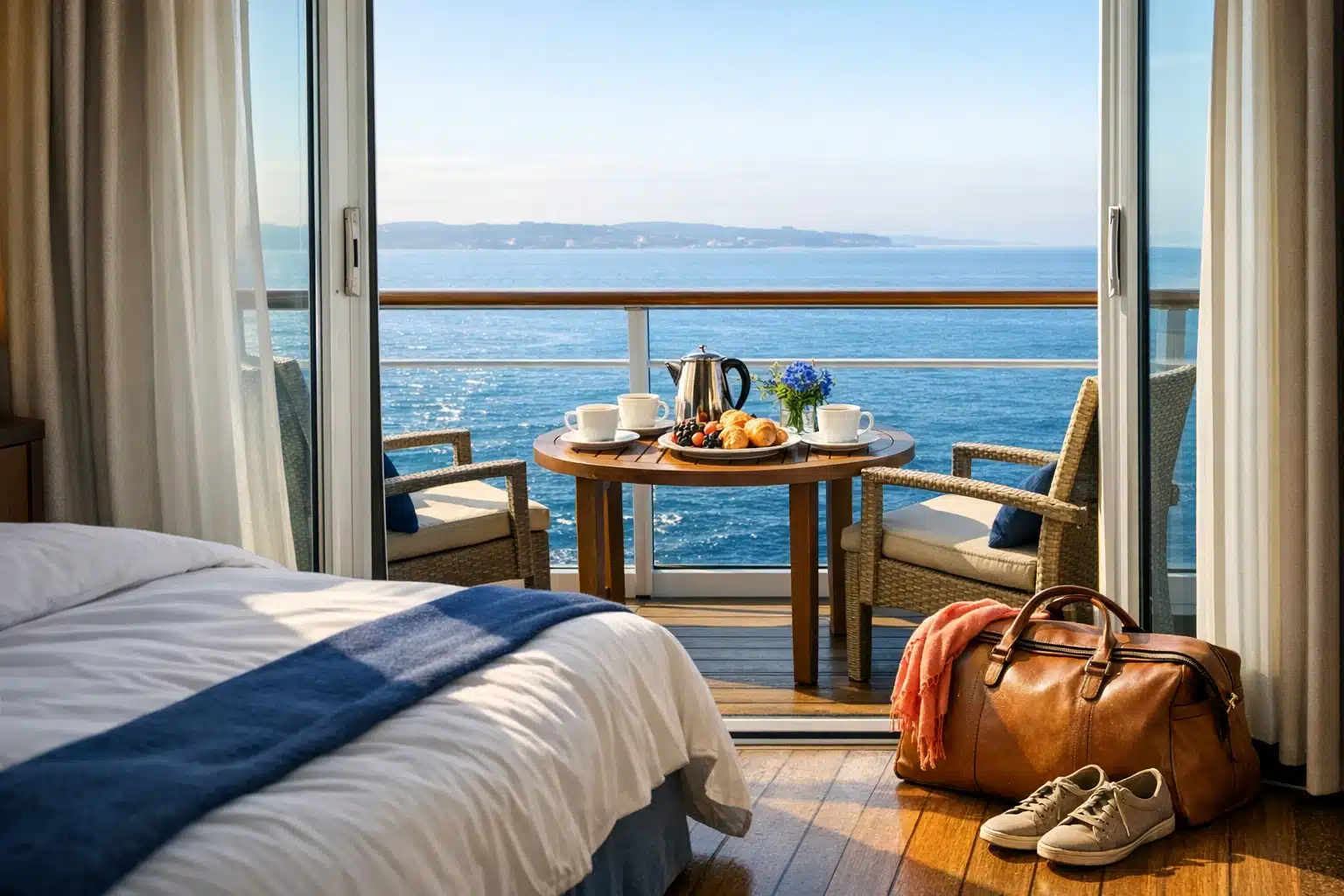
Because the trip is short, some travellers skip the extras and keep spending tightly controlled. That can make a three-night cruise cost-competitive with a hotel break in a European city, particularly once meals and entertainment are considered. On the other hand, if you add cocktails, premium dining, spa treatments, and organised excursions, the final bill can move well beyond the entry fare. A sensible strategy is to decide in advance what kind of trip you want. If the cruise itself is the main event, an inside cabin may be excellent value. If you want private outdoor space and a more relaxed cabin experience, a balcony can feel worthwhile even on a short run.
Booking timing also affects price. Early booking often gives better cabin choice and occasionally better launch fares, while late booking can produce eye-catching discounts if a ship still has empty rooms. The risk with waiting is simple: mini cruises are popular for their convenience, so the cheapest categories may sell out quickly. In short, price matters, but value depends on how honestly you compare the complete cost of the trip, not just the figure on the first screen.
What You Can Realistically Expect On Board During a 3-Night Sailing
A three-night cruise is not simply a shorter version of a long cruise. It has its own pace, its own logic, and its own small compromises. The first thing to understand is that everything feels compressed. Embarkation, safety drill, sailaway, dinner, entertainment, and the first full day at sea or ashore all arrive quickly. If a week-long cruise can unfold gently, a mini cruise tends to stride in with its coat already off. That makes it exciting, but it also means you should board with a plan.
Most ships used for these itineraries will still offer the familiar elements of cruise life: main dining rooms, buffet dining, bars, lounges, theatre entertainment, quizzes, deck space, shops, and often a spa or fitness area. The difference is that you will not have time to experience everything. If you spend a port day ashore and an evening at a show, that may leave very little room for a long spa session, specialty restaurant, afternoon tea, and pool time. Prioritising matters.
For first-time cruisers, this is actually useful. A short trip reveals the practical side of cruising very quickly. You will learn whether you enjoy fixed dining times or flexible ones, whether the cabin feels spacious enough, whether ship movement bothers you, and whether you prefer busy social spaces or quieter corners on deck. If you come home wishing the trip had lasted longer, that is a good sign. If three nights feels exactly right, you have still had a worthwhile break and gained a clearer sense of your preferences.
There are a few smart ways to make the most of the time on board:
- book any must-do dining or spa experiences as early as the cruise line allows
- unpack quickly so the cabin feels settled from the first evening
- check the daily programme early each morning and choose two or three priorities rather than trying to do everything
- use sea time intentionally, whether that means reading on deck, joining activities, or simply watching the coastline disappear
Short cruises tend to suit couples, friends, solo travellers, and curious newcomers especially well. Families can enjoy them too, but the shorter duration means there is less time for children to settle into kids’ clubs or for parents to unwind fully. Travellers who want deep cultural sightseeing may also find the format too brief. Yet for many people, that is not the point. The pleasure lies in the rhythm: coffee at sea, a change of country by lunchtime, dinner in motion, and the pleasant oddness of waking up somewhere else. The ship becomes both transport and destination, which is why these sailings can feel surprisingly restorative despite their modest length.
Travel Tips, Booking Strategy, and Final Advice for Different Travellers
If you want a three-night cruise from Portsmouth to feel effortless, the best approach is to treat it like a short project rather than an impulse purchase. The trip itself may be compact, but good planning makes an outsized difference. Start with timing. If your schedule is flexible, compare off-peak dates in spring and autumn, when fares can be softer than peak summer departures. If you need a specific weekend, book as soon as the sailing appears, particularly if you want a particular cabin type or are travelling as a solo passenger, since single cabins and low fares can disappear early.
Document checks are also worth doing well in advance. Even for a short sailing to nearby European ports, you will usually need a valid passport and may need to pay attention to visa or entry requirements based on your nationality and destination. Do not assume the cruise line will solve missing paperwork at the terminal. For transport, decide early whether you are driving, taking the train, or booking a pre-cruise hotel. A nearby overnight stay can remove stress if you are travelling from farther afield, especially for early check-in times.
Packing for a mini cruise is simpler than many people think. The best formula is light but deliberate:
- layers for variable Channel or North Sea weather
- comfortable shoes for walking in port
- one smarter outfit for evening dining, if your line encourages it
- any motion-sickness medication you may need
- a day bag for shore visits
- chargers, travel documents, and insurance details in hand luggage
Now for the most useful question: who should actually book one of these cruises? If you are a first-time cruiser, choose an itinerary with one straightforward port and enough sea time to sample ship life without feeling rushed. If you are a couple looking for a compact escape, focus on cabin comfort and evening atmosphere rather than chasing the lowest fare. If your main goal is sightseeing, choose the port you most want to explore and be realistic about how many hours you will have. If you are mainly interested in relaxation, a good-value inside or ocean-view cabin can work perfectly, because much of your time will be spent in lounges, restaurants, and on deck.
In conclusion, three-night cruises from Portsmouth suit travellers who want convenience, novelty, and a manageable price point without turning a short break into a complicated mission. They are not built for exhaustive sightseeing or grand luxury at every budget level, but they do offer something many holidays fail to provide: a clean break from routine with remarkably little logistical strain. For busy professionals, cautious first-timers, and couples craving a change of scene, that combination is hard to ignore. Choose the route carefully, read the fare details closely, pack for the weather rather than the brochure, and a short sailing from Portsmouth can feel much bigger than its calendar footprint suggests.