Elegant Tenerife Beach Resort Experiences for a Refreshing Coastal Break
Tenerife resets the senses with Atlantic light, steady sea air, and shorelines shaped by volcanic history, making it a standout choice for travelers who need a break that feels both easy and memorable. Its beach resorts are not simply places to sleep beside the water; the strongest options combine climate, comfort, local food, walkable promenades, and access to varied scenery in one polished stay. Knowing how the resort areas differ can turn a standard holiday into a genuinely refreshing coastal pause.
Outline
This article first maps Tenerife’s main resort zones, then explains what gives a beach stay an elegant feel, compares the best choices for different traveler types, explores the experiences that shape a satisfying coastal day, and ends with practical planning advice and a conclusion for readers seeking style, comfort, and ease.
- Understanding Tenerife’s beach resort geography
- What makes a resort experience feel elegant rather than merely expensive
- Matching resort style to couples, families, solo travelers, and longer stays
- Combining beaches, dining, wellness, and excursions into a balanced holiday
- Planning the right season, budget, and pace for a refreshing break
Understanding Tenerife’s Resort Geography: Why Location Shapes the Entire Stay
The first decision in Tenerife is not the hotel brand, the room category, or even whether to book half board. It is the area. The island’s beach resort experience changes significantly from coast to coast because Tenerife contains several microclimates and very different resort atmospheres. Broadly speaking, the south is sunnier, drier, and more resort-oriented, while the north tends to feel greener, more traditional, and slightly cooler. That contrast matters because the same traveler could describe Tenerife as polished and easygoing in one zone, then scenic and characterful in another.
Costa Adeje is often the reference point for elegant beach resort travel on the island. It usually appeals to visitors who want well-kept promenades, modern hotels, landscaped pool areas, upscale shopping, and beaches that are comfortable for long, leisurely days by the sea. Nearby Playa Fañabé and Playa del Duque are especially popular for visitors seeking a refined environment without sacrificing convenience. Playa de las Américas, by contrast, can feel livelier and more entertainment-focused, which suits travelers who enjoy nightlife, energetic beach clubs, and a busier rhythm. Los Cristianos sits somewhere in between, offering a more settled atmosphere, a working-port character in places, and practical ferry access to nearby islands.
The north tells a different story. Puerto de la Cruz, the best-known northern resort town, offers botanical greenery, a more local urban feel, and a visual identity shaped by volcanic stone, traditional balconies, and dramatic views when the weather is clear. Beaches in northern Tenerife may feature darker volcanic sand and stronger ocean character, which some travelers love because it feels more distinctive and less standardized. The trade-off is that beach weather can be less consistently warm than in the south, especially in cooler months.
A useful way to compare Tenerife’s main resort zones is to think in terms of travel personality rather than simple star ratings:
- Costa Adeje: polished, convenient, and strong for upscale beach leisure
- Playa de las Américas: lively, social, and energetic
- Los Cristianos: balanced, accessible, and practical for mixed-age groups
- Puerto de la Cruz: scenic, atmospheric, and better for travelers who want resort comfort with more local texture
Tenerife’s geography also influences how “refreshing” a break feels. A coastal holiday is rarely only about the resort itself; it is about whether the area invites you outside. Wide promenades, beach access, café density, taxi availability, and the ease of reaching a natural viewpoint or a good seafood lunch all affect the experience. An elegant stay, in other words, begins with choosing a part of the island whose pace matches your own. If you want dependable sun and easy resort living, the south is usually the safer choice. If you want atmosphere, greenery, and a stronger sense of local setting, the north may offer more emotional texture.
What Defines an Elegant Tenerife Beach Resort Experience
Elegance in a beach resort is often misunderstood. It is not simply marble in the lobby, a glossy brochure, or a long amenity list. In practical travel terms, an elegant resort experience is one where comfort, design, service, and setting work together so smoothly that the holiday feels lighter. The best Tenerife beach resorts tend to succeed not because they overwhelm guests with options, but because they make small details feel intuitive: a room that captures sea breezes instead of road noise, a breakfast terrace with enough space to linger, a pool layout that does not feel crowded by mid-morning, and staff who solve problems efficiently without turning everything into a performance.
Many travelers notice this difference the moment they arrive. A merely adequate resort processes guests. A truly refined one orients them. Check-in feels calm, common areas are legible, luggage handling is prompt, and the transition from reception to room feels seamless. Room design is another dividing line. Elegant properties usually focus on proportion and usability: quality mattresses, well-placed lighting, quiet air conditioning, decent storage, and bathrooms that feel modern rather than improvised. Sea views can be wonderful, but layout matters just as much. A large balcony with comfortable seating may add more value than an impressive but awkward suite.
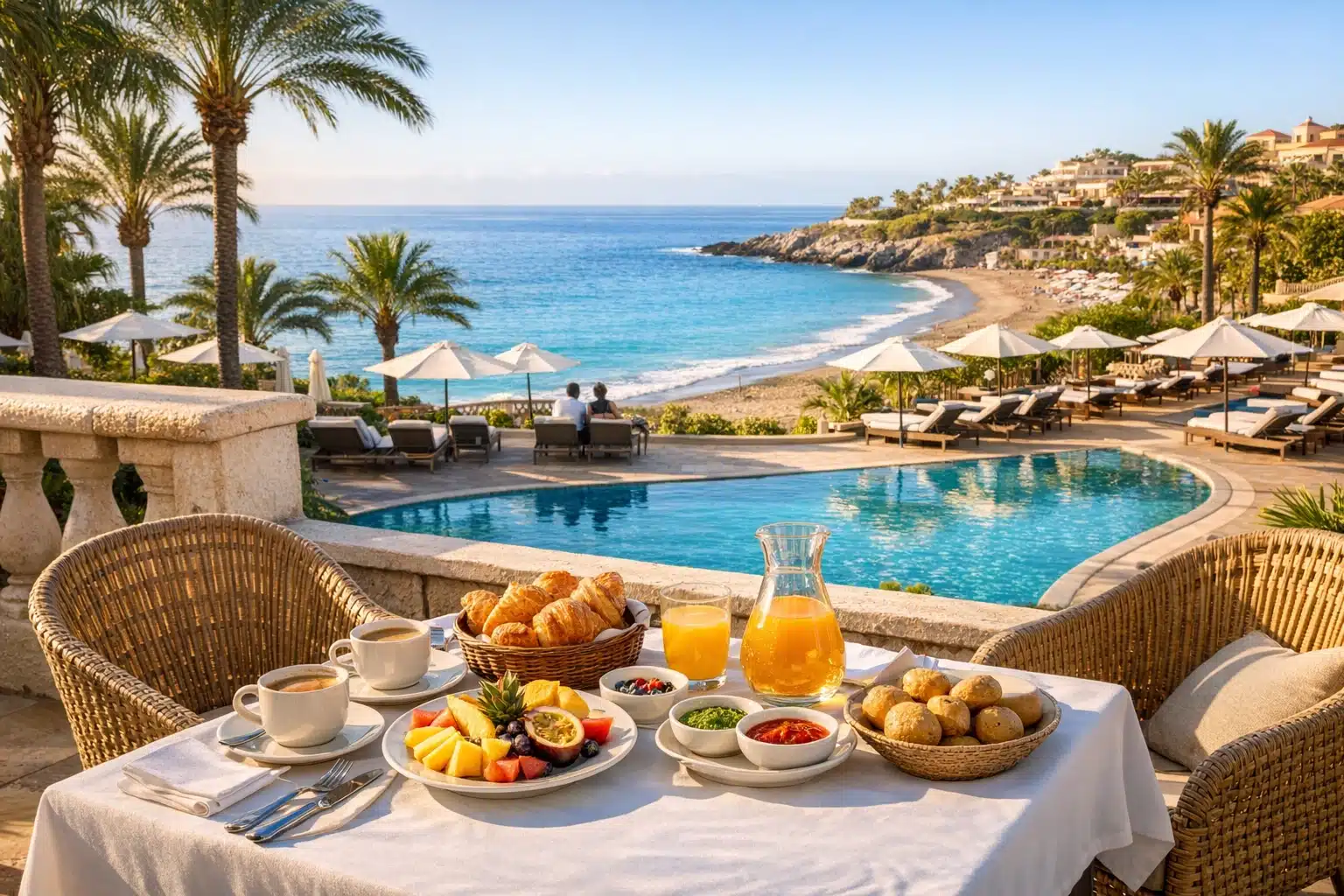
Dining also reveals the real standard of a resort. In Tenerife, where the island’s food culture includes fresh fish, papas arrugadas with mojo, local cheeses, and increasingly strong international dining, elegant resorts usually avoid treating meals as a logistical exercise. Breakfast should feel abundant without being chaotic. Dinner options should show some local identity rather than relying solely on generic buffet formulas. Even where buffets are the norm, stronger properties often improve the experience with live cooking stations, outdoor tables, clearer labeling, and fresher produce. For travelers who care about atmosphere, this matters more than sheer quantity.
When comparing resorts, these features are often more useful than star classifications alone:
- Direct or easy beach access without a difficult climb
- Heated pool options for cooler or windier days
- Quiet zones for adults and social spaces for families
- Good sound insulation and thoughtful room placement
- Walkable access to promenades, shops, or restaurants
- Spa, wellness, or fitness facilities that feel maintained rather than symbolic
Another mark of elegance is restraint. The strongest resorts know what kind of guest they serve and do not try to be everything at once. Adults-only properties may focus on serenity, wellness, and dining. Family resorts can still feel polished if they separate children’s entertainment areas from quieter lounging spaces. Boutique hotels may trade scale for personality, while larger beach resorts may win on breadth of facilities and service depth. In Tenerife, elegance often lies in balance: the right amount of activity, the right degree of privacy, and an environment that lets the coast remain the main event rather than the backdrop.
Choosing the Right Resort Style for Couples, Families, Solo Travelers, and Longer Stays
A beautiful resort can still be the wrong resort if it does not match the traveler. Tenerife works especially well because the island offers a wide spread of beach accommodation styles, from adults-focused retreats to family complexes and apartment-style stays that suit longer visits. The smartest way to choose is to start with how you want the days to unfold. Are you imagining uninterrupted pool time, easy dinners on site, and a quiet drink after sunset? Or do you want a base that lets you bounce between beaches, cafés, excursions, and local neighborhoods?
Couples often do best in resorts where design, calm, and location are prioritized over sheer entertainment volume. Adults-only or adults-oriented properties in Costa Adeje tend to suit romantic breaks, anniversaries, and short restorative getaways because they typically offer quieter pools, spa access, and a more measured evening atmosphere. A couple seeking privacy may value a sea-view room, a smaller property footprint, and a terrace suitable for slow mornings. By contrast, couples who like movement and nightlife may prefer a stylish stay closer to Playa de las Américas, where beachfront energy extends later into the evening.
Families usually benefit from a different checklist. Space becomes more important than sleek minimalism, and the practical value of a resort rises quickly if it includes child-friendly pools, flexible dining times, easy access to a gentle beach, and entertainment that does not require constant planning by parents. Suite-style accommodation or one-bedroom units can be a major advantage, especially on stays longer than a few nights. A resort can still feel elegant for a family if circulation is sensible, staff are responsive, and there is enough room for adults to relax once children are occupied.
Solo travelers often need something else entirely: safety, a walkable setting, and social choice rather than forced sociability. A well-located beach resort in a lively but not chaotic area can work well because it allows a person to spend one day quietly by the pool and the next exploring seafront restaurants, shopping streets, or local excursions. Reliable reception staff, clear transport options, and comfortable public spaces matter more than oversized rooms. For longer stays, apartment-style resorts or hotels with kitchenettes can offer freedom and help control meal costs without sacrificing beachfront access.
A useful decision framework looks like this:
- For couples seeking quiet: adults-oriented resort, spa, strong dining, walkable seafront
- For active couples or friend pairs: stylish hotel near nightlife and beach clubs
- For families: larger rooms, child-friendly pools, gentle beach access, flexible dining
- For solo visitors: safe area, promenade access, easy excursions, sociable but not noisy atmosphere
- For longer breaks: apartment-style layout, laundry options, kitchenette, good transport links
The right match makes the whole island feel easier. A couple in a family-heavy complex may find the mood too busy. Parents in a sleek adults-focused hotel may feel constrained. A solo traveler in a remote luxury property may end up isolated. Tenerife’s real advantage is range. It lets travelers choose not just a level of comfort, but a rhythm. And once rhythm aligns with setting, the holiday starts to breathe properly.
Days by the Water: Beaches, Wellness, Dining, and the Quiet Art of Doing Enough
An elegant beach resort stay in Tenerife is not defined by one dramatic moment. More often, it is built through a sequence of well-paced days. Morning light over the Atlantic, a good breakfast taken outdoors, a beach chosen for the day’s mood rather than convenience alone, a late lunch that tastes unmistakably coastal, perhaps a spa session when the wind rises, and an evening walk along the promenade before dinner. Tenerife is particularly good at this kind of layered simplicity because the island allows relaxation and activity to sit side by side rather than compete.
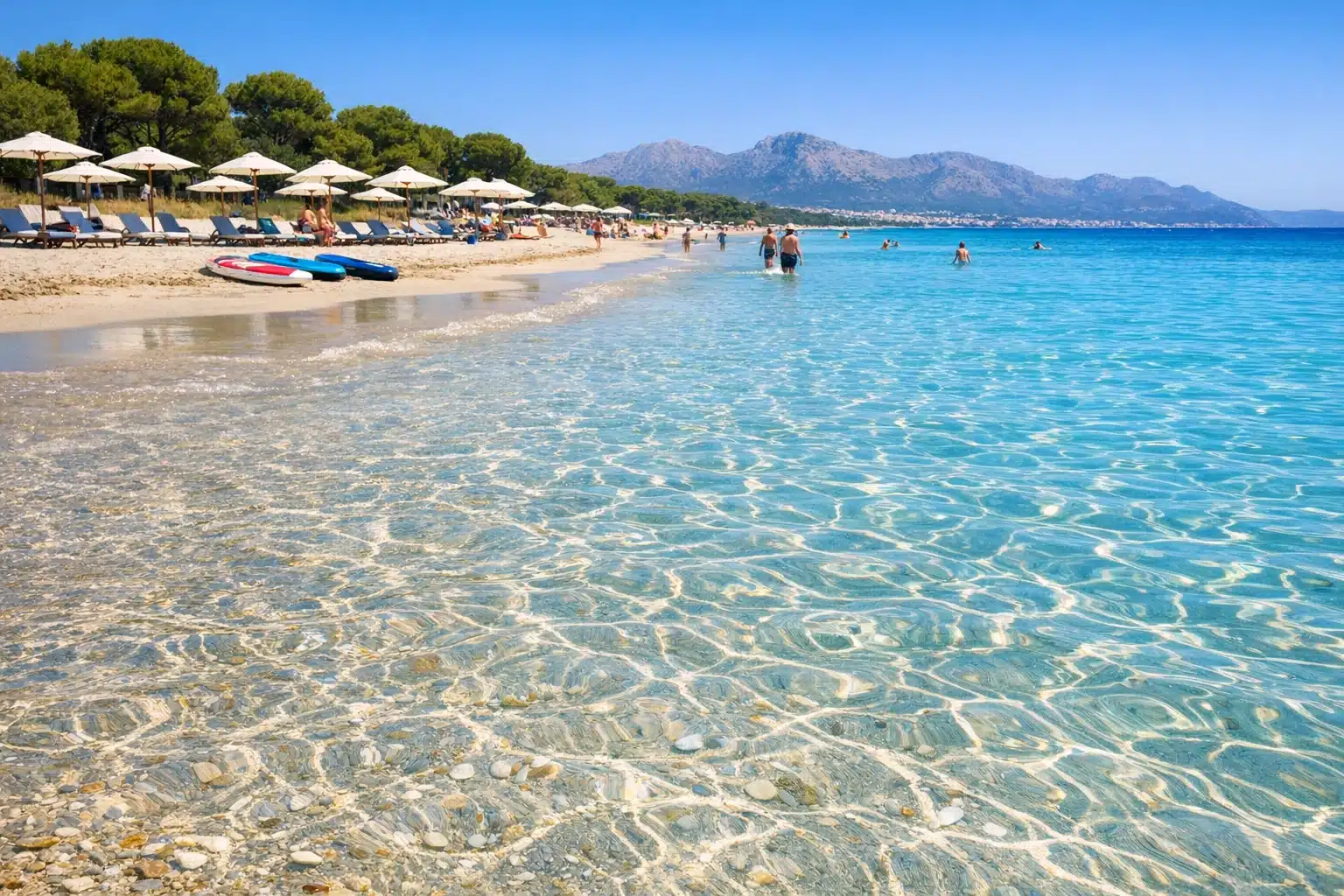
The beaches themselves are varied enough to shape different experiences. Southern beaches such as Playa del Duque and Playa Fañabé are popular for their resort infrastructure, loungers, cafés, and accessible seafront atmosphere. They suit travelers who want comfort and easy transitions between swimming, reading, lunch, and returning to the hotel without logistical friction. Other stretches of coast carry more visual drama, with darker volcanic sand or stronger surf conditions that feel wilder and more elemental. For some visitors, that contrast is part of Tenerife’s appeal: one day neat and polished, the next day textured and untamed.
Wellness plays a larger role in elegant resort travel than many brochures admit. A refreshing break does not always mean doing less; it often means doing things that restore attention. In Tenerife, resort spas, hydrotherapy circuits, yoga sessions, and open-air fitness spaces can add real value, especially for travelers arriving from colder climates or busy urban routines. Even simple habits become memorable here: a swim before breakfast, a shaded nap by the pool, an hour with a book while palms move in the breeze. The island knows how to make rest feel deliberate instead of accidental.
Dining adds another essential dimension. Travelers who stay inside the resort for every meal may miss one of Tenerife’s pleasures, which is the ease of mixing hotel comfort with local food discoveries. Depending on the area, a short walk may lead to grilled fish, rice dishes, local wines, wrinkled potatoes with mojo sauces, or desserts influenced by island traditions. Good resorts support this rather than compete with it; they position guests well and make returning easy. The strongest holidays often include both polished hotel breakfasts and spontaneous waterfront lunches.
A balanced Tenerife beach break might include:
- A quiet morning on a sheltered beach
- A long lunch with local seafood or Canarian dishes
- An afternoon spa treatment or poolside rest
- A sunset promenade walk
- A light excursion such as a boat trip, coastal viewpoint stop, or village visit on another day
There is a subtle skill in “doing enough” on an island like this. Over-scheduling can flatten the experience, yet staying in one spot all week can leave Tenerife underused. The most rewarding resort holidays leave room for mood. If the sea is calm, swim. If clouds drift over the north, enjoy the gardens and cafés. If energy rises, head out for a scenic drive. The island invites a fluid style of travel, and elegant resorts are at their best when they support that flexibility rather than overwhelm it with constant programming.
Planning a Refreshing Coastal Break: Timing, Value, and Final Thoughts for Travelers Seeking Style Without Stress
Tenerife’s enduring popularity rests on a practical advantage as much as a scenic one: it works across much of the year. For travelers based in Europe, that makes it especially attractive for a coastal reset when mainland weather is less inviting. The south of the island is generally the safer choice for more dependable sunshine and beach conditions, while the north can be rewarding for travelers who prioritize landscape, greenery, and town character. Timing still matters, though. Peak holiday periods often bring higher prices, fuller resorts, and less spontaneous choice. Shoulder seasons can provide a better balance of value, temperature, and breathing room.
Budget planning for an elegant Tenerife stay is less about chasing the lowest headline rate and more about understanding where value actually lies. A slightly higher room price in a stronger location can save both time and transport costs. A breakfast-only plan may be ideal if you want flexibility to explore local restaurants, while half board can make sense for shorter stays or travelers who prefer predictable evening routines. Sea-view upgrades are worth considering if you plan to spend genuine time on the balcony; if not, that budget might be better spent on a quieter room category, spa access, or a more refined resort area.
Before booking, it helps to check a few details that are easy to overlook on glossy listing pages:
- How far is the actual walk to the beach, and is it flat or steep?
- Are there heated pools for cooler months?
- Does the resort attract families, nightlife-focused groups, or mostly couples?
- Is the immediate area rich in restaurants and promenades, or isolated?
- Are renovated room categories clearly identified?
- What do recent reviews say about noise, cleanliness, and food quality?
Travelers seeking an elegant coastal break often want the same core outcome: to return home feeling lighter, clearer, and not mildly exhausted by their own holiday. Tenerife can deliver that unusually well because it combines reliable resort infrastructure with distinctive island character. You can have polished beach days without giving up local flavor, and you can enjoy comfort without feeling sealed off from the destination. That combination is what makes the island stand out among warm-weather resort choices.
For couples wanting a calm escape, Tenerife offers refined beachfront zones with strong dining and spa culture. For families who need convenience without chaos, it offers resort districts where beaches, amenities, and practical comforts sit close together. For solo travelers and longer-stay visitors, it offers enough structure to feel easy and enough variety to avoid monotony. The most successful trip is rarely the one with the biggest suite or the longest amenity list. It is the one where location, resort style, and daily rhythm line up so naturally that the coast seems to set the pace for you. If that is the kind of break you are after, Tenerife deserves serious consideration.