3-Night Cruise from Liverpool to the Norwegian Fjords
A 3-night cruise from Liverpool to the Norwegian Fjords appeals to travelers who want a taste of northern scenery without committing to a full week at sea. It combines the practical ease of a UK departure with the visual drama of deep inlets, steep mountains, and changing northern light. Because the schedule is compact, every choice matters, from cabin location to shore planning. That makes this itinerary especially relevant for first-time cruisers, busy professionals, and anyone testing whether fjord travel suits them.
Article outline:
- The reality of a 3-night fjords itinerary and what it can reasonably include
- Why departing from Liverpool changes the travel experience before you even sail
- What passengers may actually see, do, and miss on such a compressed route
- How to evaluate value, budgeting, cabins, and comparisons with longer cruises
- Who this voyage suits best and how to decide whether to book it
1. What a 3-Night Fjords Cruise Really Means
At first glance, the phrase “Norwegian Fjords cruise” can suggest a sweeping journey through multiple dramatic waterways, tiny villages, and postcard-famous ports. A 3-night itinerary from Liverpool is different. It is best understood as a focused introduction to fjord cruising rather than a full regional survey. That distinction matters because expectations shape satisfaction. Travelers who board expecting a grand circuit through Bergen, Geiranger, Flåm, and Ålesund will almost certainly feel rushed. Travelers who treat the voyage as a scenic sampler are far more likely to enjoy the format.
From a practical navigation standpoint, Liverpool is well placed for a short crossing to southwestern Norway. Modern cruise ships commonly operate around 18 to 22 knots, making overnight passage to parts of Norway entirely feasible. Even so, the fjord region is extensive, and many of the most famous inner fjords require additional sailing time. That is why brief itineraries often concentrate on one accessible gateway, one scenic cruise segment, or a port such as Stavanger, which works better logistically than deeper inland destinations. In other words, the ship can deliver the mood of the fjords more easily than the full checklist of famous stops.
This type of sailing usually follows a simple rhythm: embarkation in Liverpool, a full or partial sea day, one focused Norwegian call or scenic cruising period, and then a return crossing. The structure creates a very particular travel experience. There is less pressure to “do everything,” but there is also less room for mistakes. If you sleep through the morning approach, book the wrong excursion, or lose time deciding what to do ashore, a notable share of the journey is gone. On a 7-night cruise, one imperfect afternoon barely registers. On a 3-night cruise, it shapes the memory of the whole trip.
That is why this itinerary works best when seen through the lens of efficiency. It suits travelers who value:
- a no-flight departure from England
- a manageable first cruise experience
- an affordable preview of Norway
- scenic relaxation more than destination collecting
Think of it less as a complete fjords holiday and more as opening the door to one. The mountains may arrive only briefly on the horizon, yet they still have a way of rearranging your sense of scale. For many passengers, that first glimpse is exactly the point.
2. Why Liverpool Is a Strong Departure Port for a Short Northern Voyage
Liverpool adds more to this itinerary than a simple point of embarkation. For travelers in northern England, north Wales, the Midlands, and parts of Scotland, it can remove the most tiring part of a holiday before the cruise even begins. Instead of an airport check-in, baggage rules, early flights, and transfer queues, many passengers can reach the terminal by car, rail, or a short hotel stay the night before. That convenience has real value, especially on a voyage that lasts only three nights. When the total trip is brief, losing a full day to airport logistics feels disproportionately expensive.
The city also has a maritime identity that gives departure day a certain atmosphere. Liverpool’s waterfront is not just functional; it carries the weight of shipping history, trade routes, and transatlantic stories. Boarding a ship there can feel a little theatrical in the best way. The skyline recedes, the River Mersey opens, and the voyage begins with a sense of movement that air travel rarely offers. It is a reminder that travel is not merely arrival. Sometimes the leaving is part of the pleasure.
Embarkation from Liverpool can also simplify budgeting. A no-fly cruise may reduce or eliminate costs such as:
- checked baggage fees
- airport transfers
- pre-flight hotel nights
- surge pricing for short-haul holiday flights
Those savings do not make the cruise automatically cheap, but they can improve overall value. A traveler comparing a 3-night Liverpool departure with a 3-night European city break may discover that the cruise includes accommodation, transport, entertainment, and much of the food in a single fare. That bundled structure appeals to people who dislike piecing together a trip from separate bookings.
There are, however, trade-offs. Liverpool-based departures may offer fewer sailing dates than larger southern cruise hubs, and weather in the Irish Sea or North Sea can affect the feel of the crossing, particularly outside the calmest summer windows. Passengers who are sensitive to motion should not assume a short route means a flat one. Cabin selection matters, and midship accommodation on a lower deck often feels steadier than forward cabins high up.
Still, for the right traveler, Liverpool makes this itinerary sensible in a way that Southampton or a fly-cruise alternative may not. If a holiday starts with less friction, the mind arrives sooner. On a compact fjords voyage, that early ease is not a minor perk; it is part of the product.
3. Scenery, Shore Time, and the Real Experience On Board and Ashore
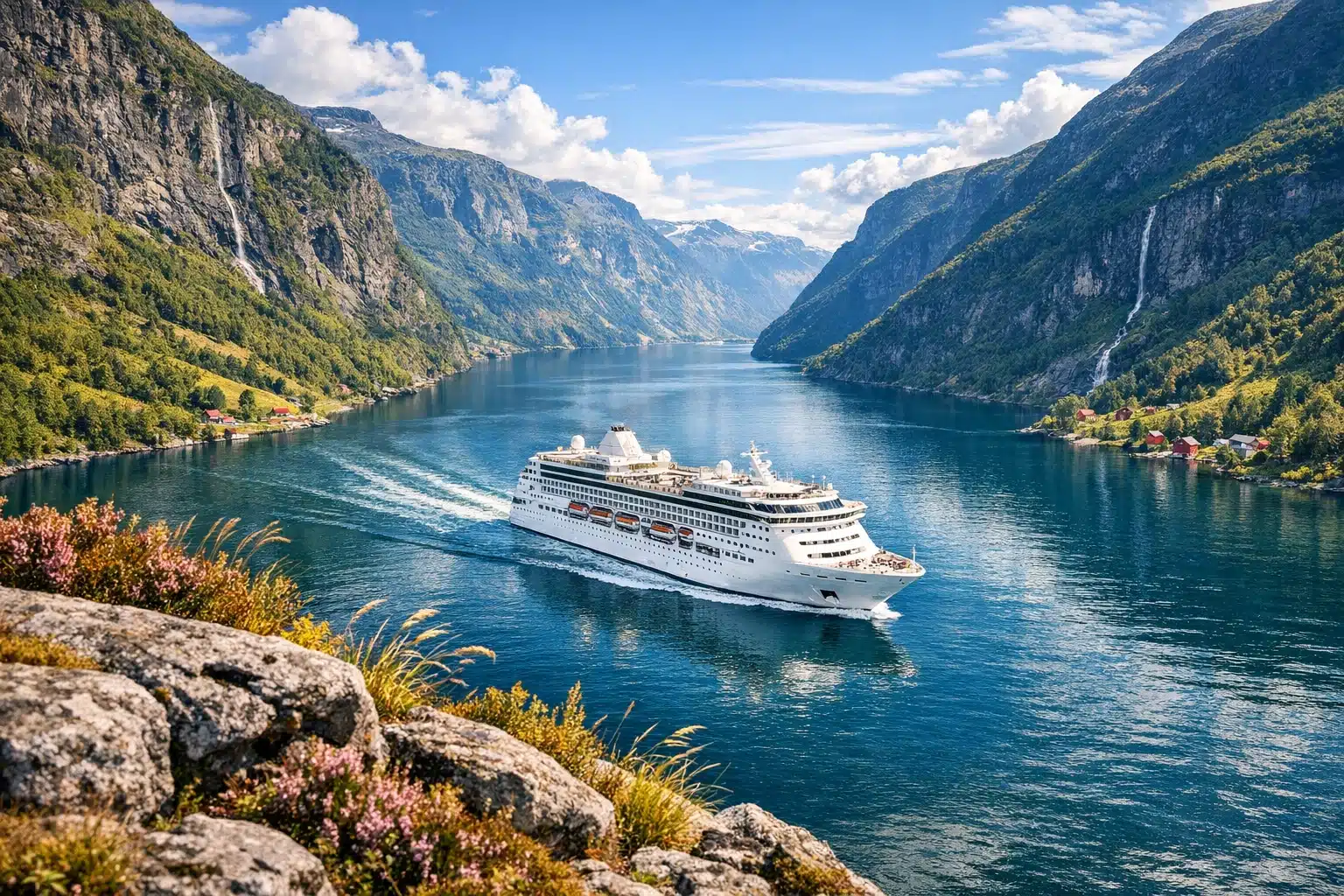
The central promise of a Norwegian fjords cruise is not nightlife, shopping, or landmark collecting. It is scenery, and scenery behaves differently on a 3-night cruise than on a longer itinerary. Instead of building gradually through several ports, the landscape may arrive almost like a stage reveal. One morning the sea is open and grey-blue; then cliffs rise, small settlements cling to the shoreline, waterfalls stitch white lines into dark rock, and the ship begins to feel tiny in a very satisfying way. The effect can be startling precisely because the transition is so sudden.
On a condensed sailing, passengers should be realistic about how much shore time they will get. Depending on the cruise line and route, the ship may offer a single meaningful port call, a scenic passage into a fjord, or a combination of both. Stavanger is a plausible stop on some short Norway itineraries because it is relatively accessible from the UK and still delivers a strong sense of place, with its harbor, old wooden houses, and nearby dramatic landscapes. Deeper or more remote classics such as Geiranger usually fit more naturally into 7-night or longer schedules. That is not a flaw in the shorter cruise; it is simply geography winning the argument.
To get the most from the experience, passengers should decide in advance what matters most. The choice often falls into three broad styles:
- staying on board for panoramic viewing and a quieter pace
- booking one structured excursion to maximize limited hours ashore
- exploring independently near the port for flexibility and lower cost
Each approach has merits. Organized tours reduce uncertainty, which is useful when the clock is tight. Independent wandering can be more rewarding if the ship docks close to a walkable town center. Remaining on board may sound passive, yet in the fjords it can be deeply memorable. A warm drink on deck, a cold wind off the water, and mountains sliding past like moving walls can be the defining image of the trip.
Longer fjord cruises offer greater variety, often combining cities, UNESCO-listed viewpoints, railway excursions, and multiple scenic sail-ins. A 3-night itinerary does not compete on breadth. It competes on intensity and efficiency. There is something appealing about a journey that asks for only a few days yet still delivers a genuine change of atmosphere. You leave Liverpool with the familiar textures of urban Britain around you and wake to a coastline that feels carved by myth and weather. That transformation, even if brief, is the emotional engine of the voyage.
For photographers, early risers, and travelers who enjoy simply looking out at the world, this format can be surprisingly rewarding. For visitors who need long museum visits, broad regional exploration, or several distinct ports to feel satisfied, it may feel too compressed. The right verdict depends less on the fjords themselves than on your personal travel rhythm.
4. Budget, Cabin Strategy, and How This Voyage Compares with Longer Fjord Cruises
A 3-night cruise can look attractive on price, but value is more nuanced than the headline fare. The base rate often covers accommodation, most dining, and onboard entertainment, which makes the product feel straightforward compared with building a land trip from separate components. Even so, the final spend can shift quickly once drinks, specialty restaurants, Wi-Fi, gratuities, parking, and shore excursions are added. Smart planning matters because extras carry a larger proportional weight on a short itinerary. If you spend heavily for three days, the cost per night may rival or exceed a longer sailing that initially seemed more expensive.
Cabin selection is another area where short cruises create unusual decision-making. On a longer voyage, a balcony can feel easier to justify because you will use it repeatedly. On a 3-night fjords trip, the calculation is more personal. A balcony gives private access to the scenery, which is undeniably appealing when the ship enters a dramatic coastal passage. At the same time, public decks may provide wider views, and the limited duration means some travelers prefer to save money with an inside or ocean-view cabin. There is no universal answer, but there are clear trade-offs:
- Inside cabin: usually the lowest fare, best for budget-focused travelers who treat the room mainly as a place to sleep
- Ocean-view cabin: natural light without the price jump of a balcony
- Balcony cabin: strongest scenic privacy, most appealing for couples and landscape lovers
- Midship location: often better for motion-sensitive passengers than far-forward cabins
Comparison with longer fjords cruises is where perspective becomes essential. A 7-night or 10-night itinerary generally offers more ports, deeper fjord access, and a more balanced ratio between travel time and destination time. Those sailings may include famous inland experiences such as scenic rail journeys, multiple mountain viewpoints, and a fuller sense of Norway’s coastal diversity. If your priority is comprehensive exploration, a longer cruise usually wins on substance.
So why choose the 3-night version? First, accessibility. It asks less of your calendar, your budget, and your confidence as a cruiser. Second, it functions well as a trial run. Some travelers are unsure whether they enjoy sea days, ship life, or cooler-weather destinations. A short itinerary tests all three without requiring a major commitment. Third, it suits the traveler who values a change of scene over an exhaustive itinerary. Not every holiday needs to be a maximal project.
The strongest strategy is to judge value by objective fit, not by marketing adjectives. If you want a brief reset with strong scenery and simple logistics, this cruise can represent solid value. If you are dreaming of an expansive Norwegian journey, the lower fare may be a false economy, because you may end the trip wishing you had booked the longer route from the beginning.
5. Conclusion: Who Should Book a 3-Night Cruise from Liverpool to the Norwegian Fjords?
This itinerary is best for travelers who think in practical terms but still want a little wonder. If you live within easy reach of Liverpool, dislike airport hassle, and have only a long weekend or a few spare days, the format makes immediate sense. It is also well suited to first-time cruisers who want to sample ship life without committing to a week or more, and to repeat cruisers who simply want a restorative break with better scenery than an ordinary mini-cruise can offer.
It is less ideal for travelers who want Norway in depth. If your goal is to compare several fjords, spend long hours ashore, or build a detailed understanding of the country’s coastal towns and inland landscapes, the 3-night sailing will feel more like a trailer than the full film. That is not criticism; it is clarity. The voyage succeeds when passengers want concentration, not coverage.
Before booking, the most useful questions are simple:
- Do I want a scenic escape or a destination-heavy holiday?
- Am I happy with one focused taste of Norway rather than a broad survey?
- Will a no-fly departure meaningfully improve my overall experience?
- Would I enjoy the ship itself as part of the holiday, not just the port?
If your answers lean toward ease, atmosphere, and efficiency, this cruise can be a strong choice. The Liverpool departure keeps the logistics grounded, while the Norwegian coast provides the sense of distance that many short breaks fail to create. In only a few nights, you can move from familiar urban streets to steep shores and still water framed by rock. That contrast is powerful, and it explains why even a brief fjords cruise can leave such a lasting impression.
For busy professionals, couples seeking a compact getaway, retirees who prefer simpler travel, and curious first-time cruisers, this voyage offers a well-defined proposition: less complexity, less time away, and a memorable slice of northern Europe. Book it for what it is, not for what longer itineraries do better, and you are far more likely to step off the ship satisfied. Sometimes a short journey is not a compromise at all. Sometimes it is exactly the right size for the season of life you are in.