Vintage Jewelry Pieces That May Have Unexpected Market Value Today
Vintage jewelry often sits quietly in a box, looking sentimental rather than significant, until a closer look reveals a forgotten designer mark, a rare clasp, or a material now prized by collectors. Today, resale platforms, rising metal prices, and renewed interest in twentieth-century style have changed how these pieces are judged. Understanding what drives value can help owners avoid underselling family heirlooms and help buyers spot overlooked opportunities. This guide maps the key categories, pricing forces, and practical checks that turn curiosity into informed decisions.
Outline:
• Why overlooked vintage jewelry can appreciate in the current market
• Which costume and fine jewelry categories often surprise sellers
• How hallmarks, materials, condition, and provenance shape price
• Where collectors, heirs, and casual owners can research, preserve, and sell wisely
Why Some Vintage Jewelry Suddenly Commands Higher Prices
The market for vintage jewelry has changed because several forces that used to operate separately now overlap. Fashion trends are cyclical, precious metal prices move over time, and the internet has made niche demand visible in a way that was difficult twenty years ago. A bracelet that once seemed too old-fashioned for everyday wear may now fit neatly into current tastes for maximalist styling, quiet luxury, or era-specific dressing. At the same time, an item made of solid gold or platinum carries an underlying material value that can support its price even before design appeal enters the picture.
One major reason values rise unexpectedly is that buyers no longer need to live near a specialty dealer to find what they want. Online auctions, resale platforms, and social media communities have widened the audience for highly specific pieces, from 1940s retro gold clips to mid-century Scandinavian silver pendants. When more knowledgeable buyers compete for limited supply, prices tend to strengthen. This is especially true for jewelry from periods with distinctive craftsmanship, such as Art Deco, Retro, and certain parts of the 1960s and 1970s. In earlier decades, some of these items were sold merely as old jewelry. Today, they are often marketed by movement, maker, and material.
Another factor is the difference between replacement and originality. Many modern pieces are cast in large volumes, while older jewelry may feature hand-finished details, unusual stone cuts, or construction techniques that are less common now. Collectors notice those differences. A hand-knotted strand, a carefully engineered double clip brooch, or a well-made box clasp can add substance to a listing in a way that mass-market pieces cannot easily match. Even costume jewelry benefits from this shift, because design history now matters more than it once did.
It also helps to separate sentimental value from market value without dismissing either. A family charm bracelet might not be rare, yet if it contains gold charms, period motifs, and original links, it can attract buyers for more than one reason. Likewise, a rhinestone necklace from a known maker may outperform an older fine piece if demand is stronger and supply is tighter. In other words, vintage jewelry value is rarely driven by age alone. It tends to come from a mix of scarcity, condition, craftsmanship, collectibility, and timing. That is why the most surprising prices often appear in categories people had underestimated for years.
Costume Jewelry That Can Be Worth More Than Expected
Many people assume that costume jewelry has little resale value because it is not made of solid precious metal or high-grade gemstones. That assumption can be expensive. Signed costume jewelry from respected makers has built a dedicated collector base, and some unsigned pieces with recognizable construction or design traits also sell strongly. Brands and houses often discussed by collectors include Trifari, Miriam Haskell, Schreiner, Ciner, Weiss, and Kenneth Jay Lane, among others. The appeal lies in artistry, wearability, period style, and scarcity rather than bullion content.
The most collectible costume pieces often show a level of design ambition that modern buyers find hard to ignore. Think of layered faux pearls with hand-wired elements, dramatic rhinestone collars with unusual color palettes, or sculptural brooches that look like tiny stage sets. A good vintage brooch can feel like a short story pinned to a lapel. Holiday tree pins, figural animals, celestial motifs, and runway-inspired statement necklaces regularly attract attention because they photograph well and carry personality. In resale markets shaped by images, a visually distinct piece gains an advantage.
Materials matter too, even when they are not conventionally precious. Bakelite, for example, has remained popular with collectors because of its early plastic history, rich carved forms, and recognizable mid-century character. Lucite, enamel, glass cabochons, and Austrian crystals can also appear in pieces that sell for meaningful sums when the design, maker, and condition line up. This creates a useful comparison with fine jewelry: a gold chain may always have melt value, but a collectible costume necklace may exceed expectations because buyers are paying for style history rather than raw substance.
Condition is especially important in this category. Missing stones, darkened plating, replaced backs, and cracked plastics can reduce desirability quickly. Buyers also study hardware details, including pin stems, earring clips, signature plates, and stone settings. A signed piece in original condition usually performs better than one that has been heavily repaired. Useful signs to note include:
• intact finish with limited wear
• secure clasps and hinges
• original matching stones
• consistent color with no major discoloration
• clear maker’s marks where present
Because costume jewelry was often produced in seasonal lines, some designs are genuinely hard to find intact. That scarcity can create surprising prices, especially for complete sets with matching earrings, necklace, bracelet, or brooch. For owners clearing drawers or inherited boxes, this is one of the most overlooked opportunities in the vintage market. A piece dismissed as “just costume” may in fact be the very object a collector has been hunting for across auctions and estate listings.
Fine Jewelry Sleepers: Art Deco, Retro Gold, Mid-Century Design, and Beyond
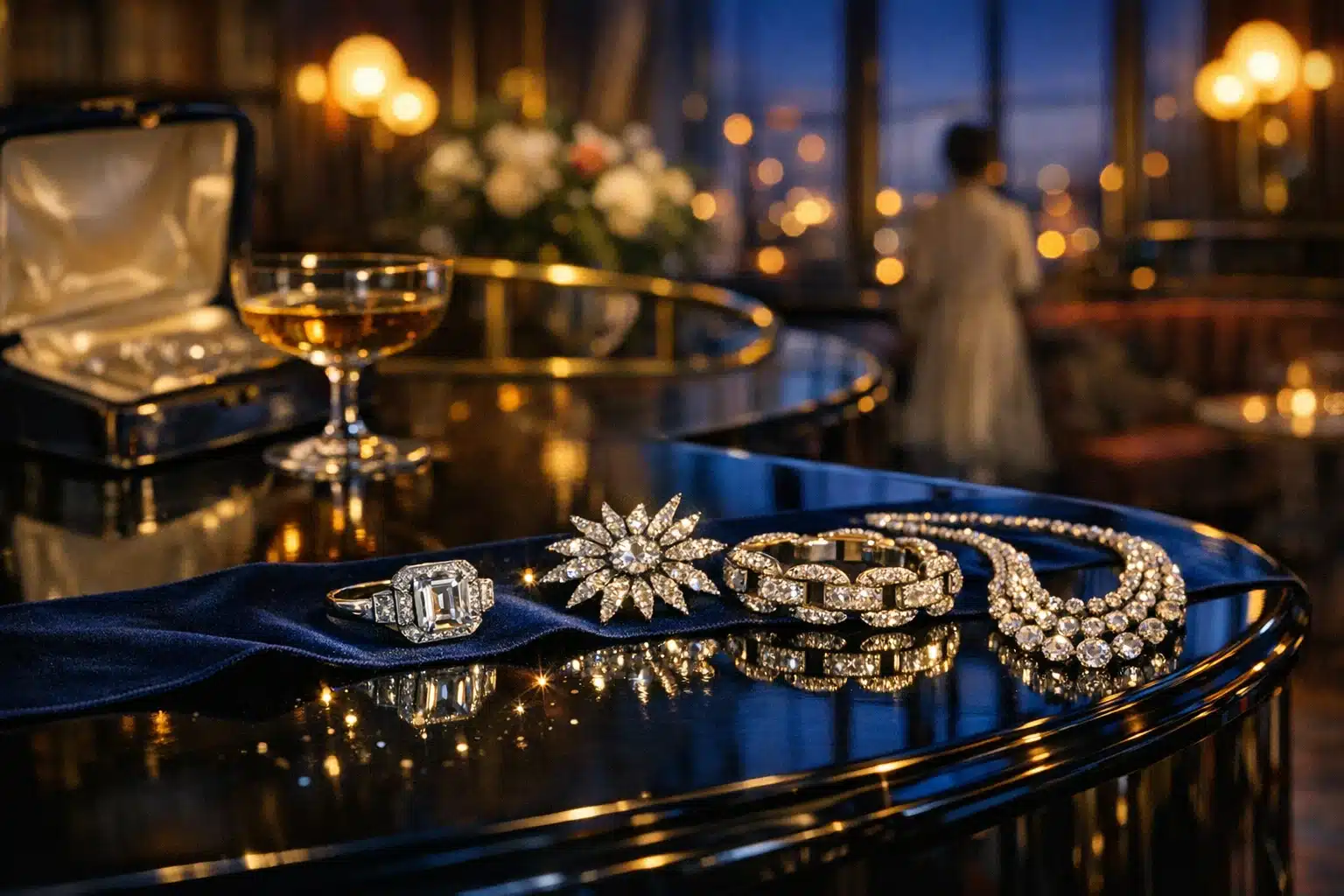
Fine vintage jewelry can appear straightforward at first glance, yet the strongest values often hide in details that casual owners miss. Era, workmanship, stone cuts, and design language can matter just as much as metal content. Art Deco pieces, for instance, remain highly sought after because they combine geometric structure, platinum or white metal settings, and an architectural sharpness that still feels modern. Filigree rings, calibre-cut accents, and old European or transitional cut diamonds may attract buyers who specifically prefer historic cutting styles over newer calibrated brilliance.
Retro jewelry from the 1940s offers a different kind of appeal. These pieces are often bold, warm-toned, and sculptural, reflecting wartime material shifts and postwar glamour. Rose and yellow gold dominated many designs, and oversized bows, ribbons, scrolls, and tank-inspired motifs gave the era its confident silhouette. Compared with delicate contemporary jewelry, retro pieces can look almost cinematic. That visual strength matters in the market because collectors and fashion-conscious buyers increasingly want items that announce themselves rather than disappear into an outfit.
Mid-century jewelry, especially from the 1950s through the 1970s, is another area where values can surprise sellers. Scandinavian silver jewelry, brutalist modernist pendants, textured gold work, and gemstone pieces by studio makers have all benefited from renewed interest in design-driven objects. A pendant once considered too abstract for everyday use may now suit current tastes for individuality and clean tailoring. Likewise, charm bracelets with period-specific charms, well-made lockets, and certain cocktail rings can command more than expected when their themes, provenance, or craftsmanship are compelling.
There is also an important comparison between intrinsic and collector value. A plain gold bracelet may be valued mainly by weight, while a signed or era-specific bracelet can trade above melt because buyers are paying for design, authenticity, and scarcity. Natural pearls, antique-cut diamonds, jade, coral, and turquoise can raise additional questions, since quality varies widely and treatments affect price. That is why fine vintage jewelry should never be judged by a quick glance alone.
Pieces that sometimes prove more valuable than owners expect include:
• platinum Art Deco engagement rings with original settings
• retro gold clips, bracelets, and brooches with strong volume
• signed mid-century modern silver work
• heavy charm bracelets with period charms intact
• unusual gemstone rings with documented maker attribution
The lesson is simple but important. In fine jewelry, age helps, material helps, and craftsmanship helps, but the real premium often appears where all three converge. When an object carries the spirit of its era and remains intact enough to wear today, the market tends to reward it.
How to Evaluate Market Value Without Guesswork
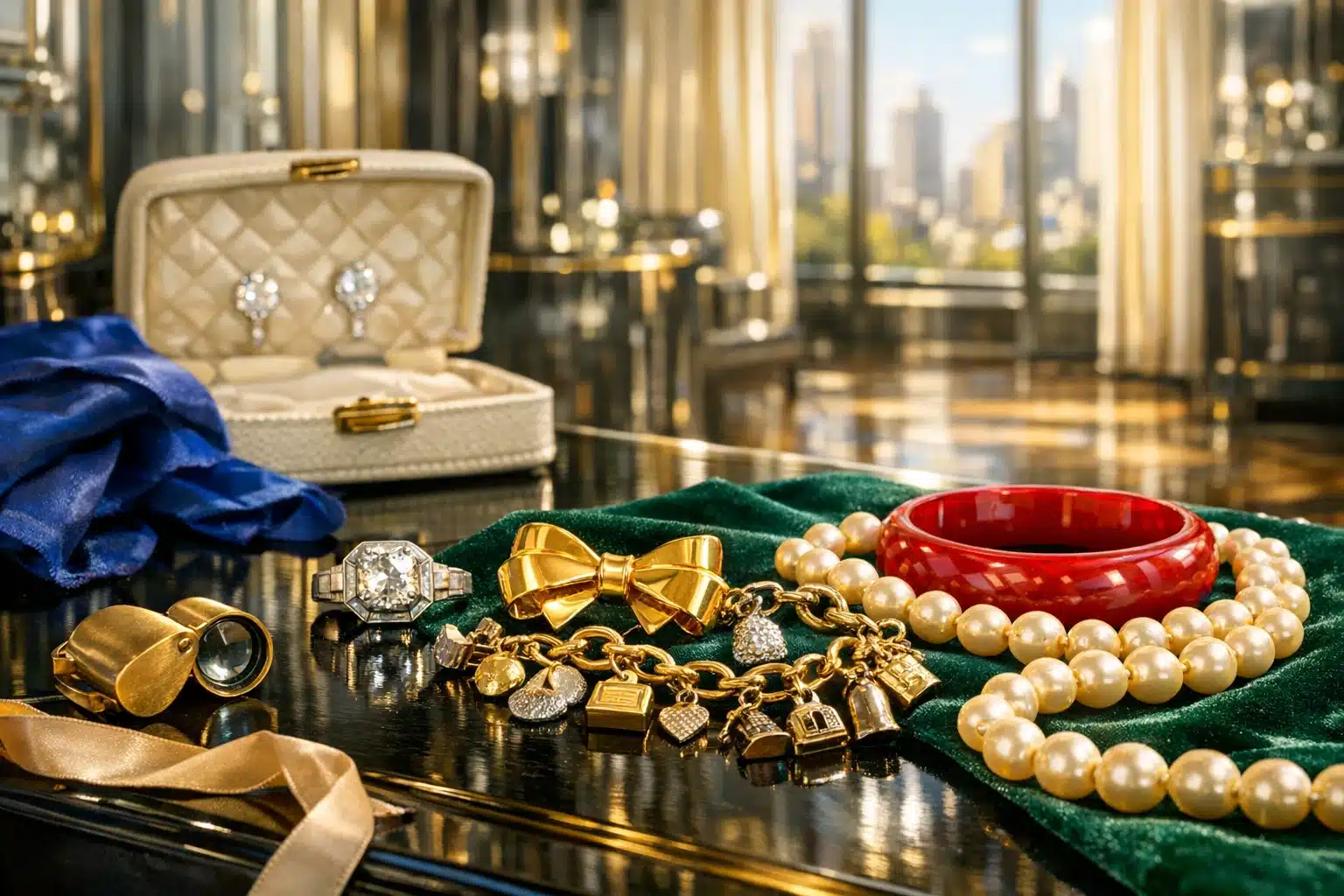
Discovering whether a vintage jewelry piece has meaningful market value requires a method, not a hunch. The first step is identification. Look for hallmarks indicating metal purity, such as 10K, 14K, 18K, 925, or platinum marks, along with maker’s signatures, patent numbers, or country-of-origin stamps. These clues do not tell the whole story, but they create a starting map. A loupe, a soft cloth, and good lighting can reveal more than most people expect. What appears to be a plain clasp may carry the most useful information on the entire object.
Next comes construction and condition. Collectors care about whether stones appear original, whether clasps work properly, and whether repairs were sympathetic or clumsy. In fine jewelry, resized rings, replacement prongs, chipped stones, and thinning shanks influence resale. In costume pieces, re-glued stones, peeling finish, and replaced backs matter just as much. Condition affects value because buyers calculate restoration risk. A dealer or experienced collector may still buy a damaged piece, but the offer usually reflects time, labor, and uncertainty.
Provenance can add another layer. Original boxes, receipts, family documentation, photographs showing the piece in use, or a clear link to a known maker may strengthen confidence. That said, provenance should support value rather than substitute for it. A romantic family story is lovely, but the market responds more reliably to verifiable evidence. Practical comparison is essential here. Insurance appraisals often describe replacement value, which can be much higher than a realistic resale figure. Auction estimates may be narrower, while dealer offers are often lower because they must leave room for overhead and future profit.
A sensible evaluation routine often includes:
• weighing the piece if the material is precious
• photographing the front, back, clasp, and marks
• measuring dimensions and stone sizes
• comparing sold listings rather than asking prices
• checking whether the design is signed, attributed, or commonly reproduced
• seeking a professional opinion for higher-value stones or rare makers
It is also wise to resist two common mistakes. The first is cleaning too aggressively before research. Harsh polishing can remove patina, damage enamel, loosen stones, or reduce collector appeal. The second is assuming that rarity automatically means demand. Some items are uncommon because few were made; others are uncommon because few people wanted them. Value appears where scarcity meets active interest.
In practical terms, the best estimate comes from triangulation. Combine material value, comparable recent sales, maker reputation, and condition adjustments. When those signals point in the same direction, you can speak about price with far more confidence. Vintage jewelry rewards careful observation, and the market tends to favor people who look twice before making a quick decision.
Conclusion for Collectors, Heirs, and Curious Sellers: Preserving and Realizing Value
Once you suspect a piece may be worth more than expected, the next question is what to do with it. The answer depends on your goals. If you want the highest possible price, you may need patience, research, and the right selling venue. If speed matters more, a dealer or estate buyer can provide convenience, though usually at a lower figure than a private sale or strong auction result. No single outlet is best for everything. Costume jewelry sets may perform well online with detailed photographs, while rare signed fine jewelry may benefit from a specialist auction house or a reputable antique jewelry dealer.
Venue choice changes the outcome because each market has a different audience. A local pawn transaction typically emphasizes material value and immediate liquidity. A vintage fashion collector, by contrast, may pay for design significance, styling potential, and label recognition. That difference can be dramatic. The same brooch may be treated as scrap by one buyer and as a sought-after period accessory by another. Knowing which audience matches your piece is often the difference between an average result and a satisfying one.
Preservation matters too. Store pieces separately to reduce scratching, keep chains fastened to limit tangling, and avoid humid environments that can accelerate tarnish or weaken certain materials. For delicate costume jewelry, especially pieces with glue-set stones, gentle handling is essential. Fine jewelry with gemstones may require professional inspection if prongs are loose or clasps feel worn. A little restraint is useful here: old jewelry does not need to look newly manufactured to remain attractive. In many cases, honest age is part of the charm.
For readers who inherited a box, enjoy thrift hunting, or are finally curious about the contents of a dresser drawer, the practical takeaway is encouraging. You do not need to become a gemologist overnight, but you do need a structured approach. Start with marks, materials, and condition. Compare sold results, not hopeful listings. Ask for expert help when the piece seems unusual, signed, or made of precious materials. Most of all, do not assume that quiet objects have quiet value.
Vintage jewelry sits at the intersection of memory, fashion, craft, and commerce. That is why its market can surprise people so often. A neglected clip, ring, or necklace may turn out to be more than an accessory from another decade; it may be a durable little witness to design history, now meeting a new wave of demand. For collectors, heirs, and casual sellers alike, that possibility makes careful research well worth the effort.