10 Healthy Snack Options: Tasty and Nutritious Choices
Why Smarter Snacking Matters and Where This Guide Is Going
Snacks are often treated like a nutritional side note, but a well-chosen bite can calm hunger, sharpen concentration, and prevent the late-day raid on whatever is closest. This guide explores ten healthy snack ideas that balance taste with staying power, moving from crisp produce and creamy dairy to portable pantry staples that fit crowded schedules. Along the way, you will see why protein, fiber, and sensible portions matter, and how a few small upgrades can make everyday eating feel easier rather than stricter. Think of it as a friendly map for eating between meals without drifting into autopilot.
Outline:
• First, this article explains what separates a helpful snack from a random nibble.
• Next, it introduces Greek yogurt with berries and apple slices with nut butter as two dependable openers.
• The following sections move through vegetable-based pairings, savory protein choices, whole-grain options, and make-ahead ideas.
• The final section closes with practical advice for readers who want healthier routines without complicated meal planning.
A useful snack usually does one of three things well: it fills a gap between meals, supports energy when your day runs long, or keeps you from arriving at dinner so hungry that portions become hard to judge. Research in nutrition consistently points to protein and fiber as two major contributors to satiety. When they appear together, a snack tends to feel more complete. That is one reason Greek yogurt with berries earns a place near the top of many dietitians’ lists. A typical 170-gram serving of plain Greek yogurt can provide around 15 to 20 grams of protein, while berries add fiber, vitamin C, and natural sweetness. Compared with many flavored yogurts that rely on added sugar, plain yogurt with fresh fruit lets you control both taste and sweetness. If you want more texture, a sprinkle of oats or seeds can turn it into something that feels almost dessert-like, but steadier.
Apple slices with peanut or almond butter are another reliable starting point. A medium apple offers roughly 4 grams of fiber, plus crunch and volume that make the snack feel substantial. Nut butter adds richness, healthy fats, and a modest amount of protein, often around 7 grams per 2 tablespoons for peanut butter. This combination is particularly useful when compared with a standard vending machine option such as cookies or a candy bar. Those choices can deliver fast energy, but they often disappear quickly and leave hunger close behind. An apple with nut butter takes longer to eat, gives you more chewing satisfaction, and usually causes less of the dramatic rise-and-dip cycle people describe as a sugar crash.
If you remember only one principle from this section, let it be this: the best snacks are not merely small, they are strategic. A spoonful of yogurt with berries or a crisp apple dragged through creamy nut butter is not glamorous, yet both choices show how balanced ingredients can quietly do a lot of work.
Fresh Crunch and Creamy Balance: Hummus, Vegetables, and Cottage Cheese
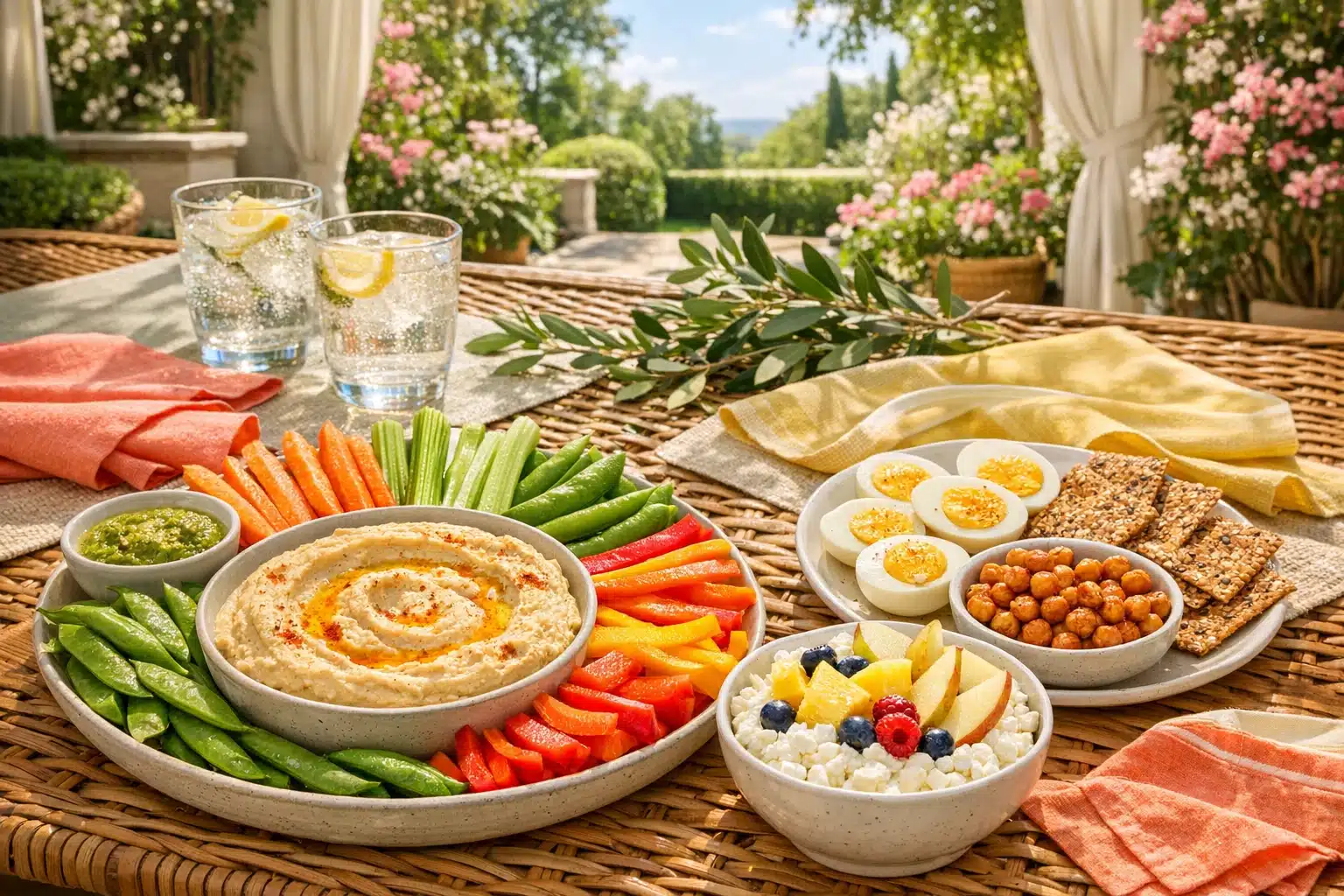
Healthy snacks become much easier to enjoy when they satisfy more than one craving at once. Hummus with raw vegetables is a perfect example because it offers creaminess, crunch, color, and a savory flavor that feels far more lively than a plain bag of crackers. Hummus, usually made from chickpeas, tahini, olive oil, and lemon, contributes plant protein, fiber, and unsaturated fat. A modest 2-tablespoon serving is often around 70 calories, though recipes vary, and can make a bowl of carrots, cucumbers, bell peppers, celery, or snap peas much more appealing. Compared with a snack built around chips and a heavy dip, this pairing usually delivers more micronutrients, less saturated fat, and more volume for the calories. That matters because food that takes up visual and physical space often feels more satisfying.
Vegetables also bring diversity that many snack foods lack. Carrots offer beta-carotene, bell peppers provide vitamin C, cucumbers add refreshing texture, and celery can be useful when you want a crisp, high-volume option. The practical beauty of hummus is that it can meet different moods. Classic, roasted red pepper, garlic, or lemon versions each create a slightly different experience, so the snack stays interesting without changing the basic structure. If you are buying packaged hummus, it is worth checking sodium levels and ingredient lists, since some brands are more heavily seasoned than others. Homemade hummus can be especially budget-friendly, and it allows you to adjust thickness, lemon, and salt to taste.
Cottage cheese deserves a fresh look as well. It was once dismissed as bland diet food, but that reputation misses its strengths. Half a cup commonly provides about 12 to 14 grams of protein, making it one of the simplest higher-protein snacks available. It is also remarkably flexible. If you want something sweet, pair cottage cheese with pineapple, peaches, berries, or sliced pear. If you prefer savory flavors, add cherry tomatoes, black pepper, cucumber, or everything bagel seasoning. Compared with sweet puddings, flavored desserts, or many fruit yogurts, cottage cheese often offers more protein with less added sugar.
Here is where these two options stand out:
• Hummus with vegetables is ideal when you want volume, freshness, and a clear savory bite.
• Cottage cheese works well when you need something creamy and notably higher in protein.
• Both choices are easy to portion ahead, making them practical for workdays or school lunches.
If section one introduced the logic of protein and fiber, this section shows how texture shapes satisfaction. A carrot snap and a spoonful of hummus can wake up a tired afternoon, while chilled cottage cheese with fruit feels calm and cool, almost like a pause button in a busy day.
Savory Protein That Travels Well: Eggs, Whole-Grain Crackers, and Roasted Chickpeas
Some snack moments call for more substance, especially on active days, during long meetings, or in the stretch between lunch and a late dinner. Hard-boiled eggs with whole-grain crackers fit that need well. One large egg contains about 6 grams of protein along with nutrients such as choline, selenium, and vitamin B12. On its own, an egg can be filling, but pairing it with whole-grain crackers adds a small amount of carbohydrate and crunch, which helps the snack feel more rounded. This combination works particularly well as an alternative to pastries, buttery crackers, or processed snack packs that disappear in a few hurried bites. Instead of a quick burst followed by distraction and hunger, eggs and whole grains offer steadier fuel.
Whole-grain crackers vary widely, so label reading matters. The better options usually list whole grain near the top of the ingredients and keep added sugar low. They do not need to taste like cardboard. Many now have hearty seeds, rye, or oat blends that bring both flavor and texture. If you want more brightness, a little mustard, sliced cucumber, or a pinch of paprika can turn the snack into something that feels intentional rather than improvised. For people who exercise, commute, or work on their feet, this type of snack can bridge the gap between meals with very little effort.
Roasted chickpeas offer a different path to the same destination. They are crisp, portable, and easy to season with paprika, cumin, garlic, black pepper, cinnamon, or a light touch of sea salt. Nutritionally, they provide both protein and fiber, which is a useful combination for fullness. A half-cup serving can contribute several grams of each, though exact numbers depend on preparation. Compared with standard chips, roasted chickpeas generally bring more nutritional value and a stronger sense of substance. They also encourage slower eating because their texture asks to be chewed rather than inhaled.
There are a few smart notes to keep in mind:
• Packaged roasted chickpeas can be convenient, but some versions are high in sodium.
• Homemade batches are simple to prepare and usually cheaper per serving.
• Eggs are excellent for advance prep, but they should be stored properly and eaten within safe time limits.
This section is really about confidence. When you have sturdy, savory options on hand, you are less likely to chase energy with sweets that sound helpful in the moment but fade quickly. An egg beside a few crisp crackers or a handful of roasted chickpeas may not be flashy, yet both can hold their ground during a demanding day.
Whole-Grain and Plant-Powered Picks: Popcorn and Edamame
Air-popped popcorn is one of the most underrated healthy snacks because it solves a problem many people do not realize they are trying to solve: the desire to eat a decent amount of food without accidentally wandering into excess. Popcorn is a whole grain, and when it is prepared with minimal oil and salt, about 3 cups can come in around 90 to 100 calories. That gives it an impressive volume-to-calorie ratio. In plain terms, you get a big bowl rather than a tiny portion, which can make a genuine difference when you want something to munch on during work, reading, or an evening at home. Compared with buttery movie-style popcorn or greasy chips, air-popped popcorn is far lighter while still delivering the pleasure of crunch.
The nutritional profile is not magical, but it is practical. Popcorn offers fiber, and that fiber helps create staying power. It also takes seasoning well. A little nutritional yeast can add a savory, almost cheesy note. Cinnamon can nudge it in a sweeter direction without much sugar. Smoked paprika, garlic powder, or a pinch of chili can make it feel far more interesting than the plain version many people remember from childhood. The main trap is turning a useful snack into a delivery system for butter, candy coatings, or too much salt. Preparation determines whether popcorn remains a smart pick or becomes a disguised indulgence.
Edamame, or young soybeans, sits at the opposite end of the snack spectrum. Instead of airy crunch, it offers a firmer bite and a stronger protein presence. One cup of shelled edamame can provide roughly 18 grams of protein and around 8 grams of fiber, making it a standout option for satiety. It also supplies iron, folate, and other nutrients, which gives it substance beyond protein alone. Compared with pretzels or plain rice cakes, edamame is far better at keeping hunger at a distance. It can be bought frozen, steamed quickly, and seasoned with lemon, black pepper, chili flakes, or a touch of sesame.
These two snacks suit different moments:
• Popcorn is excellent when you want volume and a light, snacky feel.
• Edamame is stronger when you need serious staying power.
• Together, they show that healthy snacking does not have to look only one way.
If popcorn is the cheerful crackle of a casual break, edamame is the steadier voice that says, not so fast, you still have a few hours to go. Both deserve a place in a thoughtful snack rotation.
Make-Ahead Winners and a Practical Conclusion: Overnight Oats and Homemade Trail Mix
Not every healthy snack needs to be assembled at the exact moment hunger appears. In fact, some of the best choices are the ones waiting patiently in the refrigerator or pantry before a hectic schedule can interfere. Overnight oats are a strong example. Rolled oats absorb liquid over several hours, softening into a spoonable mixture that can be flavored in countless ways. A basic version might combine half a cup of oats with milk or yogurt, then add chia seeds, cinnamon, berries, banana slices, or chopped nuts. Oats contribute complex carbohydrates and fiber, and a half-cup dry portion usually offers around 4 grams of fiber and about 5 grams of protein. If yogurt or seeds are added, the protein and texture improve further. Compared with many breakfast bars or sweet pastries often eaten as emergency snacks, overnight oats usually provide more substance and far less added sugar.
Another strength of overnight oats is control. You decide how sweet, creamy, or filling the mixture should be. Cocoa powder and banana create a dessert-like version. Grated apple and cinnamon feel familiar and comforting. Plain oats with Greek yogurt and blueberries lean brighter and tangier. A jar in the refrigerator can become the difference between a smart midmorning choice and a rushed purchase that looked convenient but did little to satisfy. There is a quiet pleasure in opening a ready-made snack that already solved tomorrow’s problem.
Homemade trail mix is equally useful, though it requires a different kind of attention. Done well, it is portable, shelf-stable, and adaptable to travel, office drawers, gym bags, or long afternoons outside. The healthiest versions usually combine nuts, seeds, and a smaller amount of dried fruit, with optional extras such as unsweetened coconut flakes or a few dark chocolate pieces. This approach is typically more balanced than store-bought mixes filled with candy-coated chocolates or heavily salted add-ins. Nuts and seeds provide healthy fats, minerals, and some protein, while dried fruit adds sweetness and chew. The main caution is portion size, because trail mix is nutrient-dense and easy to overeat if you snack directly from a large container.
For readers who want a simple framework, here is the larger lesson from all ten options:
• Pair protein, fiber, or healthy fat whenever possible.
• Keep preparation realistic enough that you will actually repeat it.
• Use variety to match different cravings, energy needs, and schedules.
Conclusion for Busy, Health-Conscious Readers
If you are trying to eat better without turning food into a full-time project, healthy snacking works best when it feels practical, not punishing. Greek yogurt with berries, apples with nut butter, hummus with vegetables, cottage cheese, eggs, roasted chickpeas, popcorn, edamame, overnight oats, and trail mix all succeed for slightly different reasons, but they share one advantage: they do more than simply fill time between meals. They help you stay steady, think clearly, and approach the next meal with less urgency. Start with two or three options that fit your routine, keep the ingredients visible and easy to reach, and let consistency do the quiet work. Small choices, repeated calmly, often shape better eating more effectively than dramatic overhauls ever do.