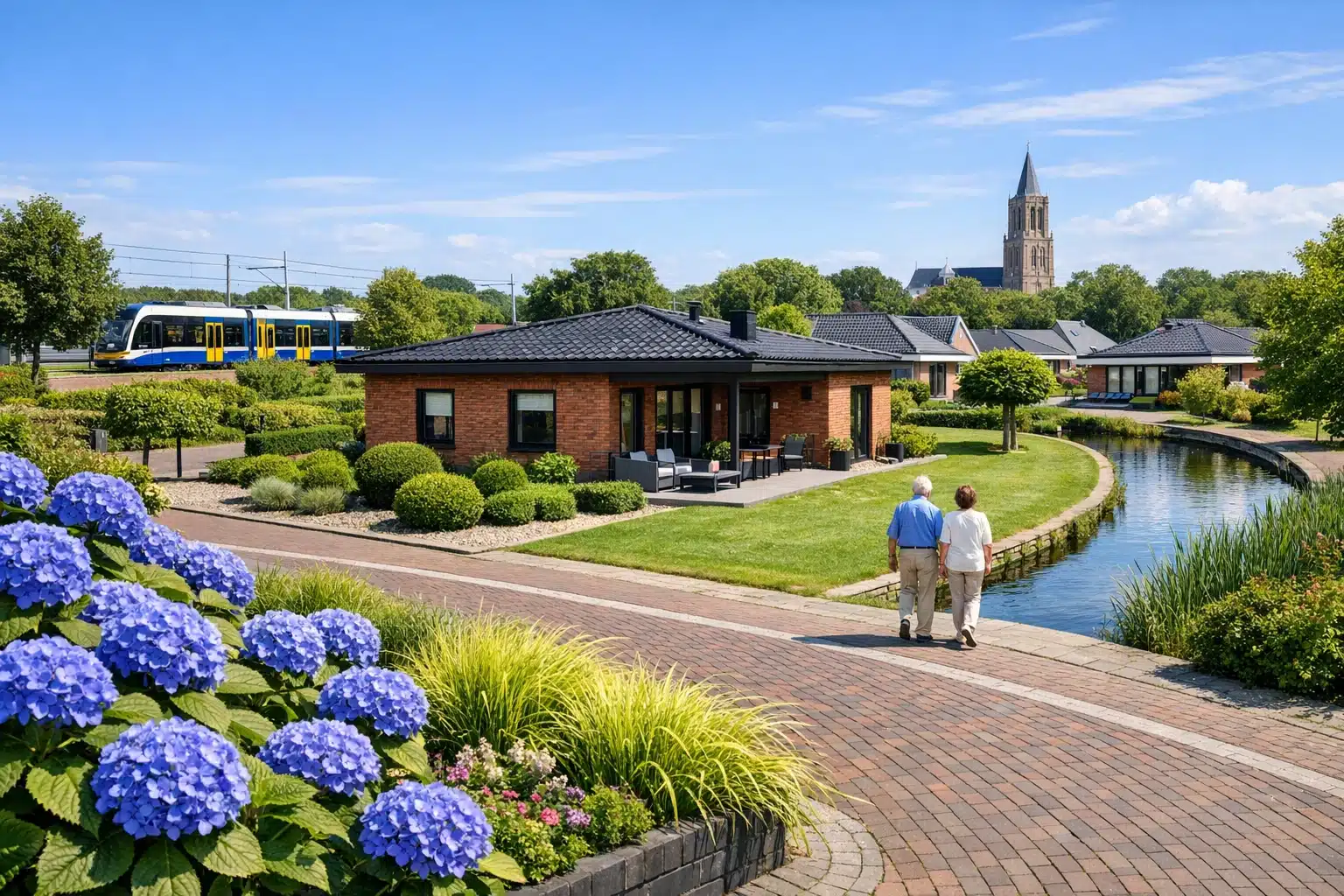
55+ Senior Bungalows: Prices, Locations, and Benefits
Choosing a home for later life is rarely just about square meters; it is about comfort, independence, and peace of mind. That is why 55+ senior bungalows attract growing attention from buyers who want fewer stairs, lower upkeep, and a setting that fits changing needs. Prices, locations, and services can differ more than many expect, making careful comparison essential. This guide explores the market in practical terms so readers can weigh lifestyle value alongside budget.
1. Understanding 55+ Senior Bungalows and Why Demand Is Rising
A 55+ senior bungalow is usually a single-storey home designed for older adults who want simpler, safer living without giving up privacy. In many cases, these homes are part of age-oriented neighborhoods or small residential parks with quieter streets, easy access paths, and layouts that reduce daily strain. The idea is straightforward: remove physical barriers before they become a problem. A staircase that once felt invisible can eventually become the loudest feature in a house, and many households would rather move on their own terms than wait for a forced decision later.
Before looking at prices and neighborhoods, it helps to see the structure of this topic clearly. This article follows five main questions:
- What defines a 55+ bungalow and why is it increasingly relevant?
- How much do these homes typically cost, both upfront and over time?
- Which locations are most attractive, and how do regions differ?
- What are the practical benefits and possible drawbacks of this housing type?
- How can buyers and families make a sensible final decision?
Demand for senior-friendly housing has been rising across much of Europe, including the Netherlands, because populations are aging and many homeowners are rethinking large family houses. Roughly one in five Dutch residents is now 65 or older, and that share has increased steadily over time. At the same time, suitable homes are not always being built fast enough. This creates pressure in the market: good bungalows in practical locations often attract strong interest, especially if they are energy efficient and close to shops, healthcare, or public transport.
It is also important to understand that not every single-storey house qualifies as a true senior bungalow. Some older properties have level floors but still include narrow doorways, dated bathrooms, poor insulation, or awkward thresholds. A well-suited 55+ home usually offers features that support aging in place, such as a bedroom and bathroom on the ground floor, step-free entry, manageable outdoor space, and room for future adjustments like grab rails or a walk-in shower.
For many buyers, the appeal lies in a mix of independence and realism. A bungalow can preserve the feeling of having one’s own front door, garden, and rhythm of life, while quietly removing much of the friction that makes conventional homes harder to manage later on. That balance is a large part of why this niche continues to attract attention.
2. Price Ranges: Purchase Costs, Monthly Expenses, and Hidden Financial Factors
Prices for 55+ senior bungalows vary widely, and the range is often broader than first-time buyers expect. In the Dutch market, a compact older bungalow in a smaller town may start at around €250,000 to €350,000, while updated properties in popular regional centers often sit between €350,000 and €500,000. In highly sought-after areas, especially near the Randstad, the coast, or well-connected affluent suburbs, asking prices can move well beyond €600,000. These figures are not fixed rules, but they provide a realistic framework for comparison.
Several factors shape the price more than age alone. Size matters, of course, but layout often matters more. A modest bungalow with two good bedrooms, a modern bathroom, strong insulation, and an efficient floor plan may attract more interest than a larger but dated home. Plot size also plays a role. Some buyers want a small, low-maintenance garden; others still value outdoor space for grandchildren, pets, or simply a quiet cup of coffee in the morning sun. Energy label, heating system, solar panels, parking availability, and renovation quality can all shift value considerably.
Buyers should look beyond the purchase price and account for the full cost of ownership. Common extras include:
- Property transfer costs, legal fees, and valuation expenses
- Mortgage advice or financing charges, if a loan is needed
- Municipal taxes and home insurance
- Maintenance, especially for roofing, glazing, paving, and drainage
- Service charges if the home is part of a managed community or owners’ association
Monthly service costs are easy to underestimate. In some developments, fees may be limited and cover little more than common-area upkeep. In others, charges may include gardening support, shared lighting, maintenance reserves, or community facilities. Even a reasonable monthly amount can materially change affordability over a decade.
Renting is another path, though supply is often tight. Free-sector senior rentals may offer flexibility and fewer repair worries, but monthly rents can be high in popular regions. For some households, selling a larger family home creates enough equity to purchase a bungalow outright, reducing future housing stress. For others, a mortgage, bridge financing, or a careful drawdown of savings may be part of the plan.
The key financial lesson is simple: compare total living costs, not just asking prices. A cheaper property that needs insulation, bathroom work, and accessibility upgrades may end up costing more than a move-in-ready home with a higher sticker price. In senior housing, convenience has real economic value.
3. Location Matters: Urban Convenience, Suburban Calm, and Regional Differences
Location is often the decisive factor in choosing a 55+ senior bungalow, sometimes even more than price. A beautiful home can lose much of its appeal if basic services require a car for every errand. By contrast, a slightly smaller property in the right neighborhood can support independence for many more years. For older buyers, “good location” usually means something very practical: short travel times, safe streets, nearby shops, access to healthcare, and manageable distances to family or social activities.
Urban and suburban locations offer clear advantages. In or near cities, residents are more likely to find supermarkets, pharmacies, GPs, physiotherapy practices, and public transport within easy reach. This matters not only today but also later, when driving becomes less appealing or less possible. Good bus or train access can turn a bungalow from a nice home into a long-term solution. On the other hand, city-adjacent properties are often more expensive and may come with smaller plots, denser surroundings, or limited parking.
Smaller towns and rural areas can offer better value and more space. Regions in the north, east, or parts of Limburg and Zeeland may provide bungalows at lower prices than major western urban centers. These areas often appeal to buyers who prioritize peace, greenery, and a slower pace. Yet there is a trade-off: if healthcare facilities, cultural venues, or public transport are further away, the home may feel less flexible over time. A quiet village can be charming in spring and summer, but winter reveals whether daily logistics are truly practical.
When comparing locations, buyers should assess the neighborhood as carefully as the house itself. Useful questions include:
- How far is the nearest supermarket, GP, and pharmacy?
- Is there reliable public transport within walking distance?
- Are pavements even, well lit, and easy to navigate?
- Does the area feel socially active or isolated?
- Are there future development plans that could change noise, traffic, or value?
Regional price differences are real, but so are regional lifestyle differences. A bungalow in a leafy Gelderland village may offer excellent access to nature and community life. A property in Brabant may combine sociability with good mid-sized city links. Homes near Amsterdam, Utrecht, The Hague, or Haarlem often command premium pricing because convenience is built into the postcode. There is no universal best location; the right place depends on how a person wants to live, move, and age. The smartest choice is usually the one that reduces future friction while preserving present enjoyment.
4. The Main Benefits of 55+ Senior Bungalows, Along With the Trade-Offs
The strongest argument for a 55+ senior bungalow is not fashion or prestige. It is function. A well-designed one-level home can make ordinary life noticeably easier: fewer physical obstacles, less cleaning, fewer unused rooms, and simpler movement from kitchen to living space to bedroom. That may sound modest, but in housing, small daily advantages add up quickly. The right bungalow can support independence far longer than a multi-storey house that demands constant adaptation.
Accessibility is the most obvious benefit. No stairs means lower fall risk and less strain on knees, hips, and balance. Ground-floor bathrooms, wider hallways, and step-free entry can make a major difference for people with reduced mobility, whether now or later. Many senior bungalows are also easier to adapt if circumstances change. Adding handrails, replacing a bath with a walk-in shower, or making room for a mobility aid is generally simpler in a single-storey layout than in a narrow traditional house.
Another important advantage is lower maintenance. Senior buyers often want to spend less time managing gutters, spare bedrooms, and large gardens. A bungalow with a compact plot can free up energy, money, and attention for hobbies, travel, volunteering, or simply a calmer routine. Newer or renovated bungalows may also be more energy efficient, which matters financially as utility costs remain a real concern.
There are social benefits too. Age-oriented communities can feel reassuring without being intrusive. Neighbors may be at similar life stages, shared expectations are often clearer, and the environment may be quieter. For some residents, that sense of familiarity is a comfort. For others, it is the chance to stay private while knowing support is nearby if needed.
Still, senior bungalows are not perfect for everyone. Common trade-offs include:
- Smaller living space compared with a former family home
- Limited availability in popular areas
- Possible service charges or community rules
- Less room for overnight guests, hobbies, or storage
- An emotional adjustment after decades in one house
Compared with an apartment, a bungalow often offers more privacy, easier direct access, and sometimes a garden. Compared with a standard detached or semi-detached family home, it is usually easier to manage but may provide less room and fewer expansion options. In other words, the benefits are strongest when buyers want convenience, predictability, and livability rather than maximum space. For many 55+ households, that is not a compromise at all. It is a clear upgrade in the way life actually works.
5. How to Choose the Right Bungalow and What It Means for 55+ Buyers
Choosing a 55+ senior bungalow is part financial decision, part lifestyle design, and part future planning. The best approach is to think in layers rather than rushing toward the first attractive listing. Start with non-negotiables: budget, location, access to healthcare, size, and whether buying or renting suits your situation better. Then move to the second layer: energy performance, service charges, storage, parking, guest space, and the quality of the outdoor area. Finally, consider the third layer, which is often the most personal of all: does the home feel workable for the life you want in five or ten years, not only this year?
A practical shortlist helps keep emotions in check. Buyers should review:
- Total monthly living costs, not just the asking price
- The energy label and likely renovation needs
- Bathroom safety, doorway widths, and step-free access
- Distance to family, friends, care providers, and daily shopping
- Resale prospects and neighborhood stability
It is also wise to visit a property at different times of day. A peaceful street at noon may feel very different during school traffic, evening parking pressure, or wet winter weather. If possible, walk the route to shops or transport stops rather than judging only by map distance. What looks close on paper can feel inconvenient in practice if pavements are uneven or crossings are awkward.
For adult children helping a parent compare homes, the most useful role is not to take over but to help structure the decision. Create side-by-side comparisons, ask about hidden costs, and think beyond the moving date. A bungalow should not simply solve today’s housing question; it should reduce complexity later. Legal review, technical inspection, and realistic budgeting remain essential, even when a property seems ideal on first impression.
In summary, 55+ senior bungalows make the most sense for people who value independence, manageable living, and a home that can adapt to changing needs. They are rarely the cheapest option in the most desirable areas, but they can offer strong value when judged over the long term. For buyers who are ready to downsize without giving up autonomy, and for families hoping to support a thoughtful move rather than a crisis move, this type of housing deserves serious attention. A good bungalow does more than provide shelter. It quietly makes everyday life easier, and that is often worth more than extra space that no longer serves a clear purpose.