Vintage Jewelry Pieces That May Have Unexpected Market Value Today
Vintage jewelry is one of the rare categories of personal property that can rest unnoticed in a drawer for years and then reappear with a stronger story and a higher price. A plastic bangle bought on holiday, a signed brooch worn to church, or a gold chain inherited without much comment may now interest collectors, appraisers, and resellers. Shifting fashion cycles, rising metal prices, and renewed respect for craftsmanship have given many overlooked pieces a second life in the market.
Outline:
- Why vintage jewelry has gained fresh market attention in recent years
- Which types of older pieces often surprise owners with their resale potential
- How hallmarks, materials, and construction details affect value
- Why condition, provenance, and repairs can sharply change pricing
- What practical steps owners can take before selling, insuring, or collecting
Why Vintage Jewelry Can Appreciate in Ways Owners Do Not Expect
The market for vintage jewelry has become more dynamic because several forces now move together instead of separately. One force is the price of raw materials. In recent years, gold has traded above 2,000 US dollars per ounce at various points, which means even plain older chains, bracelets, wedding bands, and broken pieces can carry baseline melt value. Silver has also remained relevant, especially for mid-century and artisan work. When the material floor rises, neglected jewelry stops looking trivial and starts looking measurable.
Another reason is taste. Fashion rarely travels in a straight line; it loops, revisits, and borrows. Art Deco geometry, bold Retro gold designs, sculptural 1960s silver, and 1980s statement earrings have each returned to public attention through runway styling, film costume design, social media, and secondhand shopping culture. A brooch that once seemed too formal may now be clipped onto a blazer, a knit hat, or a handbag. Younger buyers are not always searching for perfection. They are often searching for character, which is where vintage pieces shine like old stage lights warming up again.
Online selling platforms have also widened the audience. Decades ago, a seller might rely on one local jeweler, one antique shop, or one estate sale company. Today a specialized collector in another state or another country can find a rare Trifari necklace, an early Bakelite bangle, or a Scandinavian sterling pendant with a few searches. Broader access tends to reward niche items. Pieces that were once hard to explain in a local storefront now have a better chance of meeting the right buyer.
There is also a growing sustainability argument. Many consumers prefer to buy pre-owned jewelry rather than new production, especially when they can get better craftsmanship or more distinctive design for the same money. Vintage jewelry often offers hand-finishing, thicker metal, and small design quirks that are expensive to reproduce in contemporary manufacturing.
Still, appreciation is uneven, not automatic. A mass-produced plated necklace from the late 1990s may remain modest in value, while an older signed costume brooch from a respected maker can sell for many times its original retail price. What matters most is the intersection of demand, authenticity, condition, maker, rarity, and material value. In short, the market acts a bit like a magpie with a ledger: it loves beauty, but it also counts.
Vintage Jewelry Categories That Often Deliver Market Surprises
When people imagine valuable vintage jewelry, they often picture diamonds in velvet boxes or grand pieces from famous luxury houses. Those certainly exist, but the more surprising stories tend to come from categories that were once affordable, widely worn, or casually stored. Costume jewelry is the classic example. Signed pieces by makers such as Trifari, Miriam Haskell, Coro, Schreiner, Eisenberg, and Weiss can draw strong interest, especially when designs are distinctive, stones are original, and finish loss is limited. Some unsigned pieces attributed to notable workshops also perform well, though attribution requires caution and expertise.
Bakelite jewelry is another standout. Genuine carved or deeply colored Bakelite bangles, pins, and dress clips from the early to mid-20th century have become collectible because the material is no longer produced in the same way and because styling feels fresh again. A stack of common plain bangles may sell modestly, while rare laminated colors, carved motifs, or figural shapes can command much more. In this category, authenticity matters enormously because later plastic imitations are common.
Several categories deserve special attention:
- Signed costume jewelry from major 20th-century makers
- Art Deco dress clips, filigree pieces, and geometric brooches
- Retro gold jewelry from the 1940s with bold curves and substantial weight
- Mid-century Scandinavian silver by known designers or workshops
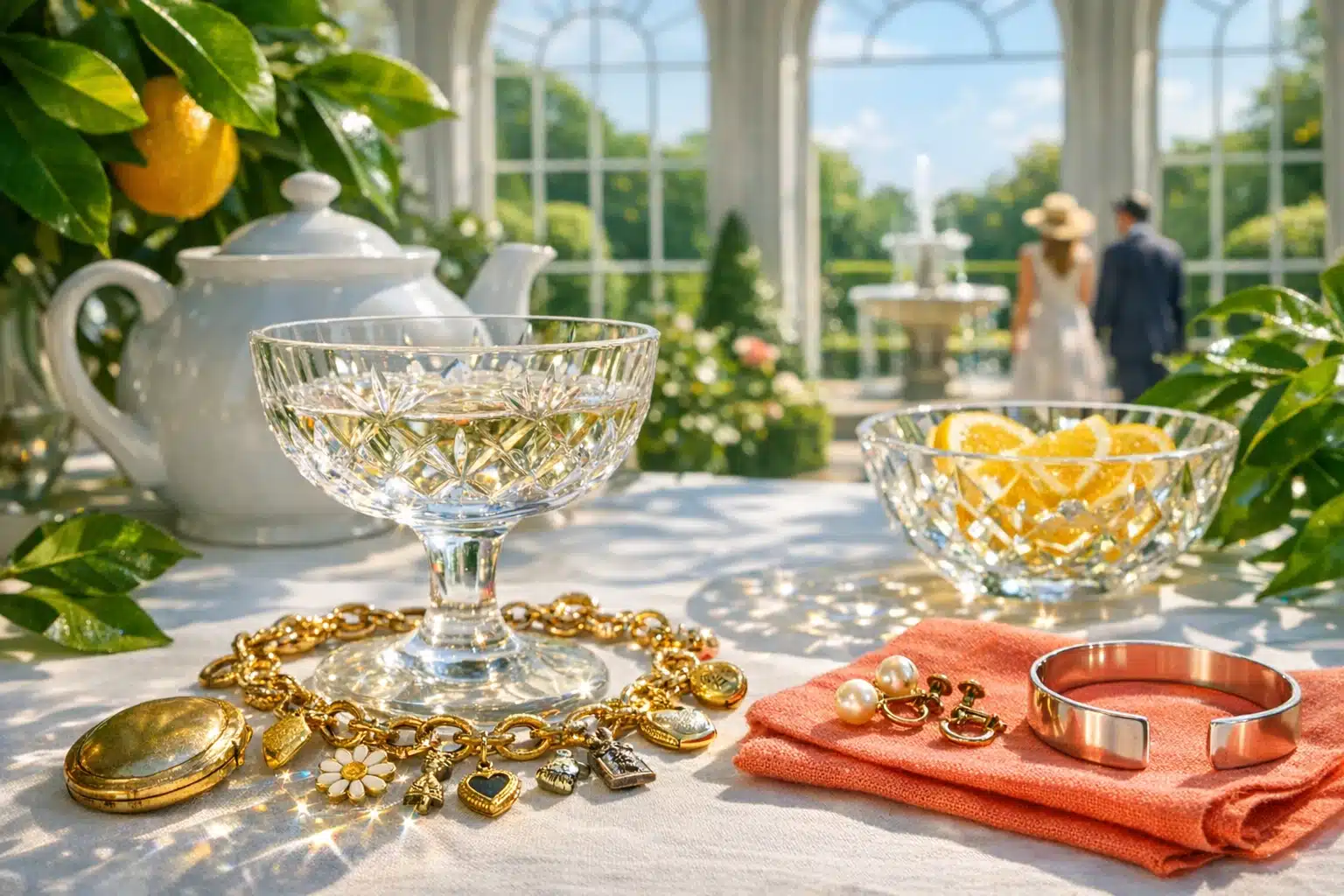
- Charm bracelets with original period charms and complete links
- Victorian lockets, mourning jewelry, and hairwork pieces with provenance
Mid-century sterling silver jewelry often surprises families because it can look simple rather than obviously luxurious. Yet simplicity is exactly what many collectors want. Clean modernist lines, designer signatures, and strong workshop traditions from Denmark, Finland, Mexico, and the United States have kept this area active. A sculptural sterling cuff may appeal both to jewelry buyers and design collectors, which expands its market.
Charm bracelets can also exceed expectations when they remain intact and era-appropriate. A bracelet with a mix of travel charms, miniature tools, animals, or sentimental motifs gives buyers a visual biography in metal. People pay for story as much as substance, and charm bracelets tell their stories without waiting to be asked.
Even pieces with modest original materials can rise if they check several boxes at once: signed, era-correct, well-preserved, wearable, and visually memorable. On the other hand, obvious luxury does not always mean rapid resale. Heavy gemstone rings may be valuable on paper but slower to sell than a highly collectible costume brooch. The surprise, then, is not just that old jewelry can be valuable. It is that the market often rewards design history and collector enthusiasm as much as carat weight.
How to Spot Value Clues in Materials, Hallmarks, and Construction
One of the most useful skills for owners is learning how to read a piece before anyone else prices it for them. The first place to look is the mark. Precious metal stamps such as 10K, 14K, 18K, 585, 750, sterling, 925, or continental silver marks can quickly separate fine jewelry from plated accessories. Maker’s marks matter just as much. A tiny cartouche, symbol, or scripted name can transform an object from generic to collectible. Patent numbers, assay marks, country marks, and workshop stamps add more context and can help date a piece with surprising accuracy.
Construction tells another part of the story. Older brooches may use C-clasps, trombone clasps, or rollover safety catches depending on the era. Earrings with screw-backs can point to early and mid-20th-century manufacture. Hand-set stones, carefully wired beads, milgrained edges, and articulated links often indicate better workmanship than glued rhinestones or thin stamped findings. None of these features guarantees high value on their own, but together they create a profile that collectors recognize.
Materials deserve a close look because value does not live only in gold and diamonds. Old cut diamonds, natural pearls, jade, amber, coral in historical pieces, moonstone, turquoise, garnet, opal, and high-quality paste stones can all matter in context. In costume jewelry, the brilliance and condition of rhinestones, the complexity of settings, and the originality of decorative elements influence price. A well-made imitation can outperform a poorly designed genuine-stone piece in the collector market if the maker and style are more desirable.
Useful clues include the following:
- Weight that feels substantial for the size of the piece
- Uniform aging rather than fresh-looking replacement parts
- Matching screws, clasps, and solder points consistent with the period
- Original stones that fit the settings correctly
- Maker signatures that are crisp rather than newly etched
Owners should resist dramatic home tests. Acid tests, aggressive polishing, and improvised scraping can damage surfaces or erase evidence that specialists want to see. A simple magnifying loupe, a soft cloth, good daylight, and careful note-taking are usually more helpful than experimentation. Photograph front, back, clasp, and mark. Measure dimensions. Weigh the item if possible. Keep similar pieces together.
An appraiser often approaches jewelry like a detective, but ordinary owners can still gather excellent clues. The goal is not to become a museum curator overnight. It is to learn enough that a drawer full of ornaments starts to separate into categories: scrap, sentimental, collectible, and potentially significant.
Condition, Provenance, and Repair History Can Change the Number Quickly
Two vintage jewelry pieces may look almost identical at first glance and still end up worlds apart in value. Condition is often the dividing line. Missing stones, cracked enamel, bent prongs, worn plating, broken clasps, heavy tarnish damage, stretched links, and chipped cameos usually reduce appeal. In some categories, especially costume jewelry, replacement stones that do not match the original color or cut can be a major issue because collectors want period integrity. A brooch with one noticeably newer rhinestone may lose more than its owner expects.
Provenance can pull value in the other direction. Original boxes, receipts, family letters, old photographs, or documented ownership create confidence and narrative. A bracelet is one thing; a bracelet worn in a studio portrait from 1948 is something richer. Provenance does not need to involve a celebrity to matter. Clear family history can reassure buyers that a piece is authentic, unaltered, and not recently assembled from mixed parts.
Restoration is where nuance matters. Sensitive repair by a skilled jeweler may preserve wearability and protect stones from loss. Heavy-handed repair can erase historical character. Replating may brighten appearance but sometimes weakens collector appeal if it hides age improperly. Polishing can help a gold band, yet over-polishing can soften engravings and maker marks. Restringing old pearls may be necessary for safety, but replacing original clasps without documentation can complicate value discussions.
Some issues affect different categories in different ways:
- Fine jewelry buyers may accept professional resizing if workmanship is clean
- Costume jewelry collectors often care deeply about untouched original components
- Bakelite enthusiasts watch for cracks, sanding, and altered surfaces
- Silver collectors may tolerate surface wear more easily than structural damage
It is also important to distinguish among appraisal types. Insurance appraisals are often higher than immediate resale value because they estimate replacement cost in a retail setting. Auction estimates may be conservative to encourage bidding. Dealer offers reflect margin, restoration risk, and time to resale. An owner who hears three different numbers is not necessarily being misled; each number may belong to a different market purpose.
If a piece seems promising, documentation is a practical gift to your future self. Write down where it came from, when it was acquired, what marks it carries, and whether any repairs were done. Vintage jewelry travels through time like a small passenger with many tickets in its pocket. The more tickets remain intact, the easier it is for the next buyer, appraiser, or heir to understand the journey and assign a fair value.
What Owners Should Do Before Selling, Insuring, or Building a Collection
If you suspect that a vintage jewelry piece may have real market value, the smartest first move is not to sell quickly. It is to slow down. Sort items by metal type, signed versus unsigned status, era, and obvious condition. Photograph everything against a plain background. Take separate close-ups of hallmarks, clasps, earring backs, chain links, and any damaged areas. Weigh precious metal items individually if you can do so safely. A little organization saves time later and can prevent a strong piece from being treated as casual mixed jewelry.
Next, research comparable sales rather than active asking prices. Unsold listings can be optimistic fiction. Completed sales from reputable online marketplaces, auction archives, and specialist dealers give a better sense of what buyers have actually paid. Compare like with like. A Trifari brooch in mint condition with original box is not the same as a worn example missing a stone. A 14K chain with designer signature should not be priced only by gram weight if the signature adds collector interest.
Different selling channels suit different pieces:
- Local jewelers may be useful for gold scrap, basic gemstone pieces, or quick consultations
- Antique dealers can help with mixed estates and decorative categories
- Specialist costume jewelry dealers are often better for signed mid-century pieces
- Auction houses can work well for rare designer items, strong provenance, or broad collector appeal
- Consignment may bring better returns for wearable pieces if you are willing to wait
Insurance is another step owners overlook. If a piece is genuinely valuable, update coverage and store documentation separately from the jewelry itself. For heirloom items, consider both money and meaning. Some families decide to sell common pieces and keep one representative item from each generation. Others create a small written archive so future heirs know which brooch belonged to whom and why a bracelet was worn only on winter holidays.
Collectors, meanwhile, should build a point of view instead of buying at random. Some focus on one material, such as Bakelite or sterling silver. Others collect by period, maker, or motif. A focused collection is easier to study, insure, and eventually sell. It also turns shopping into scholarship, which is one of the quiet pleasures of vintage jewelry. The market may be lively, but the deeper reward comes from learning why one small object outlasted fashion, changed hands, and still has enough spark to stop someone in their tracks.
Conclusion for Heirs, Collectors, and Curious Sellers
Vintage jewelry rewards attention. For heirs, it can reveal that family keepsakes carry more than sentiment and may deserve professional evaluation before they are boxed away or casually sold. For collectors, it offers a field where design history, materials, and rarity meet in fascinating ways, often at lower entry points than other antiques. For casual sellers, the main lesson is simple: check marks, condition, provenance, and sold comparables before accepting the first offer. A careful look may confirm that an old piece is ordinary, but it may also uncover the kind of hidden value that turns a forgotten drawer into a small archive of market-worthy treasures.